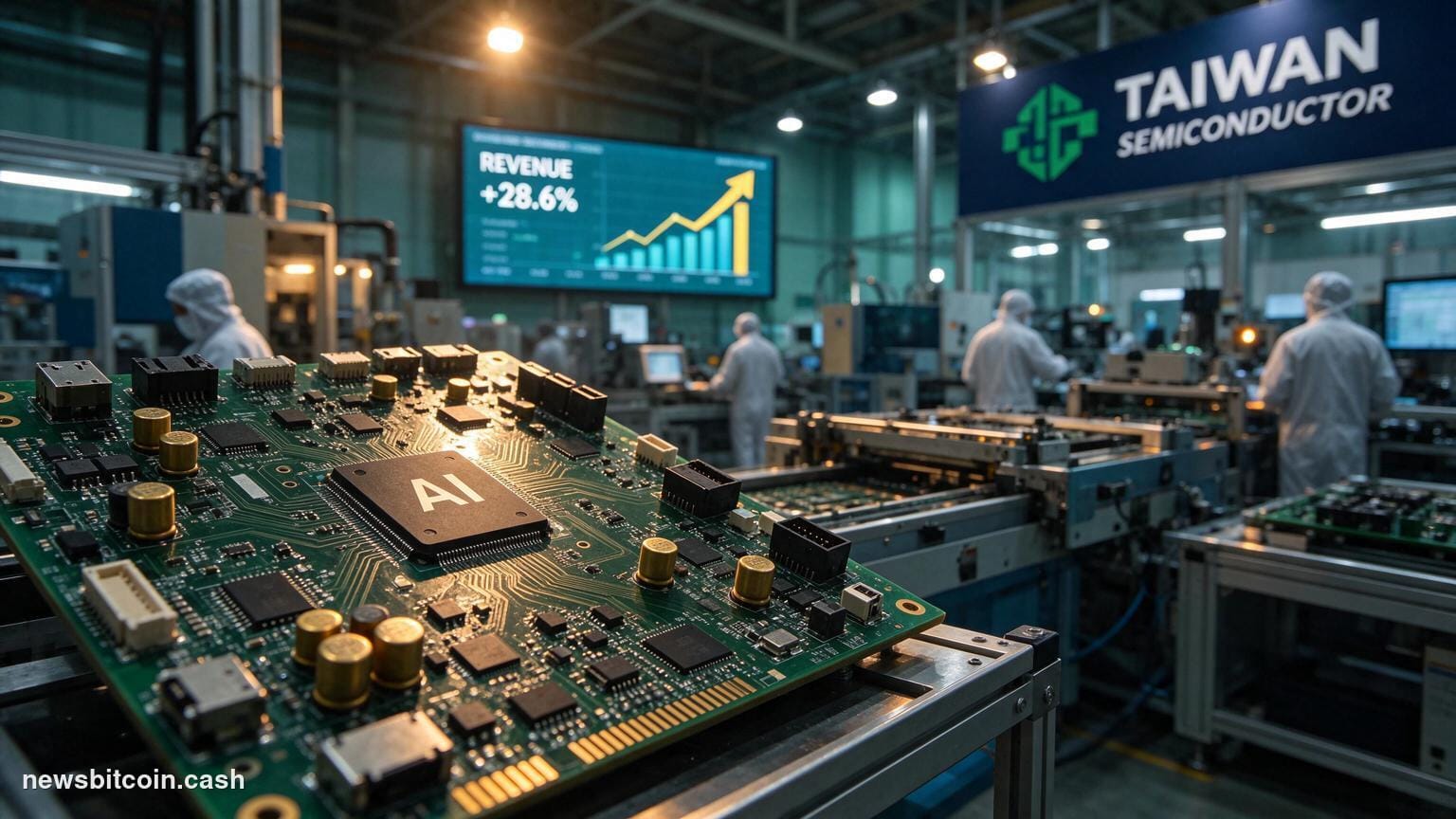
A printed circuit board manufacturer is setting its sights on artificial intelligence — and it's putting a hard number on the ambition. WUS Printed Circuit has announced a target to generate 50% of its total revenue from artificial intelligence (AI)-related business lines by 2027, a goal that represents one of the more concrete strategic commitments seen from a hardware-layer company positioning itself for the AI infrastructure boom. The announcement signals not just an internal reorganization, but a calculated bet on where the next wave of technology spending will concentrate.
The printed circuit board (PCB) industry sits at an unglamorous but essential position in the global technology supply chain. Every server, every AI accelerator chip, every high-bandwidth memory module that powers the large language models and inference engines now dominating enterprise technology budgets requires a PCB substrate beneath it. As hyperscalers and cloud providers race to build out AI data center capacity, demand for specialized high-density interconnect and advanced PCB designs has surged, creating an unusual window for manufacturers willing to retool and reposition quickly. WUS appears to be moving to capture exactly that window — with a specific, time-bound target rather than vague directional language.
The 50% threshold matters precisely because it is a majority stake in the company's revenue identity, not a supplementary line item. If WUS hits its 2027 target, AI will effectively define what the company is, displacing whatever revenue mix currently anchors its books. That kind of pivot carries meaningful execution risk. Retooling production capacity for AI-grade PCBs — which often require tighter tolerances, more exotic materials, and closer integration with chip design cycles — is capital-intensive and technically demanding. The company's own framing acknowledges this: the path to 2027 hinges on successfully navigating supply constraints and market volatility, two forces that have already reshaped the semiconductor and hardware industries multiple times this decade.
Supply constraints are not a hypothetical concern in this space. The PCB sector relies on specialized raw materials including copper foil, high-frequency laminates, and advanced resins, all of which have experienced significant demand pressure as AI infrastructure buildout accelerated globally. Lead times for key inputs have stretched, and suppliers capable of meeting the quality specifications required for AI server boards remain concentrated and sometimes bottlenecked. Any company targeting meaningful AI revenue growth by 2027 needs either secured supply agreements or sufficient vertical integration to insulate itself from these pinch points. Whether WUS has those structures in place is a critical open question for investors and analysts watching this pivot.
Market volatility presents a separate dimension of risk. The AI hardware spending surge of 2024 and 2025 was real, but it was also concentrated among a relatively small number of hyperscale buyers — companies like major U.S. cloud providers and a handful of Asian technology conglomerates. When those buyers adjust their capital expenditure cycles, suppliers feel the reverberations quickly and sharply. A PCB manufacturer deriving half its revenue from AI by 2027 would be meaningfully exposed to the capex decisions of a narrow customer base, raising concentration risk even as the overall revenue mix becomes more modern and higher-margin.
That said, the upside case is genuine. AI infrastructure is not a cyclical fashion — it represents a generational shift in what computing hardware is purchased, in what volumes, and at what performance specifications. PCB manufacturers that successfully establish themselves as reliable, high-quality suppliers to AI hardware OEMs (original equipment manufacturers) and chip designers stand to benefit from long qualification cycles that create durable customer relationships. Getting qualified into an AI server vendor's supply chain is difficult; staying qualified, once achieved, provides a degree of revenue stickiness that commodity PCB work does not.
The 2027 deadline also provides a useful accountability anchor. By setting a specific year and a specific percentage, WUS has handed analysts and investors a clear yardstick. Progress reporting in 2025 and 2026 will either validate the strategic direction or expose gaps between ambition and execution. In an industry where many companies have announced AI-adjacent strategies without quantifiable commitments, the specificity of WUS's target is itself notable — it removes the escape hatch of perpetually deferred transformation.
For observers of the broader digital infrastructure landscape, WUS Printed Circuit's pivot is a useful signal about where hardware-layer investment is concentrating. The AI boom is not only reshaping software companies and chip designers — it is working its way down the supply chain into manufacturers, materials suppliers, and substrate producers. Whether WUS becomes a case study in successful industrial transformation or a cautionary tale about the gap between targets and delivery will depend on factors partly within and partly outside its control. The 2027 clock is now running.
Written by the editorial team — independent journalism powered by Bitcoin News.