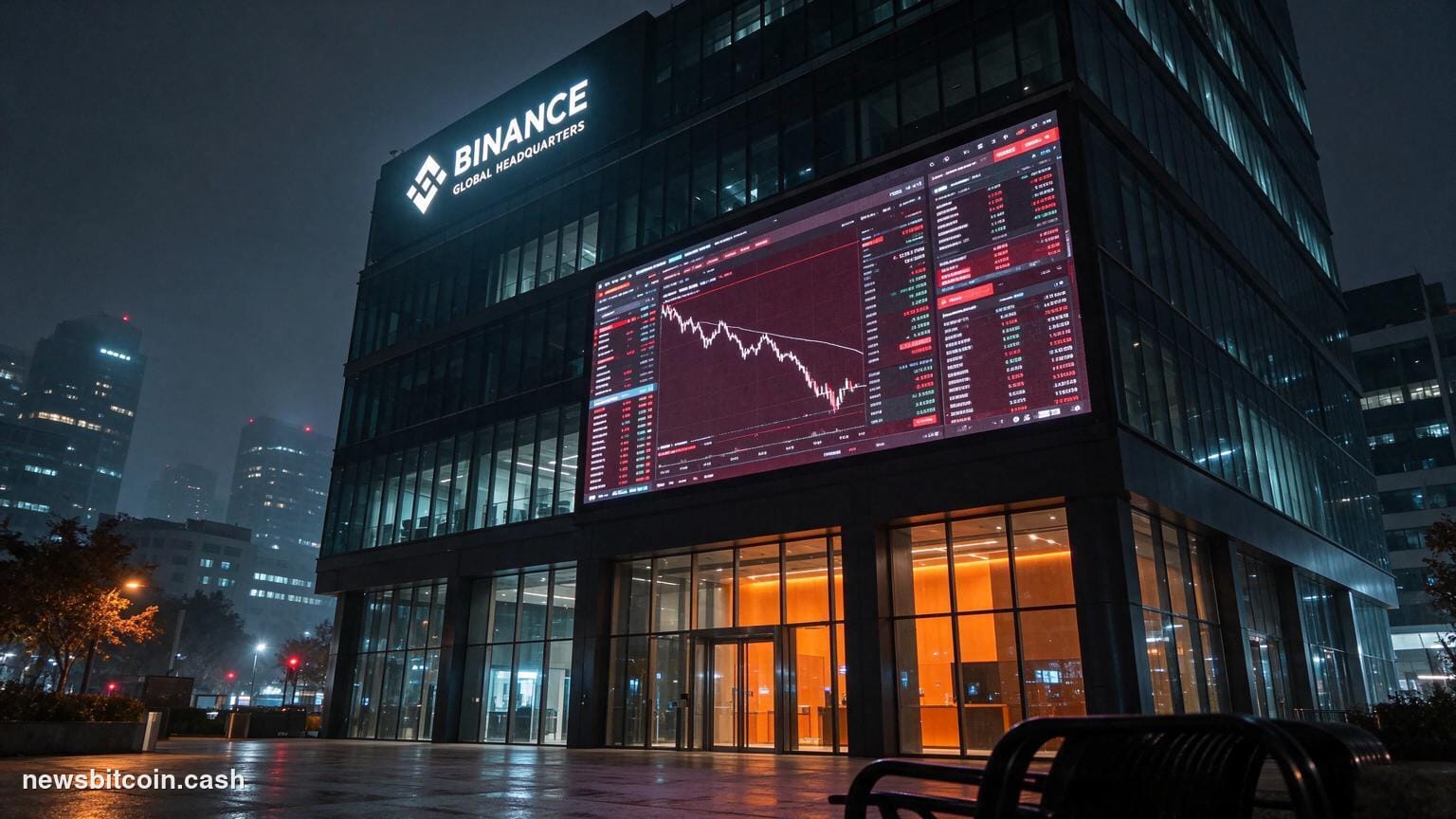
A dispute between World Liberty Financial (WLFI) and Binance over the forced closure of WLFI futures positions has surfaced, raising uncomfortable questions about exchange pricing power, transparency, and the rights of retail traders caught in the middle. At the center of the controversy is a claim that positions showing a profit at the time of closure were ultimately settled at a loss — a discrepancy that, if accurate, would represent a serious failure of market integrity on one of the world's largest crypto derivatives platforms.
According to World Liberty, affected traders came forward reporting that their WLFI futures bets were closed by Binance, and that the settlement prices applied did not reflect the market conditions visible to those traders before the closure was executed. In plain terms: some traders watched what appeared to be winning positions transform into losing ones upon settlement. The mechanism by which a profitable trade becomes a loss at closing is not a minor technical footnote — it goes to the heart of how futures contracts are priced and what guarantees, if any, an exchange owes its users at the moment of liquidation or forced exit.
What makes this situation particularly difficult to assess is Binance's silence. As of the time of reporting, the exchange has not publicly confirmed how it priced the exits. No official statement, no methodology disclosure, no acknowledgment of the specific grievances raised by WLFI or the traders involved. That opacity is itself a data point. In conventional financial markets, any forced closure of client positions — especially one that generates outcomes materially different from pre-closure market prices — would typically trigger immediate disclosure obligations and regulatory scrutiny. In crypto derivatives markets, the standards remain far less codified, and exchanges retain enormous discretionary latitude over liquidation and settlement processes.
The absence of a clear explanation from Binance creates a vacuum that speculation readily fills. The core technical question is whether the exit prices were derived from Binance's internal mark price — a composite index used by derivatives platforms to prevent manipulation and determine liquidation thresholds — or from actual spot or order book prices at the moment of closure. If mark prices diverged significantly from visible market prices during the closure window, traders could plausibly see profitable positions on paper become losses under the exchange's settlement accounting. This is not a hypothetical scenario in crypto futures markets; it has occurred before on multiple platforms under various stress conditions.
World Liberty Financial itself occupies an unusual position in the broader crypto landscape, having built a public profile around decentralized finance (DeFi) principles and community-oriented governance. The irony of its token becoming the subject of a centralized exchange dispute — one in which the exchange holds unilateral pricing authority and chooses not to explain its decisions — is hard to miss. It underscores a persistent tension in the crypto industry: projects that evangelize decentralization often find their tokens most actively traded, and most consequentially priced, on centralized venues where the rules of engagement can shift without notice or recourse.
For the traders involved, the practical consequences are immediate and financial. A position that appeared profitable is a realized loss if the settlement price says so, regardless of what the screen showed in the moments before closure. Dispute mechanisms on centralized exchanges are notoriously limited — users agree to terms of service that grant platforms wide authority over settlement methodology, and the appeals process rarely produces outcomes favorable to the retail trader challenging an institutional decision. Unless Binance chooses to revisit the closure terms, the traders who reported profitable positions settling at a loss may have limited formal recourse.
The episode also arrives at a moment when regulatory pressure on crypto derivatives markets is intensifying across multiple jurisdictions. Futures products tied to DeFi tokens, offered on offshore platforms to retail users globally, sit in a regulatory grey zone that authorities in the United States, the European Union, and elsewhere have been progressively trying to close. How platforms like Binance handle forced position closures — and whether they disclose pricing methodology in real time — will increasingly matter to regulators drafting oversight frameworks for crypto derivatives. Silence, in that context, is not a neutral posture.
What this means in practical terms is straightforward: traders operating in crypto futures markets must internalize that settlement prices are set by the exchange, not by what they see on the chart. The gap between visible market price and applied settlement price can be real, material, and — critically — not subject to the same transparency norms that govern regulated derivatives exchanges elsewhere. Until Binance clarifies how it priced the WLFI exits, the accounts coming from affected traders and from World Liberty Financial itself represent the only publicly available version of events. That is an accountability gap the industry cannot keep tolerating if it expects institutional and retail participants to trust its infrastructure.
Written by the editorial team — independent journalism powered by Bitcoin News.