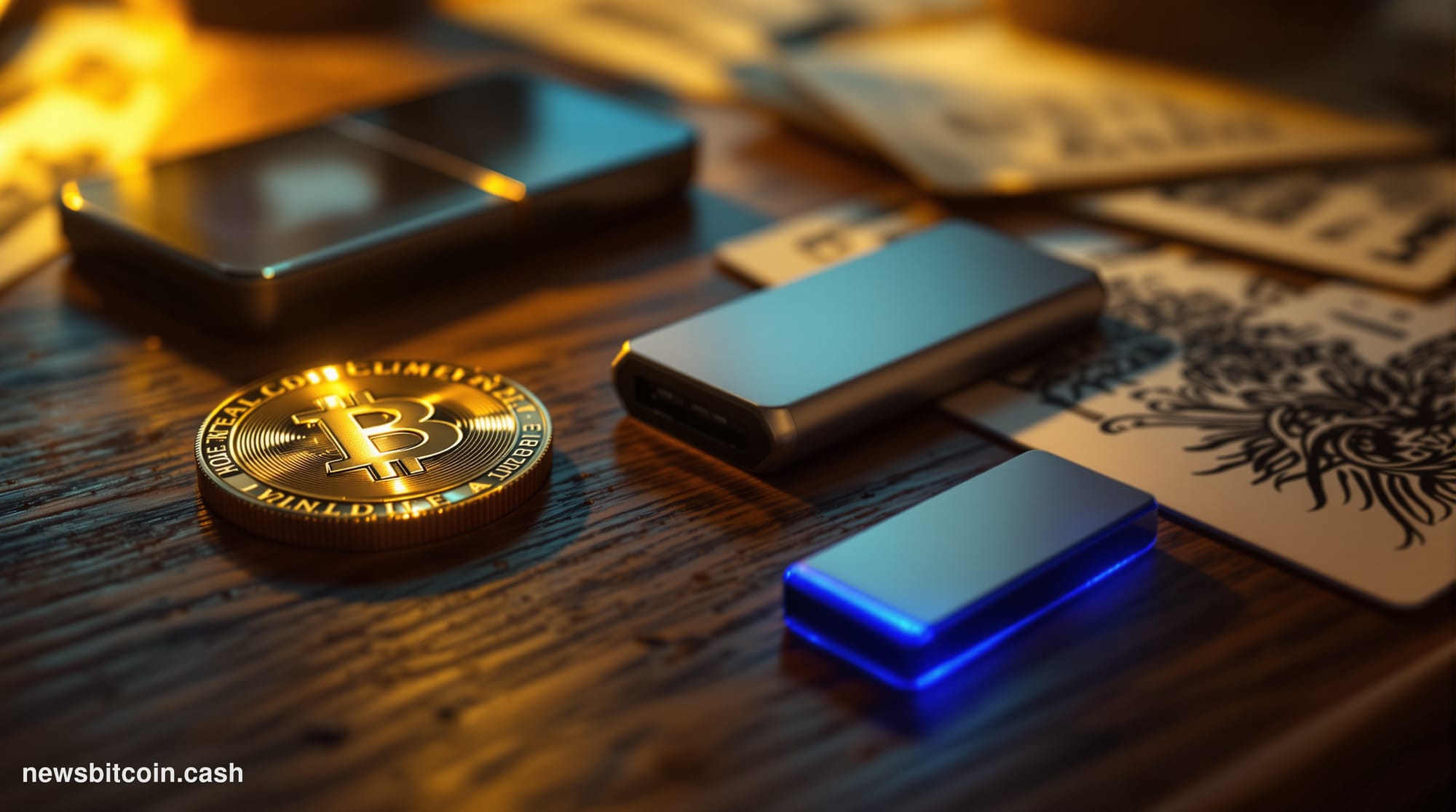
For more than a decade, Bitcoin enthusiasts and entrepreneurs have wrestled with a fundamental paradox: how do you make the world's most revolutionary digital currency feel as tangible as the cash in your wallet? The answer has spawned an entire ecosystem of physical Bitcoin implementations, from collectible coins to credit card-sized devices, each attempting to bridge the gap between invisible code and real-world usability.
The quest to physicalize Bitcoin represents more than mere novelty collecting. It addresses one of cryptocurrency's most persistent adoption barriers—the abstract nature of digital assets that exist purely as cryptographic signatures and blockchain entries. When Bitcoin emerged in 2009, it challenged fundamental assumptions about money's physical properties, but human psychology still craves tangible representations of value.
Early attempts at physical Bitcoin took various forms, each with distinct advantages and limitations. Collectible coins, often featuring embedded private keys hidden beneath tamper-evident holograms, offered the psychological comfort of holding Bitcoin while maintaining security through physical sealing mechanisms. These coins became popular among collectors and gift-givers who wanted to introduce newcomers to cryptocurrency through familiar physical formats.
Hardware wallets represented another evolutionary branch in physical Bitcoin development, prioritizing security over cash-like convenience. These devices store private keys in dedicated secure elements, requiring deliberate user interaction for transactions. While technically sophisticated, hardware wallets never achieved the seamless user experience of traditional cash transactions, requiring computers or smartphones for actual spending.
Credit card-sized implementations emerged as another approach, attempting to replicate familiar payment form factors while embedding Bitcoin functionality. These cards typically contained secure chips storing private keys, sometimes featuring displays or buttons for transaction confirmation. However, they still required compatible point-of-sale systems or mobile apps, limiting their utility as truly cash-like instruments.
USB-based solutions offered yet another vector for physical Bitcoin implementation, leveraging familiar computer connectivity while providing secure key storage. These devices often combined storage capabilities with transaction signing functions, but like other digital implementations, they required compatible software and technical knowledge for operation.
The fundamental challenge facing all physical Bitcoin implementations remains the same: Bitcoin's security model relies on cryptographic verification rather than physical possession. Unlike traditional cash, where physical control equals ownership, Bitcoin requires private key knowledge and blockchain validation. This creates inherent tension between user-friendly physical interfaces and robust security practices.
Modern developments in physical Bitcoin continue pushing boundaries through improved security chips, wireless connectivity, and simplified user interfaces. Some implementations now support near-field communication (NFC) for contactless transactions, while others integrate biometric authentication to enhance security without sacrificing convenience. These advances suggest physical Bitcoin may eventually achieve cash-like usability while maintaining cryptographic security guarantees.
The future trajectory of physical Bitcoin will likely depend on broader cryptocurrency adoption patterns and regulatory developments. As Bitcoin gains mainstream acceptance, demand for intuitive physical interfaces may drive further innovation in form factors and security mechanisms. Conversely, if digital wallet interfaces achieve sufficient simplicity, the need for physical Bitcoin representations may diminish.
What this means for Bitcoin's evolution is that the tension between digital innovation and physical familiarity continues driving creative solutions. Physical Bitcoin implementations serve as important bridges for users transitioning from traditional monetary systems while potentially offering unique security and privacy advantages. The decade-plus history of physical Bitcoin experimentation demonstrates both persistent demand for tangible cryptocurrency experiences and the ongoing challenge of matching Bitcoin's revolutionary capabilities with intuitive user interfaces. As the cryptocurrency landscape matures, physical Bitcoin formats will likely remain relevant for specific use cases, even as purely digital implementations become increasingly sophisticated.
Written by the editorial team — independent journalism powered by Bitcoin News.