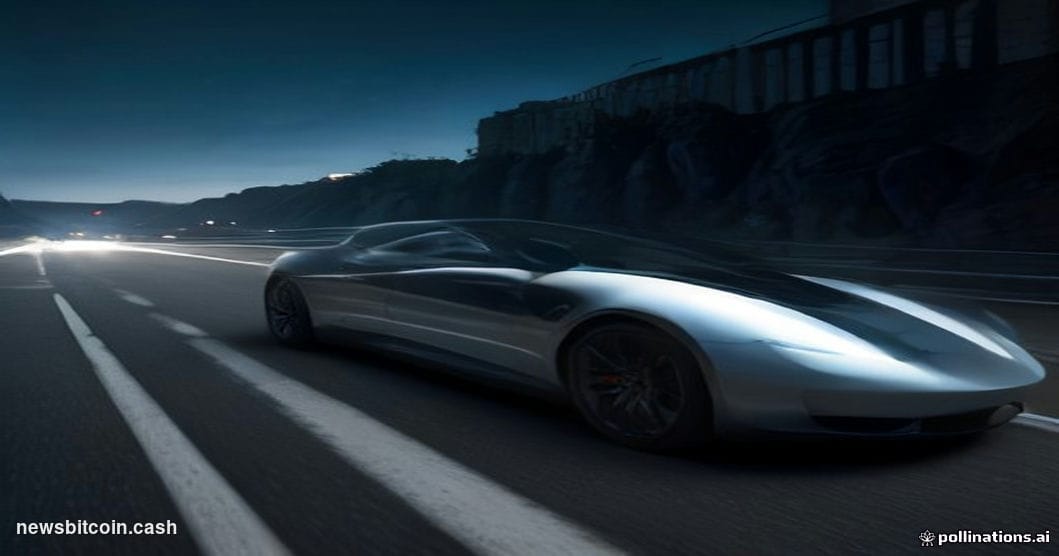
When the White House press apparatus chooses to weigh in on a video game's release schedule, something culturally significant has shifted. That moment arrived this week when the official White House communications team publicly mocked Grand Theft Auto 6 following Tesla's reveal of a working flying car — pointedly noting that Tesla had beaten one of the most anticipated entertainment products in history to market. The jab was equal parts political theater and a genuine marker of how dramatically the pace of technological change has accelerated.
The underlying facts are remarkable on their own terms. Tesla, the electric vehicle company led by Elon Musk, has now unveiled a flying car ahead of a video game sequel that has been in development for what feels like a geological epoch. GTA 6, developed by Rockstar Games, has been one of the most delayed and speculated-upon releases in entertainment history. The White House's decision to use Tesla's milestone as a punchline at the game's expense signals how normalized the idea of flying personal vehicles has become — at least in the corridors of American political communication.
For Musk, the flying car reveal is only part of a broader transportation ambition currently in motion. He is now targeting a peak speed of 400 miles per hour for the Tesla Roadster, a vehicle that has itself endured years of delays and is currently projected for a 2028 arrival. The Roadster's development arc mirrors, in some ways, the GTA 6 situation — a product long promised, long awaited, and repeatedly pushed back. The difference, apparently, is that Tesla's pipeline is now delivering hardware that even the White House considers worthy of political commentary.
The intersection of this story with digital asset and blockchain audiences may not be immediately obvious, but it is real. Tesla's trajectory — from electric car manufacturer to aerospace-adjacent technology company with a 400 mph vehicle on the drawing board — is directly relevant to the infrastructure-level thinking that underpins the crypto economy. Musk has remained one of the most consequential individual voices in the digital asset space, with his public statements having moved Bitcoin and Dogecoin markets repeatedly over the past several years. When his company crosses a threshold as significant as a flying vehicle reveal, the ripple effects across innovation-adjacent financial markets bear watching.
There is also a broader narrative about the relationship between speculative promises and eventual delivery that resonates deeply in the crypto world. The blockchain industry has endured its own version of the GTA 6 problem — technologies announced with enormous fanfare, timelines extended repeatedly, communities left holding white papers instead of working products. The White House's mockery of GTA 6 is essentially a cultural referendum on that pattern. Tesla, for all its own delays on the Roadster, appears to have crossed to the other side of that divide with the flying car reveal, delivering something tangible that even the executive branch felt compelled to acknowledge.
The 400 mph Roadster target also deserves its own examination. That figure, if achieved, would place the vehicle in a performance category with no civilian automotive precedent. For context, the fastest production cars on earth currently peak well below 300 mph. A 400 mph road-capable vehicle — or whatever regulatory classification a 2028 Tesla Roadster ultimately receives — would represent a categorical leap rather than an incremental improvement. Musk has a documented history of setting targets that initially seem absurd and then arriving at something in their approximate neighborhood, even if timelines stretch. The flying car reveal suggests the engineering pipeline is real, even if the 2028 date should be treated with appropriate skepticism.
What this means for observers of technology, markets, and digital infrastructure is that the boundary between science fiction and deployable hardware continues to compress. The same forces driving that compression — rapid iteration, private capital, founder-led engineering cultures — are the forces reshaping the financial system through blockchain and digital assets. When the White House finds it politically useful to reference Tesla's flying car as a benchmark against which a beloved entertainment franchise falls short, it reflects a world in which the pace of physical technology development has begun to match the narrative velocity that crypto markets have operated at for years. The question now is whether the Roadster, flying car, and the broader Tesla hardware ecosystem arrive on anything resembling Musk's stated timelines — or whether 2028 becomes the new "soon."
Written by the editorial team — independent journalism powered by Bitcoin News.