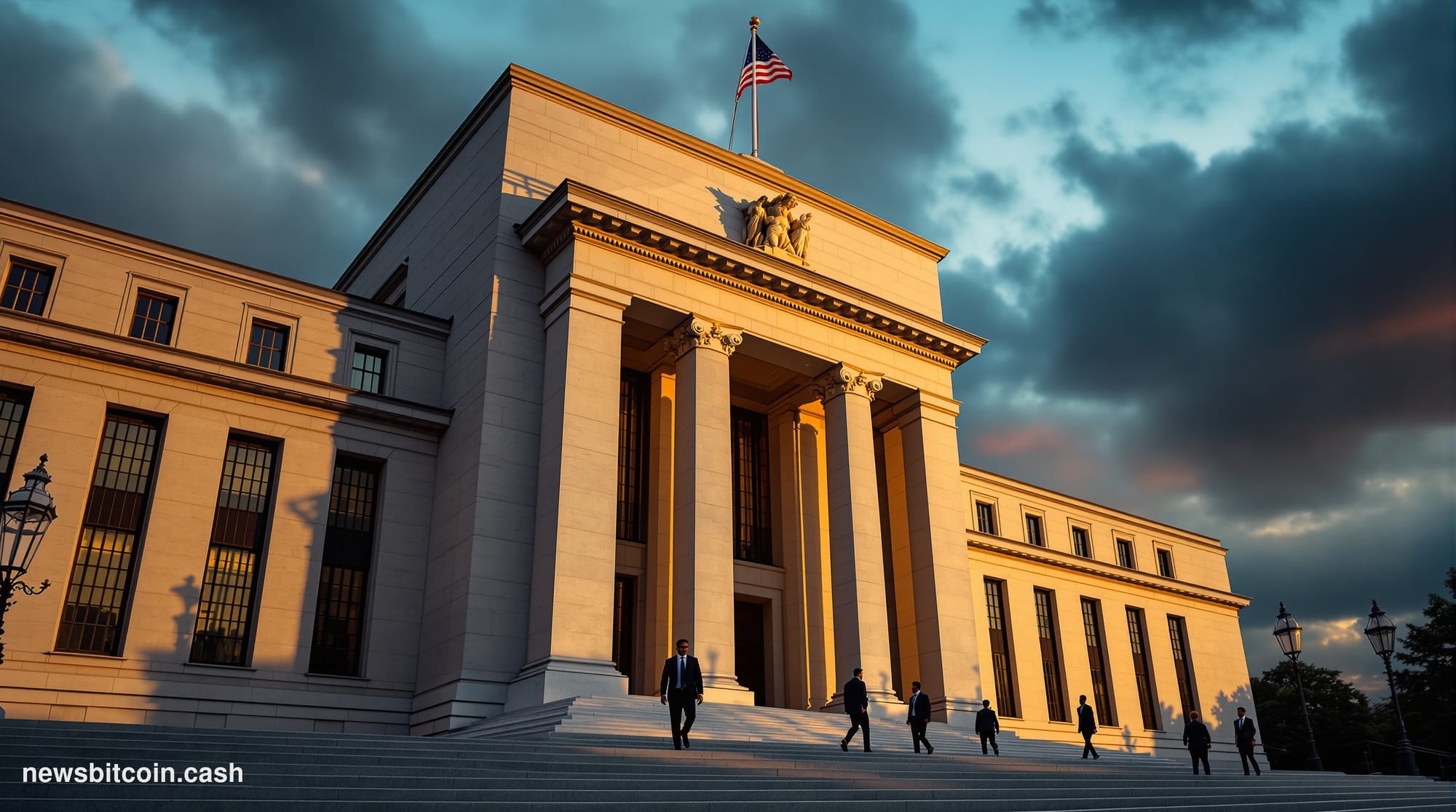
The Federal Reserve enters uncharted territory under Kevin Warsh's leadership, as the new chair assumes control of America's central bank amid the most challenging inflationary environment in decades. His appointment marks a pivotal moment for both traditional monetary policy and the evolving relationship between central banking and digital assets.
Warsh's ascension to the Fed chair comes at a critical juncture when conventional policy tools face their greatest test since the stagflation era. The intersection of his leadership with current economic pressures creates a unique laboratory for monetary experimentation, particularly regarding the integration of cryptocurrency considerations into Federal Reserve decision-making processes.
Inflation Pressures Reshape Central Bank Priorities
The inflationary backdrop confronting Warsh represents more than cyclical economic adjustment—it signals fundamental shifts in how central banks must navigate competing pressures from fiscal expansion, supply chain disruptions, and emerging financial technologies. Traditional monetary policy transmission mechanisms show signs of strain as digital assets create new channels for capital flows that bypass conventional banking intermediaries.
Warsh's academic background and previous Fed experience position him uniquely to address these challenges, yet the scale of current inflation pressures demands innovative approaches that extend beyond historical playbooks. The cryptocurrency ecosystem's maturation during his absence from central banking creates additional complexity for policy implementation, as digital asset markets now represent trillions in value that can amplify or dampen traditional monetary policy effects.
Cryptocurrency Integration Enters Central Bank Calculus
The potential for cryptocurrency integration into Fed policy considerations represents perhaps the most significant institutional shift since the abandonment of the gold standard. Coinbase's rise to prominence as a regulated exchange and Tether's role in global dollar circulation create new transmission mechanisms that Fed leadership must understand and potentially leverage.
Warsh's approach to digital assets could fundamentally alter how monetary policy reaches global markets. Bitcoin's adoption by institutional investors and its correlation patterns with traditional risk assets mean that Fed decisions now ripple through cryptocurrency markets with unprecedented speed and magnitude. This integration creates both opportunities for enhanced policy effectiveness and risks of unintended consequences across interconnected financial systems.
Market Dynamics Under New Leadership
The economic ripple effects from Warsh's leadership extend beyond domestic monetary policy into global financial architecture. Central bank digital currency (CBDC) considerations, regulatory clarity for digital assets, and the Fed's stance on private stablecoins all fall under his purview during this critical period.
Financial markets are recalibrating expectations around Fed policy effectiveness as traditional metrics like employment and inflation interact with newer variables including cryptocurrency market capitalization, decentralized finance (DeFi) lending rates, and digital asset volatility. Warsh inherits a complex ecosystem where monetary policy must account for both Main Street economic conditions and the rapidly evolving digital asset landscape that increasingly influences capital allocation decisions.
Policy Framework Evolution
The redefinition of monetary policy under Warsh's leadership likely involves reassessing fundamental assumptions about money velocity, credit transmission, and inflation dynamics in an economy where digital assets play expanding roles. His academic work on financial innovation provides intellectual framework for navigating these challenges, yet practical implementation requires unprecedented coordination between traditional banking oversight and emerging financial technologies.
Warsh's Fed faces the dual mandate of price stability and employment in an environment where cryptocurrency markets can either amplify or offset traditional policy measures. The success of his tenure may depend largely on developing coherent approaches to digital asset integration that enhance rather than complicate the Fed's ability to achieve its core objectives.
The convergence of inflation challenges and cryptocurrency maturation creates a defining moment for American monetary policy. Warsh's leadership will be measured not only by traditional economic metrics but also by his ability to position the Federal Reserve as a relevant and effective institution in an increasingly digital financial ecosystem. The stakes extend beyond domestic economic management to America's role in shaping global monetary standards for the digital age.
Written by the editorial team — independent journalism powered by Bitcoin News.