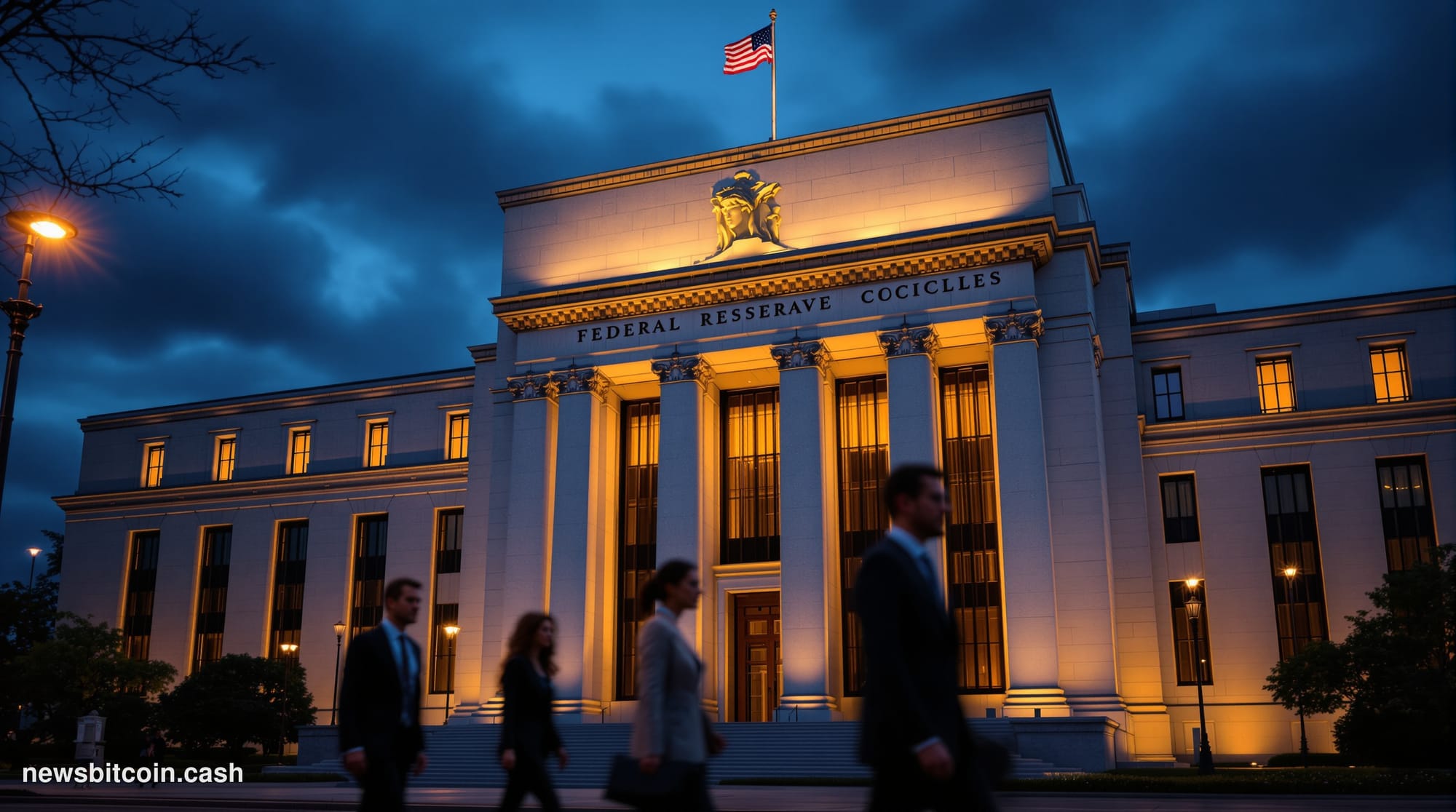
Kevin Warsh has assumed the chair of the Federal Reserve at a pivotal moment for both traditional finance and digital assets, conducting his first meeting as inflation reaches 4% — a level that threatens to reshape monetary policy and drain liquidity from speculative markets including cryptocurrency.
The timing of Warsh's leadership transition could hardly be more consequential for crypto investors. As inflation climbs to twice the Fed's target rate, the central bank faces mounting pressure to implement tighter monetary policies that historically correlate with reduced appetite for risk assets. Digital currencies, despite their growing institutional adoption, remain particularly sensitive to liquidity conditions that tighter policy would constrain.
Warsh's hawkish reputation precedes him into this critical role. During his previous tenure as a Fed governor from 2006 to 2011, he consistently advocated for disciplined monetary policy and expressed skepticism toward prolonged periods of accommodation. This philosophical stance suggests his leadership may mark a departure from the ultra-loose policies that helped fuel the crypto boom of recent years. The 4% inflation reading provides immediate justification for more aggressive policy normalization than markets may have anticipated.
The implications for cryptocurrency markets extend beyond simple correlation with traditional risk assets. Digital currencies have benefited enormously from the liquidity-rich environment created by years of near-zero interest rates and quantitative easing. As the Fed under Warsh's leadership potentially pivots toward restrictive policy, the abundant capital that flowed into speculative investments could face significant headwinds. Higher interest rates make yield-bearing traditional assets more attractive relative to non-yielding cryptocurrencies, while tighter financial conditions typically force investors to reduce exposure to volatile assets.
Major cryptocurrency exchanges like Coinbase and Binance may find themselves navigating more challenging market conditions as institutional flows potentially reverse course. The corporate treasury strategies that saw companies allocate portions of their cash to Bitcoin could face renewed scrutiny if traditional fixed-income alternatives begin offering meaningful yields again. This dynamic particularly threatens the institutional adoption narrative that has underpinned much of crypto's recent legitimacy gains.
Warsh's appointment also signals potential philosophical shifts in how the Fed views financial stability risks from digital assets. His academic background and previous policy positions suggest a more skeptical view of financial innovation that lacks traditional regulatory oversight. While this doesn't necessarily translate to direct crypto hostility, it may result in more stringent oversight of how digital assets interact with the broader financial system, particularly through banking partnerships and institutional custody arrangements.
The 4% inflation reading that coincides with Warsh's first meeting creates additional urgency around policy responses. Unlike gradual inflation buildups that allow for measured responses, this level demands more immediate attention. The Fed's credibility in maintaining price stability depends on decisive action, which could mean more aggressive rate increases than previously anticipated. Such moves would likely accelerate the unwinding of speculative positions across risk assets, with crypto markets potentially experiencing disproportionate volatility due to their relatively smaller size and higher leverage ratios.
Market participants should prepare for a fundamentally different monetary policy environment under Warsh's leadership. The era of treating Fed accommodation as a permanent fixture supporting risk asset valuations may be ending. Crypto investors who built strategies around persistent liquidity abundance will need to adapt to conditions where capital becomes scarce and expensive. This transition could separate sustainable crypto projects with real utility from purely speculative tokens that relied primarily on abundant liquidity for their valuations.
The convergence of Warsh's hawkish reputation with elevated inflation creates a perfect storm for tighter monetary conditions ahead. Digital asset markets, having thrived in an era of unprecedented accommodation, now face their most significant policy headwind since the 2008 financial crisis. How successfully the crypto ecosystem adapts to this new reality will determine whether the recent institutional adoption gains prove durable or merely cyclical artifacts of extraordinary monetary policy.
Written by the editorial team — independent journalism powered by Bitcoin News.