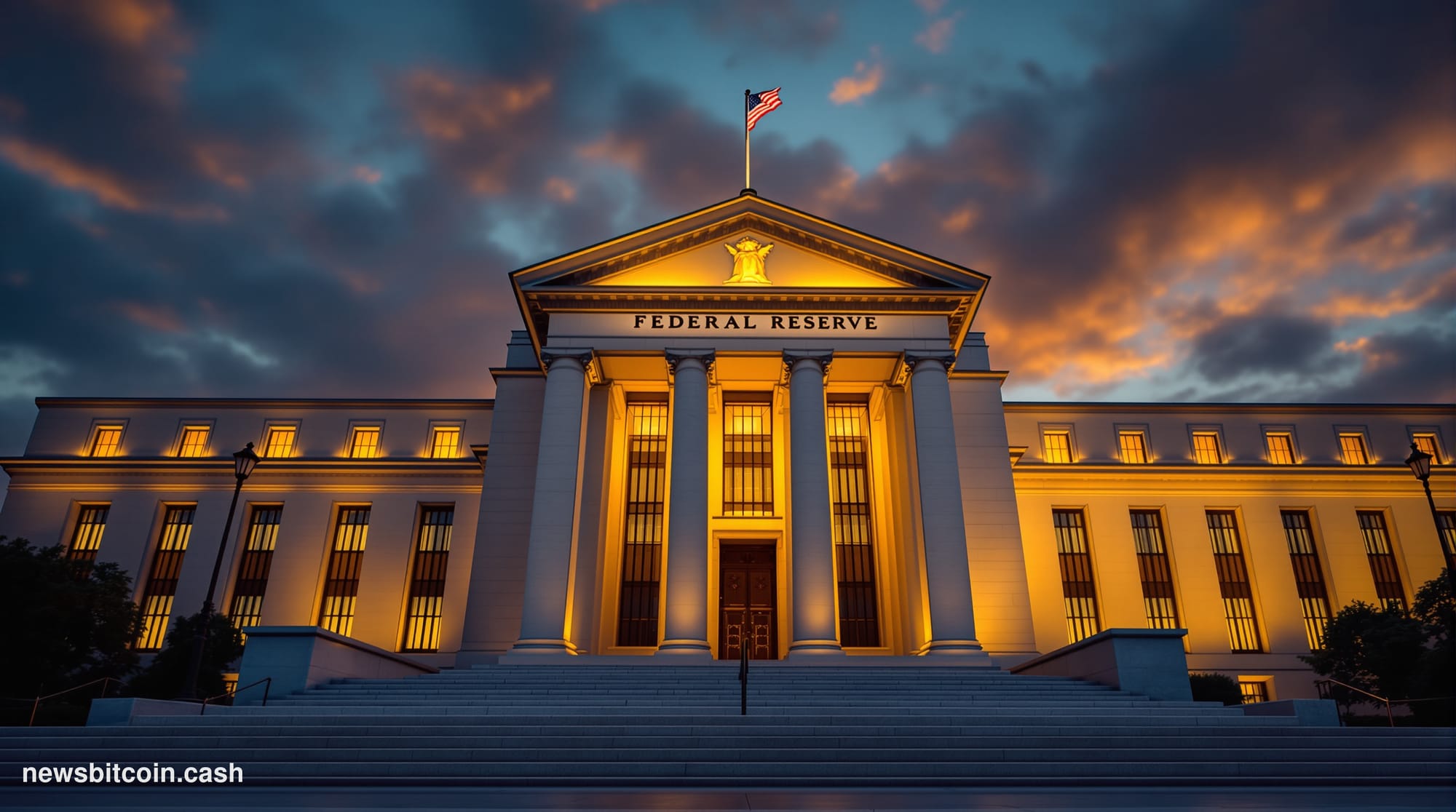
The seismic shift in American monetary policy toward digital assets begins today with Federal Reserve leadership transitioning from Jerome Powell to Kevin Warsh, marking the most significant philosophical pivot at the world's most powerful central bank in decades. This appointment, backed by former President Trump, signals a fundamental realignment of how the United States approaches cryptocurrency regulation and digital asset integration into the broader financial system.
Warsh's ascension to Fed Chair represents more than a personnel change—it embodies a strategic repositioning of American monetary policy that could redefine the global cryptocurrency landscape. Unlike his predecessor Powell, who maintained a cautious approach toward digital assets throughout his tenure, Warsh brings a demonstrably pro-crypto stance to the institution that controls the world's reserve currency. This philosophical divergence suggests the Federal Reserve may abandon its historically restrictive posture toward cryptocurrency innovation in favor of strategic embrace.
The timing of this appointment carries particular significance for digital asset markets, which have operated under regulatory uncertainty for years. Powell's Fed consistently emphasized potential risks associated with cryptocurrencies, from financial stability concerns to consumer protection issues. Warsh's appointment signals a potential end to this era of institutional skepticism, potentially opening pathways for clearer regulatory frameworks that could accelerate mainstream adoption of digital assets.
Market analysts are closely watching for immediate policy signals from the new Fed leadership, particularly regarding central bank digital currency development and cryptocurrency regulation coordination with other agencies. The Federal Reserve's stance has historically influenced global monetary policy approaches toward digital assets, making Warsh's leadership transition a pivotal moment for international cryptocurrency markets. His pro-crypto positioning could encourage other central banks to adopt more accommodating approaches toward digital asset integration.
The broader implications extend beyond immediate market movements to fundamental questions about monetary sovereignty and innovation. Warsh's appointment suggests the Trump administration recognizes digital assets as integral to America's financial competitiveness rather than threats to traditional monetary systems. This represents a dramatic departure from previous Fed leadership approaches that prioritized stability over innovation in digital finance.
Financial institutions have been preparing for potential policy shifts under new Fed leadership, with many major banks and payment processors positioning themselves to capitalize on more favorable regulatory environments. The combination of pro-crypto Fed leadership with supportive political backing creates conditions for accelerated institutional adoption of digital assets across traditional financial services.
Weekend trading patterns in cryptocurrency markets often amplify major news developments, and Warsh's appointment could trigger significant price movements as global markets digest the implications of pro-crypto leadership at the Federal Reserve. The psychological impact of having an explicitly supportive central bank leader may prove as important as any specific policy changes in driving market sentiment toward digital assets.
This leadership transition fundamentally alters the trajectory of American financial policy toward digital innovation. Warsh's appointment represents a inflection point where the world's most influential central bank shifts from skeptical observer to potential facilitator of cryptocurrency integration into mainstream finance. The ramifications will likely extend far beyond domestic markets, influencing global approaches to digital asset regulation and central bank policy coordination. The era of Federal Reserve resistance to cryptocurrency innovation appears to be ending, replaced by leadership explicitly committed to digital asset advancement within the American financial system.
Written by the editorial team — independent journalism powered by Bitcoin News.