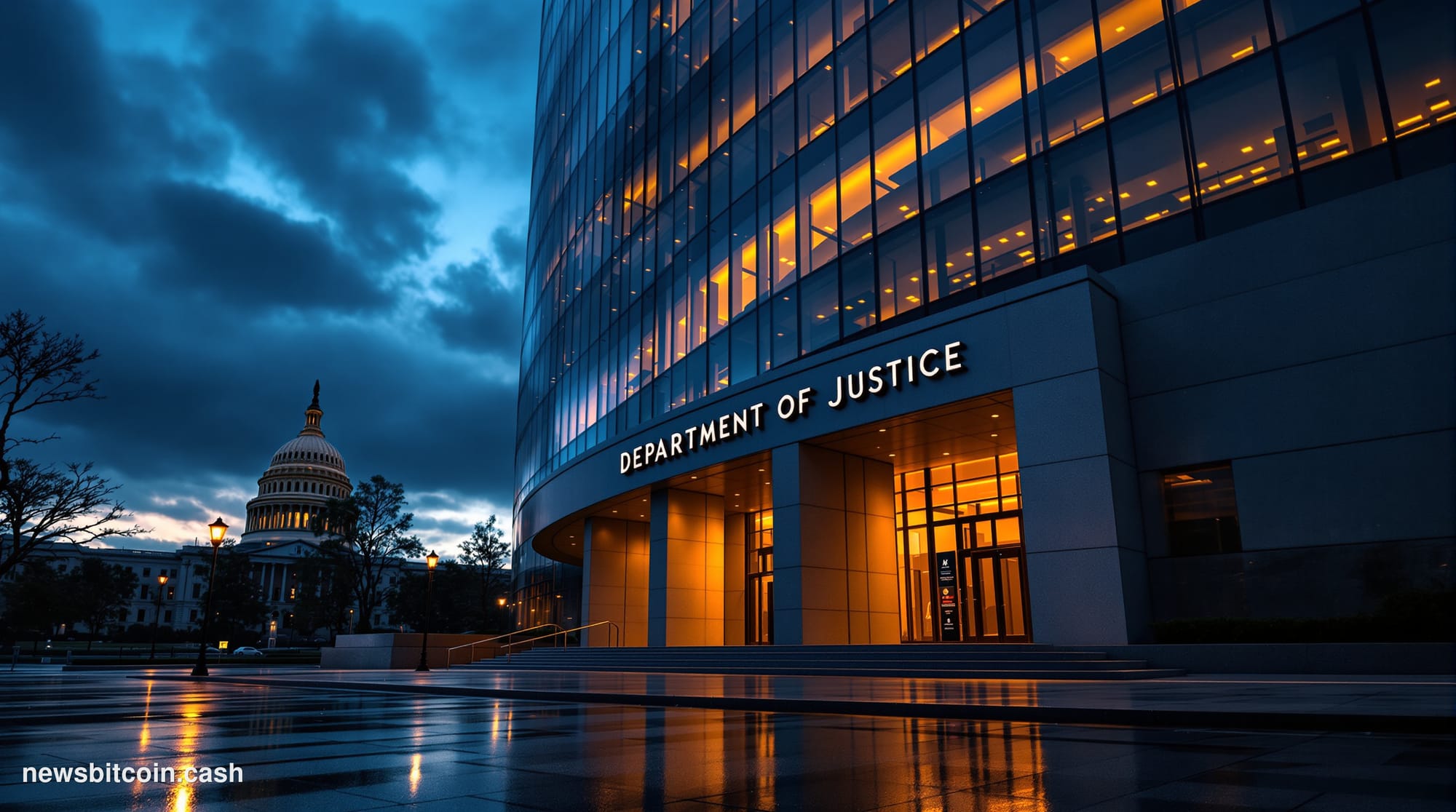
The intersection of traditional law enforcement and cryptocurrency compliance reached a significant milestone this week as federal authorities successfully froze $3.8 million in illicit digital assets with unprecedented cooperation from America's technology giants. The Department of Justice's National Cryptocurrency Enforcement Team executed the operation targeting sophisticated fraud schemes orchestrated by organized crime networks operating from Southeast Asia, marking a new chapter in public-private collaboration against crypto-enabled criminal enterprises.
The seizure represents more than just another enforcement action—it demonstrates the maturation of institutional frameworks designed to combat the weaponization of digital assets by international criminal organizations. Coinbase, SpaceX, and Meta each provided critical assistance to federal investigators, though the specific nature of their contributions remains undisclosed pending ongoing investigations. This level of corporate cooperation signals a fundamental shift in how major technology companies approach their role in the broader cryptocurrency ecosystem's security infrastructure.
The Southeast Asian connection adds particular gravity to this enforcement action, as the region has emerged as a primary hub for crypto-enabled fraud schemes targeting American consumers and businesses. These operations typically leverage sophisticated social engineering tactics combined with advanced technical infrastructure to move funds rapidly across multiple blockchain networks before traditional enforcement mechanisms can intervene. The successful freezing of $3.8 million suggests federal authorities have developed more effective real-time monitoring and response capabilities.
For Coinbase, participation in this operation reinforces the exchange's positioning as a compliance-forward platform willing to work closely with federal authorities. The company's involvement likely centered on transaction monitoring and account freezing capabilities, leveraging its extensive know-your-customer infrastructure to identify and halt suspicious activity patterns. This cooperation comes as the broader exchange sector faces intensified regulatory scrutiny and mounting pressure to demonstrate proactive anti-money laundering measures.
The inclusion of SpaceX and Meta in this enforcement action reveals the expanding scope of cryptocurrency-related investigations beyond traditional financial service providers. SpaceX's involvement could relate to Starlink's satellite internet infrastructure being exploited by criminal networks to mask their digital footprints, while Meta's participation likely stems from fraudulent schemes conducted across its social media platforms. Both scenarios illustrate how modern crypto fraud operations exploit diverse technological infrastructure to execute their schemes.
The DOJ's National Cryptocurrency Enforcement Team, established to coordinate federal responses to digital asset crimes, has demonstrated increasing sophistication in its operational capabilities since its formation. The team's ability to secure cooperation from multiple major corporations while executing a complex international investigation suggests significant improvements in both inter-agency coordination and private sector engagement protocols. These developments occur against a backdrop of congressional pressure for enhanced crypto regulation and enforcement.
This enforcement action arrives at a critical juncture for cryptocurrency compliance frameworks. As institutional adoption accelerates and regulatory clarity improves, the industry faces mounting expectations to self-police and actively assist in combating illicit activities. The voluntary cooperation demonstrated by Coinbase, SpaceX, and Meta may establish new standards for corporate responsibility in the digital asset ecosystem, potentially influencing future regulatory requirements and industry best practices.
The $3.8 million seizure, while significant, represents merely a fraction of the estimated billions in cryptocurrency moved annually through illicit channels. However, the operation's success in securing multi-corporate cooperation and targeting international criminal networks demonstrates evolving federal capabilities that could prove scalable to larger enforcement actions. For legitimate cryptocurrency users and businesses, these developments signal a more secure and regulated operating environment, though they also underscore the importance of robust compliance measures and due diligence procedures in all digital asset transactions.
Written by the editorial team — independent journalism powered by Bitcoin News.