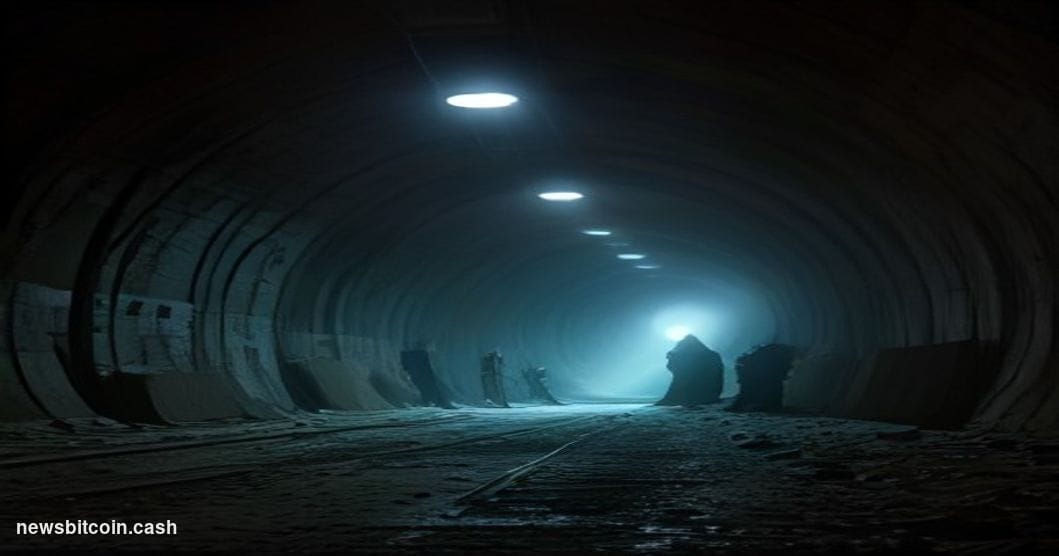
When The Boring Company last raised money at a formal valuation in 2022, the tunnel infrastructure venture founded by Elon Musk was worth somewhere in the region of $5.75 billion — already a substantial figure for a company many dismissed as a vanity project dressed up in engineering ambition. Four years later, that skepticism looks expensive. A new $3 billion funding round led by the United Arab Emirates has pushed the company's valuation to $23 billion, exactly four times its 2022 mark, in one of the more striking infrastructure bets to emerge from the Gulf's increasingly assertive sovereign-backed investment apparatus.
The sheer scale of the re-rating demands attention. A 4x valuation jump over roughly four years is the kind of trajectory more commonly associated with software platforms than with companies that deploy massive boring machines underground. It signals something important: institutional capital, particularly from the Gulf states, is no longer content to watch from the sidelines while Musk's constellation of ventures reshapes physical and digital infrastructure alike. The UAE's decision to lead this round is a geopolitical and financial statement rolled into one.
Why the UAE Is Writing This Check
The Emirates have spent the better part of the last decade repositioning themselves as a hub for transformative technology investment — from artificial intelligence to advanced logistics to space. Backing The Boring Company at a $23 billion valuation fits cleanly within that strategy. Underground transit and freight networks offer a credible answer to one of the Gulf's persistent urban planning headaches: surface congestion in rapidly expanding cities like Dubai and Abu Dhabi, where temperatures make outdoor infrastructure both expensive to maintain and hostile to daily use. A subterranean transit layer solves for climate, density, and modernization simultaneously.
From a capital allocation standpoint, committing to a $3 billion lead position also gives UAE-linked investors meaningful equity influence over a company that, if its infrastructure thesis plays out, could become a foundational layer of urban mobility in multiple markets. The tunnel business is slow, capital-intensive, and operationally complex — but it is also extraordinarily defensible once built. Nobody tears out a completed tunnel network.
The Broader Musk Capital Ecosystem
It is worth contextualizing this raise within the broader pattern of how Musk-affiliated ventures attract capital. SpaceX has repeatedly demonstrated that patient, large-check institutional investors are willing to absorb long development timelines in exchange for equity in what they believe will be generational infrastructure businesses. Tesla's early survival similarly depended on investors who understood the difference between near-term losses and long-term structural positioning. The Boring Company is now attracting the same class of conviction capital — and doing so at a valuation that implies the market believes it has moved well past the speculative phase.
For the digital assets and blockchain-adjacent audience tracking where large capital flows are heading, this round carries its own signal. The UAE has been simultaneously aggressive in developing its crypto regulatory framework, attracting exchanges and Web3 firms to Abu Dhabi and Dubai's financial free zones. A nation-state that leads a $3 billion round in physical tunnel infrastructure while also cultivating DIFC and ADGM as crypto-friendly jurisdictions is making a unified bet: the future is built on both physical and digital infrastructure layers, and the UAE intends to have a stake in both.
What $23 Billion Actually Buys
A valuation of this magnitude comes with expectations baked in. At $23 billion, The Boring Company is being priced not as a regional novelty — the Las Vegas Convention Center Loop being its most visible operational project — but as a company with genuine multi-city, potentially multi-continent deployment potential. The Las Vegas network demonstrated that the core technology is functional and commercially operational, but scaling from a single-city pilot to a global infrastructure provider requires exactly the kind of sovereign-backed, patient capital that this UAE-led round represents.
The $3 billion raised will presumably accelerate the pipeline of projects under development, improve tunneling speed and cost economics, and potentially position the company for additional contracts in the Gulf region itself. Musk has long argued that The Boring Company's core innovation — reducing the cost and time of tunnel boring through engineering refinements and automation — can make underground transit economically viable at scale. Whether that thesis holds across the geological and regulatory complexity of different geographies remains the critical open question.
What This Means
A 4x valuation jump backed by $3 billion in Gulf capital is not a financing footnote — it is a fundamental reappraisal of where The Boring Company sits in the infrastructure investment landscape. For observers tracking how sovereign wealth and state-adjacent capital is deploying globally, this round confirms that Musk-affiliated infrastructure ventures have achieved a credibility floor that now attracts the largest institutional checks available. Whether the $23 billion valuation proves prescient or premature will depend almost entirely on The Boring Company's ability to translate its engineering ambitions into operational tunnels at commercial scale across multiple markets. The UAE, it appears, has decided to bet on the former.
Written by the editorial team — independent journalism powered by Bitcoin News.