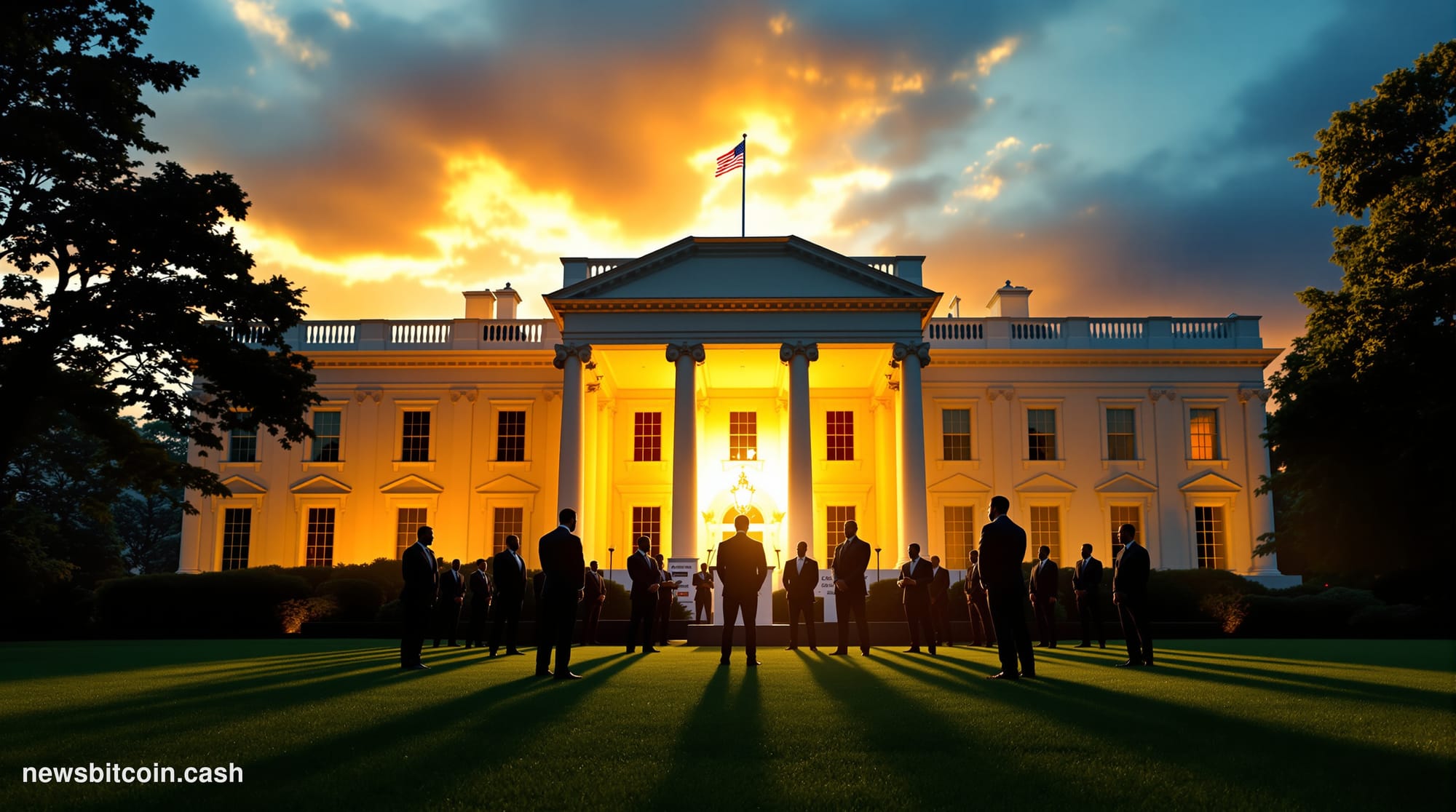
The cryptocurrency industry's integration into American political and cultural institutions reached a new milestone this weekend when World Liberty Financial distributed $250,000 in mixed martial arts bonuses using its proprietary stablecoin on the White House South Lawn. The Trump-backed financial platform funded the entire Performance of the Night bonus pool at UFC Freedom 250, marking the first time a presidential administration has hosted a cryptocurrency-denominated sports payment ceremony at the nation's executive residence.
The decision to conduct the bonus distribution in USD1, World Liberty Financial's dollar-pegged stablecoin, represents more than ceremonial symbolism. It demonstrates how quickly digital assets have moved from regulatory uncertainty to official government venue acceptance under the current administration. The $250,000 payment pool, while modest by institutional crypto standards, signals a fundamental shift in how traditional financial ceremonies might incorporate blockchain-based payment rails going forward.
World Liberty Financial's choice to use its own stablecoin infrastructure for these payments provides valuable real-world testing for the platform's payment capabilities. Unlike established stablecoins such as Tether or USD Coin, USD1 remains a relatively new entrant in the stablecoin ecosystem. Processing high-profile payments under the scrutiny of a White House ceremony creates both marketing opportunity and technical validation pressure for the platform's underlying blockchain infrastructure.
The UFC Freedom 250 event itself reflects the broader cultural alignment between combat sports and cryptocurrency adoption. Mixed martial arts organizations have increasingly embraced digital asset partnerships, from Crypto.com's arena naming rights deals to various exchange sponsorships across major fighting promotions. However, conducting the actual bonus payments in cryptocurrency, rather than simply displaying crypto branding, represents a more substantive integration of blockchain technology into sports compensation structures.
From a regulatory perspective, the White House venue choice carries significant implications for how federal agencies might approach stablecoin oversight. By hosting a USD1-denominated payment ceremony on government property, the administration effectively provides unofficial endorsement of the stablecoin's legitimacy as a payment mechanism. This could influence how agencies like the Securities and Exchange Commission and the Commodity Futures Trading Commission approach future stablecoin regulations, particularly regarding government contractor payments and federal venue usage policies.
The $250,000 bonus pool distribution also establishes precedent for how cryptocurrency payments might be structured in high-visibility government settings. Unlike private sector crypto adoption, which often emphasizes decentralization and regulatory arbitrage, this White House ceremony suggests government-adjacent crypto usage will likely emphasize compliance, transparency, and integration with existing financial reporting frameworks.
For World Liberty Financial, the UFC Freedom 250 sponsorship represents strategic positioning within the broader Trump administration's apparent cryptocurrency embrace. The company gains significant credibility by associating its stablecoin with official government venues, even as it maintains its private sector independence. This approach mirrors how traditional financial services companies have historically leveraged government relationships to enhance their institutional reputation and regulatory standing.
The broader implications extend beyond immediate political symbolism. As stablecoins gain acceptance in government-adjacent ceremonies and venues, they move closer to potential integration with federal payment systems and contractor disbursement mechanisms. The $250,000 UFC bonus pool, while ceremonial in nature, demonstrates the technical and logistical feasibility of conducting significant cryptocurrency payments within government oversight frameworks.
Written by the editorial team — independent journalism powered by Bitcoin News.