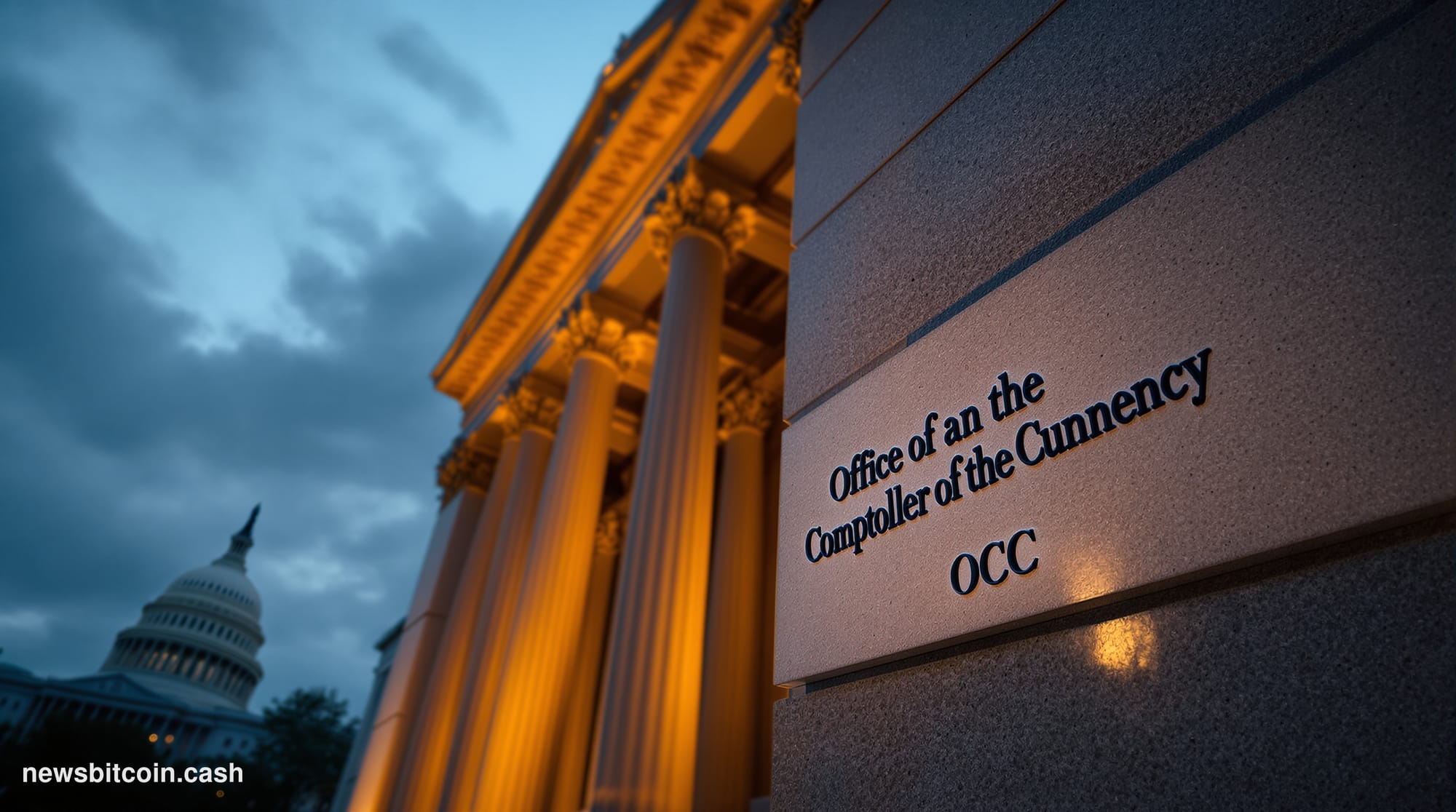
A Trump-affiliated cryptocurrency venture has crossed a threshold that once seemed distant for politically connected digital-asset firms: World Liberty Financial has received preliminary approval from the Office of the Comptroller of the Currency (OCC) for a national trust bank charter. The move is less a footnote in the ongoing crypto-regulation drama and more a structural inflection point — one that places a crypto-native entity with direct ties to the Trump political orbit squarely inside the federal banking architecture.
What a National Trust Bank Charter Actually Means
A national trust bank charter granted by the OCC is not a minor administrative milestone. It confers federal banking status, allowing the charter holder to operate across state lines under a unified regulatory framework rather than navigating the patchwork of state-by-state money transmission licenses that most crypto firms have historically relied upon. For World Liberty Financial, preliminary OCC approval represents the first formal gate cleared on the path to becoming a federally recognized financial institution — with all the legitimacy, oversight obligations, and competitive advantages that designation carries.
Trust bank charters, specifically, permit institutions to hold assets in custody, administer fiduciary accounts, and offer trust services, but typically restrict them from taking FDIC-insured deposits in the conventional sense. That nuance matters enormously in the crypto context: custody of digital assets is one of the most contested and legally murky services in the entire sector. A federally chartered trust bank operating under OCC supervision would have clarity that most crypto custodians currently lack — a structural edge that could reshape how institutional capital flows into digital assets.
The OCC's Posture Has Changed — and That Change Has Consequences
The OCC's crypto-friendly regulatory stance is not incidental context. It is the precondition that makes this approval legible. Under previous regulatory atmospheres, the OCC was considerably more cautious about extending federal banking infrastructure to crypto-native entities. The agency's current orientation — more receptive to digital asset innovation and more willing to engage with crypto firms seeking banking privileges — has created a window that World Liberty Financial has now moved through, at least in preliminary form.
This posture shift at the OCC has broader implications than any single charter approval. When the federal banking regulator signals openness to crypto entrants, it recalibrates the entire competitive dynamic of the financial sector. Traditional banks that have been slow to build digital asset infrastructure suddenly find themselves potentially sharing federal regulatory space with purpose-built crypto institutions. State regulators, meanwhile, must contend with the reality that federally chartered crypto trust banks can preempt certain state-level requirements — a dynamic that tends to accelerate regulatory harmonization, for better or worse.
The Political Dimension Cannot Be Ignored
World Liberty Financial's Trump affiliation is not peripheral to this story — it sits at the center of any honest analytical accounting of the situation. The approval arrives within a regulatory environment shaped in part by the policy priorities of an administration with documented ties to the project. Critics will argue, with some justification, that the proximity between the project's political connections and the regulator's hospitable stance warrants scrutiny. Supporters will counter that the OCC's criteria are procedural and that any qualifying applicant should be able to access the same approval pathway.
Both arguments can be simultaneously true in a structural sense: the process may be procedurally sound while the broader conditions enabling that process were themselves shaped by political priorities. That tension is not unique to crypto — it runs through the history of American financial regulation — but it is particularly acute here, where the founder's political identity and the regulatory environment are so visibly intertwined. Investors, competitors, and oversight bodies will be watching whether the OCC's preliminary approval translates into a full charter, and under what timeline and conditions.
What This Means for the Sector
For the broader digital asset industry, World Liberty Financial's preliminary OCC approval is a proof-of-concept moment — evidence that crypto-native firms can navigate the federal banking licensing process and emerge with the kind of institutional recognition that transforms a crypto project into a regulated financial infrastructure provider. Firms like Coinbase, which has long pursued banking-adjacent licensing strategies, will be watching closely. So will custody-focused players and any crypto firm that has been quietly assessing whether a federal trust bank charter is a viable strategic asset.
The OCC's willingness to extend preliminary approval to a Trump-linked crypto entity also sends a signal internationally: the United States federal banking apparatus is no longer categorically inhospitable to digital asset firms seeking systemic legitimacy. Whether that signal accelerates regulatory clarity or amplifies concerns about the politicization of financial oversight depends largely on what comes next — the terms of any full approval, the oversight conditions attached, and whether the OCC applies the same framework consistently to applicants without political tailwinds. For now, World Liberty Financial has cleared a gate. The real test is what it builds once inside.
Written by the editorial team — independent journalism powered by Bitcoin News.