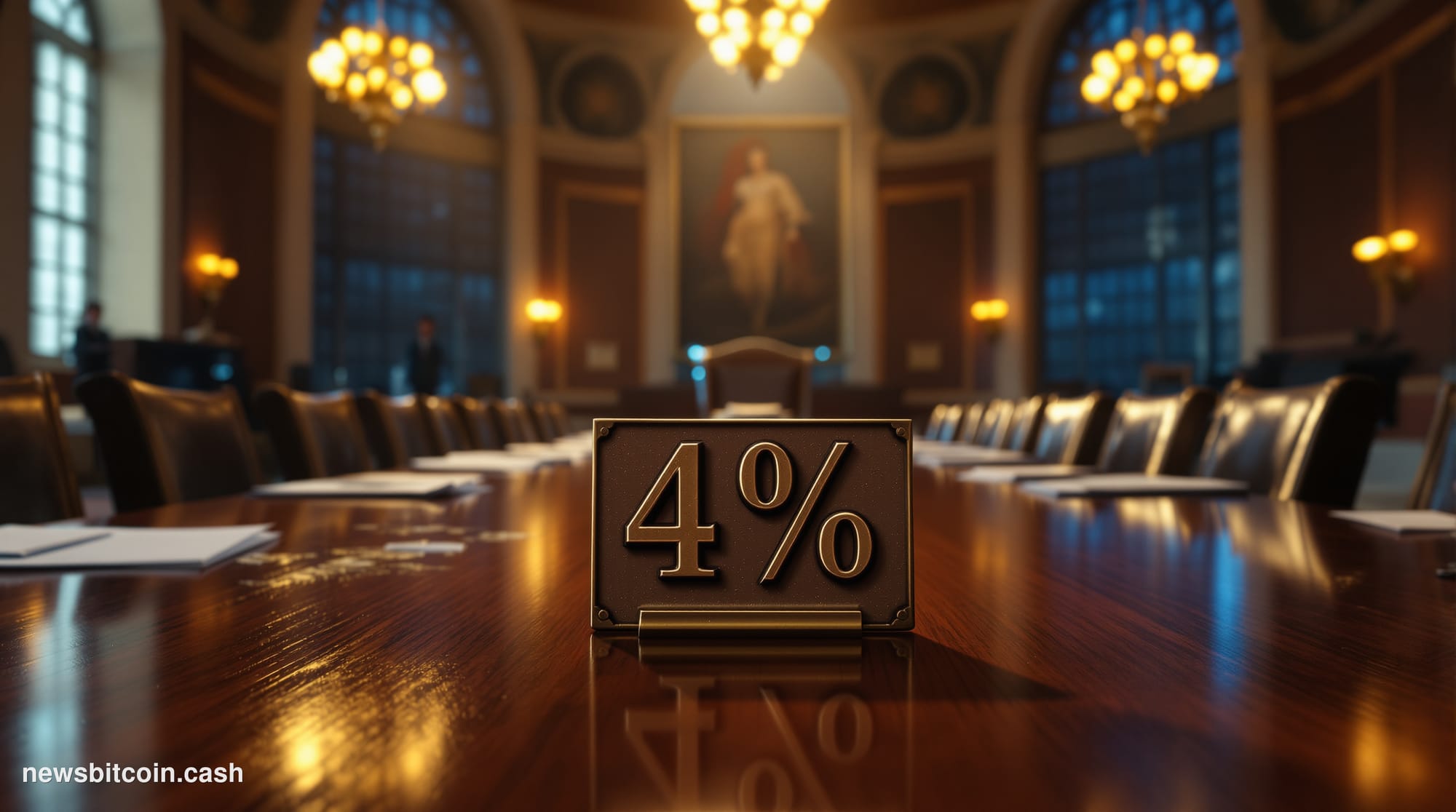
The collision between White House economic ambition and Federal Reserve independence has escalated into its sharpest confrontation in years. President Donald Trump has publicly demanded that the Fed cut its benchmark interest rate to 1% — a reduction of three full percentage points — just as newly installed Fed Chair Kevin Warsh delivered the first rate hike since 2023, pushing rates to 4% and signaling that further tightening may be on the way. For crypto markets, which have spent the better part of two years pricing in an eventual easing cycle, this institutional standoff carries consequences that go well beyond Washington politics.
The Hike That Started the Fight
Warsh's decision to lift the federal funds rate to 4% marks a significant inflection point. The move ended a prolonged pause in monetary tightening and immediately reset expectations across risk asset classes. More unsettling for markets was the accompanying signal: Warsh did not characterize this as a one-and-done adjustment. The threat of additional hikes has reintroduced a tightening narrative that many investors had assumed was buried. For Bitcoin and the broader digital asset ecosystem, higher-for-longer rates represent genuine headwinds — compressing liquidity, lifting the opportunity cost of holding non-yielding assets, and dampening the risk appetite that fuels speculative capital flows into crypto.
Trump's 1% Target: Political Pressure or Market Signal?
Trump's demand that rates fall to 1% is not a policy proposal in any formal sense — a sitting president has no statutory authority to direct the Federal Reserve's rate-setting decisions. But presidential pressure campaigns on the Fed have a documented history of influencing the institutional environment in which monetary policy gets made. The demand functions simultaneously as a political statement, a negotiating posture, and a market signal. A 1% federal funds rate would represent accommodation so extreme it has only been approached during crisis conditions — the post-2008 zero-bound era and the pandemic liquidity flood of 2020-2021. Both of those periods coincided with historic bull runs in digital assets. That historical context is not lost on crypto markets.
What Warsh's Independence Means for Crypto
Warsh, a former Fed governor and long-time advocate of price stability, has built his early tenure on a hawkish credibility platform. His willingness to hike in the face of direct presidential opposition signals that he intends to operate with genuine institutional independence — a posture that, if sustained, would keep rates structurally higher than either markets or the White House currently want. For Coinbase, Binance, and the institutional-grade custody and lending infrastructure that has been built in anticipation of mass capital inflows, the timing is awkward. Institutional adoption narratives rest partly on the premise that cheap capital eventually finds its way into alternative stores of value. A 4% rate floor — with upside risk — complicates that thesis materially.
The Three-Point Gap and Its Implications
The arithmetic of the dispute is stark. Trump wants rates at 1%. Warsh has just set them at 4% and is pointing higher. That is a minimum three-point chasm between the executive branch's preferred monetary stance and the direction the independent central bank is actually traveling. Historically, such divergences have produced volatility across every asset class. In the crypto context, the divergence creates a peculiar dual narrative: on one hand, a high-rate environment pressures leveraged positions and reduces speculative inflows; on the other, a politically compromised Fed — or the perception of one — historically boosts the Bitcoin-as-hard-money thesis. Investors seeking assets outside the direct reach of political monetary manipulation have consistently viewed Bitcoin through exactly that lens during periods of institutional stress.
What This Means for Digital Asset Investors
The Fed's first hike since 2023 and the White House's aggressive public response have jointly introduced a macro uncertainty premium that will persist until one of two things happens: Warsh blinks and reverses course, or Trump's pressure campaign fails and the Fed's independence is reaffirmed. Either outcome reshapes the investment landscape. If Warsh holds at 4% or moves higher, expect continued pressure on leveraged crypto positions and near-term headwinds for altcoin liquidity. If political pressure ultimately forces a pivot toward Trump's 1% target, the resulting liquidity surge could trigger the kind of risk-on environment that has historically produced outsized crypto rallies. The gap between those two outcomes — three full percentage points of rate policy — is now the single most important macro variable for digital asset markets to monitor. The conflict between the Oval Office and the Eccles Building is, for the moment, crypto's most consequential macro story.
Written by the editorial team — independent journalism powered by Bitcoin News.