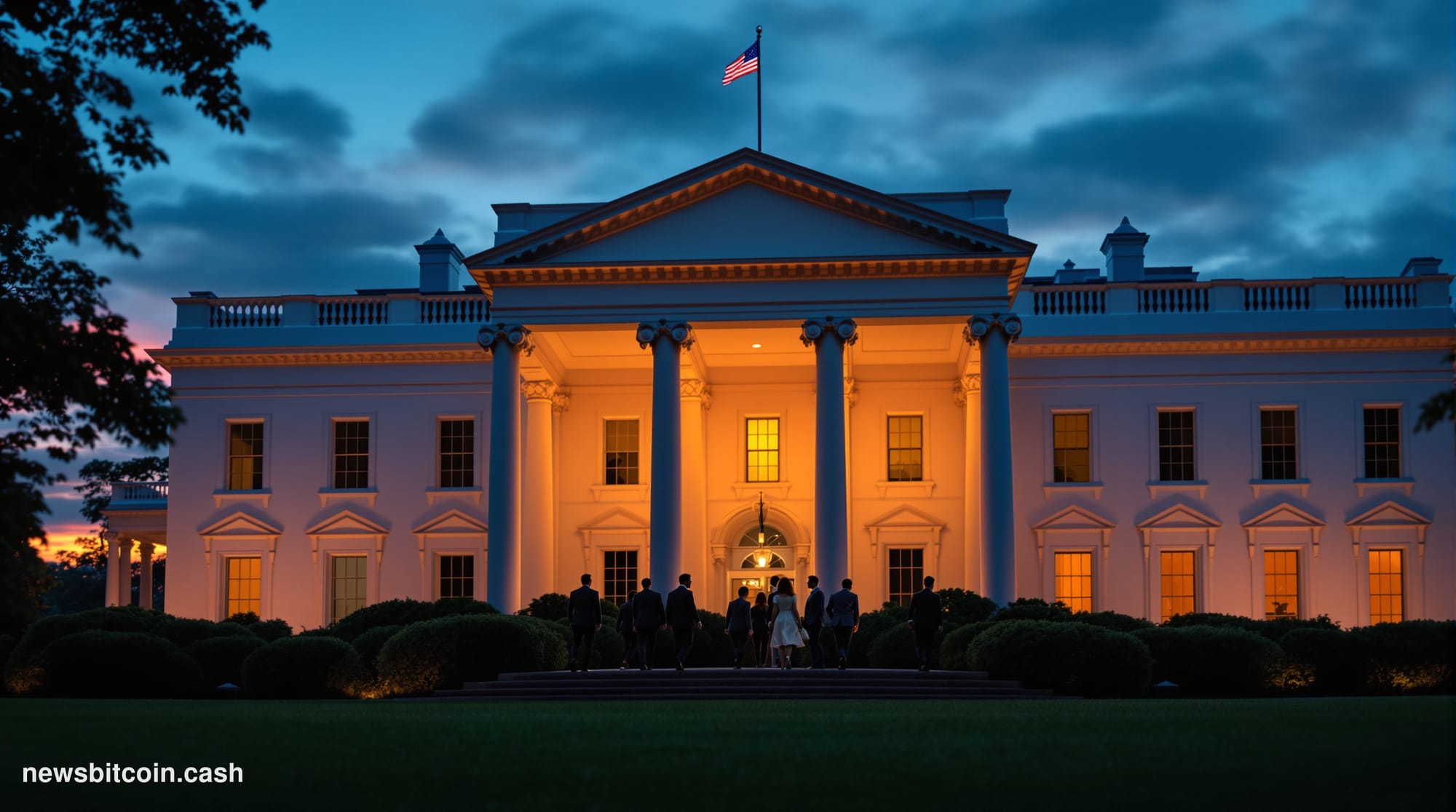
The cryptocurrency industry faces a stark regulatory crossroads as new data reveals a dramatic divide between political administrations and their relationship with digital assets. Over one in five officials in the Trump administration hold cryptocurrency investments totaling $193 million, while zero Biden Cabinet members report any crypto ownership—a disparity that could fundamentally reshape how Washington approaches this $1.7 trillion market.
This financial exposure gap extends far beyond personal investment preferences. When policymakers have skin in the game, their regulatory calculus inevitably shifts. The $193 million in combined crypto holdings across Trump administration officials represents more than portfolio diversification—it signals a potential alignment between personal financial interests and policy outcomes that could either stabilize or destabilize the digital asset ecosystem depending on execution.
The Biden administration's complete absence from crypto ownership presents its own regulatory implications. While this distance might suggest objectivity in policymaking, it also raises questions about whether key decision-makers fully grasp the technological and economic complexities they're attempting to regulate. The Securities and Exchange Commission's enforcement-heavy approach under Gary Gensler has already demonstrated how regulatory uncertainty can crater innovation and push companies offshore.
Historical precedent suggests that personal financial exposure among government officials often correlates with more nuanced regulatory frameworks. When lawmakers and Cabinet members understand markets from an investor's perspective, they tend to craft policies that balance innovation protection with consumer safeguards rather than defaulting to restrictive measures. The Trump team's substantial crypto exposure could translate into more predictable regulatory guidelines that allow Coinbase, Kraken, and other major exchanges to operate with greater certainty.
However, this financial alignment also introduces potential conflicts of interest that could undermine regulatory credibility. Critics will inevitably question whether policy decisions prioritize market stability and consumer protection or serve to protect officials' investment portfolios. The crypto industry has already weathered multiple scandals involving regulatory capture and preferential treatment—adding $193 million in government holdings to this dynamic creates new vulnerabilities.
The market implications extend beyond domestic policy. International competitors are watching closely as the United States struggles to establish coherent crypto regulation. The European Union's Markets in Crypto-Assets (MiCA) framework and the United Kingdom's emerging digital asset policies have gained momentum partly due to American regulatory uncertainty. A Trump administration with significant crypto exposure might accelerate clearer guidelines, but it could also trigger international scrutiny about fair market practices.
Institutional investors have repeatedly cited regulatory clarity as their primary concern when allocating capital to digital assets. BlackRock's successful Bitcoin exchange-traded fund launch demonstrated massive institutional appetite once regulatory pathways become clear. If Trump administration officials' crypto holdings translate into more defined regulatory frameworks, it could unlock billions in institutional capital that has remained sidelined due to compliance uncertainties.
The $193 million figure also reveals how mainstream crypto adoption has become among political elites. This represents a generational shift from traditional investment portfolios toward digital assets, suggesting that crypto has moved beyond speculative trading into serious wealth management strategies. When government officials treat cryptocurrency as a legitimate asset class worthy of significant allocation, it sends powerful signals to both institutional investors and international regulators.
What this means for the broader digital asset ecosystem depends largely on implementation. The Trump team's crypto exposure could deliver the regulatory clarity that has eluded the industry for years—or it could create new conflicts that further complicate an already complex landscape. Either way, the stark contrast with the Biden administration's zero crypto ownership ensures that the next presidential term will mark a definitive turning point for American cryptocurrency policy, with implications that extend far beyond Washington's traditional power corridors.
Written by the editorial team — independent journalism powered by Bitcoin News.