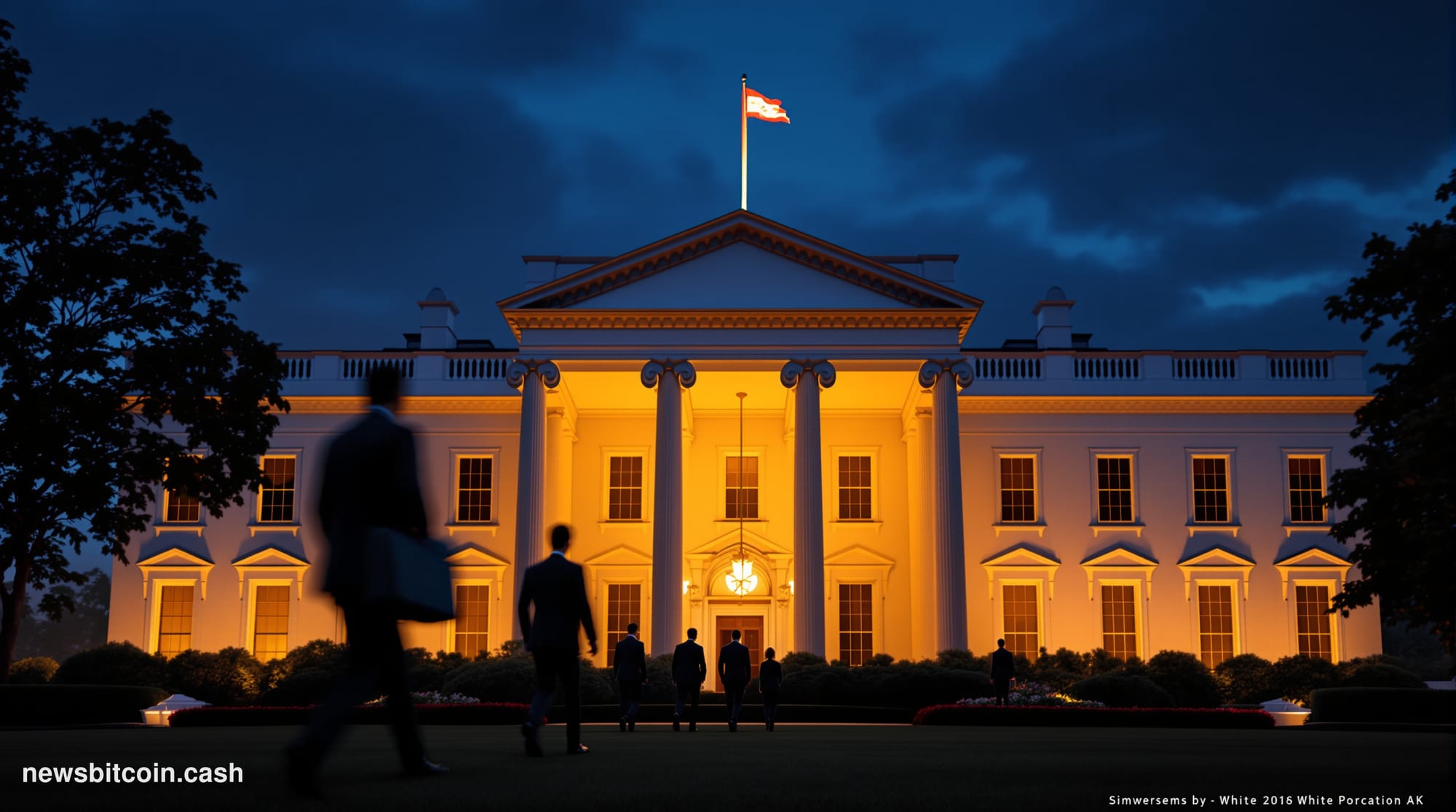
President Donald Trump is preparing to host a cohort of cryptocurrency industry executives at the White House, a gathering that carries outsized political weight given the timing: it comes directly in the wake of a stalled Senate vote on the Clarity Act, the landmark digital asset legislation that the industry has been lobbying hard to advance. The meeting signals that the executive branch is unwilling to let congressional gridlock define the pace of crypto policy, and that the White House views direct industry engagement as a lever worth pulling.
The Clarity Act had been positioned as one of the most consequential pieces of digital asset legislation in American history, designed to delineate regulatory jurisdiction between the Securities and Exchange Commission and the Commodity Futures Trading Commission over cryptocurrencies. Its failure to advance to a full vote has created an uncomfortable vacuum — one that both the industry and the administration appear eager to fill through alternative channels, including, apparently, the kind of face-to-face diplomacy that only a White House invitation can provide.
Executive Pressure Fills a Legislative Void
The stalling of the Clarity Act is more than a procedural setback. It represents a fracture in what had been a broadly optimistic narrative around crypto regulation under the Trump administration — a narrative built on the premise that 2025 and 2026 would finally deliver the regulatory clarity that the digital asset industry has sought for the better part of a decade. When legislation bogs down in committee or fails to find sufficient floor support, the industry's fallback has historically been executive engagement, and the White House appears to be leaning into that role deliberately.
Hosting crypto executives directly at 1600 Pennsylvania Avenue is not a casual gesture. These meetings carry symbolic and practical weight: they signal presidential attention, they give industry leaders a chance to make their case directly to the center of executive power, and they often precede executive orders, regulatory guidance, or renewed legislative pushes. The Trump administration has demonstrated a clear affinity for the digital asset sector throughout its tenure, and this meeting appears designed to reassure an industry rattled by legislative uncertainty that the White House remains a committed ally.
Who Sits at the Table Matters
While the specific roster of executives attending has not been detailed in full, the fact that crypto leaders are being summoned to the White House rather than dispatched to agency roundtables or congressional hearings speaks to the elevated status the sector now holds in American political economy. The executives likely to be in the room represent a cross-section of the ecosystem — exchange operators, blockchain infrastructure companies, stablecoin issuers, and possibly decentralized finance protocol stakeholders — each with distinct regulatory anxieties and legislative priorities.
For exchange operators like those running Coinbase or Binance's U.S. arm, the Clarity Act's stall is particularly consequential, as jurisdictional ambiguity between federal regulators continues to complicate compliance planning and product development. Stablecoin issuers, meanwhile, have been navigating their own parallel legislative track, and any White House meeting creates an opportunity to push for coordinated action across multiple fronts simultaneously.
The Clarity Act's Rocky Road
The Clarity Act was conceived as a comprehensive framework that would end years of regulatory ambiguity by drawing clear lines around which digital assets qualify as securities and which fall under commodities law. Its architects argued that without such clarity, American innovation in the sector would continue migrating offshore to more permissive jurisdictions. Despite strong industry backing and early bipartisan interest, the bill's path through Congress has proven difficult, reflecting deeper political disagreements about the appropriate scope of federal oversight over decentralized systems.
The stalled vote is a reminder that even in a politically favorable environment for crypto, translating industry enthusiasm and executive goodwill into durable legislation is a grinding, uncertain process. Congressional calendars, competing priorities, and the structural complexity of regulating a technology that challenges existing legal categories all conspire to slow progress even when the political will nominally exists.
What This Means
The White House meeting is best understood as a pressure valve and a strategic reset. By convening crypto executives directly, the Trump administration is sending a message to both the industry and Congress: the stall on the Clarity Act is not the end of the road, and the executive branch retains tools — moral authority, bully pulpit, and the machinery of regulatory agencies that ultimately answer to the president — to advance the digital asset agenda even when the legislative path narrows. For the industry, the invitation is both reassurance and an implicit call to action: show up, make the case, and help the administration build the political momentum needed to get the Clarity Act, or something like it, back on track. The stakes for American digital asset competitiveness are high enough that neither side can afford to let this moment pass without results.
Written by the editorial team — independent journalism powered by Bitcoin News.