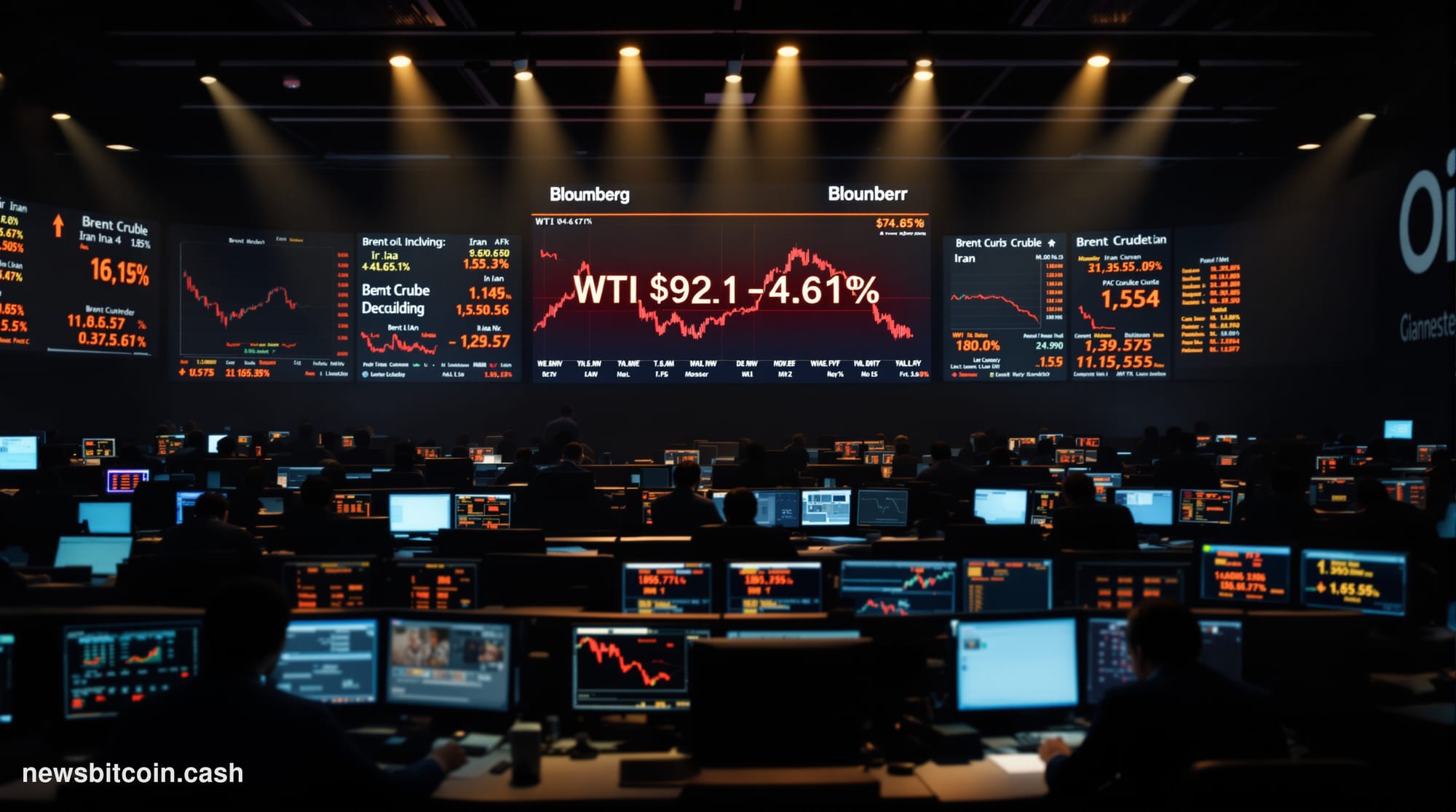
Energy markets delivered a sharp rebuke to geopolitical risk premiums Monday as President Donald Trump's measured approach to Iran nuclear negotiations triggered a broad-based sell-off across the oil complex. The president's signal of "orderly progress" while simultaneously instructing his team to avoid rushing toward a deal sparked immediate repositioning among commodity traders who had been betting on prolonged Middle East tensions.
West Texas Intermediate crude futures plunged 4.61% to settle at $92.1 per barrel, while Brent crude, the international benchmark, dropped 4.44% to $98.9. The synchronized decline across both major oil contracts suggests institutional investors are rapidly unwinding positions that had priced in elevated geopolitical risk. Gasoline futures followed suit, falling 4% to $3.3 as the selling pressure cascaded through interconnected energy markets.
The market reaction underscores how deeply geopolitical risk premiums had become embedded in oil pricing throughout the current administration's approach to Iran. Trump's latest comments represent a notable shift from earlier rhetoric that had kept traders on edge about potential supply disruptions from the Persian Gulf region. By signaling patience rather than urgency in nuclear talks, the president effectively removed a key pillar supporting elevated oil prices.
For digital asset markets, the oil sell-off carries implications that extend beyond traditional energy correlations. Bitcoin and other cryptocurrencies have increasingly tracked broader risk sentiment, particularly during periods of geopolitical uncertainty. The rapid unwinding of oil risk premiums could signal a broader shift toward risk-on positioning that typically benefits digital assets, though the correlation remains inconsistent and subject to crypto-specific dynamics.
Energy sector volatility also impacts the fundamental economics of cryptocurrency mining operations, particularly Bitcoin mining facilities that represent significant electricity consumers. Lower oil prices generally translate to reduced energy costs across the grid, potentially improving mining profitability margins for operations in regions where electricity pricing correlates with hydrocarbon costs. However, the relationship varies significantly by geographic region and local energy market structures.
The broader commodities complex followed oil lower as traders reassessed risk-reward calculations across multiple asset classes. The synchronized selling suggests algorithmic trading systems and institutional funds were reducing exposure to traditional inflation hedges and geopolitical risk assets. This dynamic could create interesting cross-currents for Bitcoin, which occupies an ambiguous position as both a risk asset and potential inflation hedge depending on market conditions.
Trump's diplomatic strategy appears designed to maintain leverage while avoiding the market disruption that could accompany rushed negotiations. By explicitly telling his team not to rush a deal, the president is attempting to thread the needle between progress and pressure. This approach has immediate implications for energy markets but could establish a template for how geopolitical risk gets priced across asset classes more broadly.
The magnitude of Monday's oil decline—more than 4% across major benchmarks—suggests markets had become overextended on geopolitical risk assumptions. Professional traders often describe such moves as "air pocket" events where concentrated positioning creates outsized price movements when underlying narratives shift. The question now becomes whether this represents a temporary recalibration or the beginning of a more sustained repricing of geopolitical risk across energy markets.
Written by the editorial team — independent journalism powered by Bitcoin News.