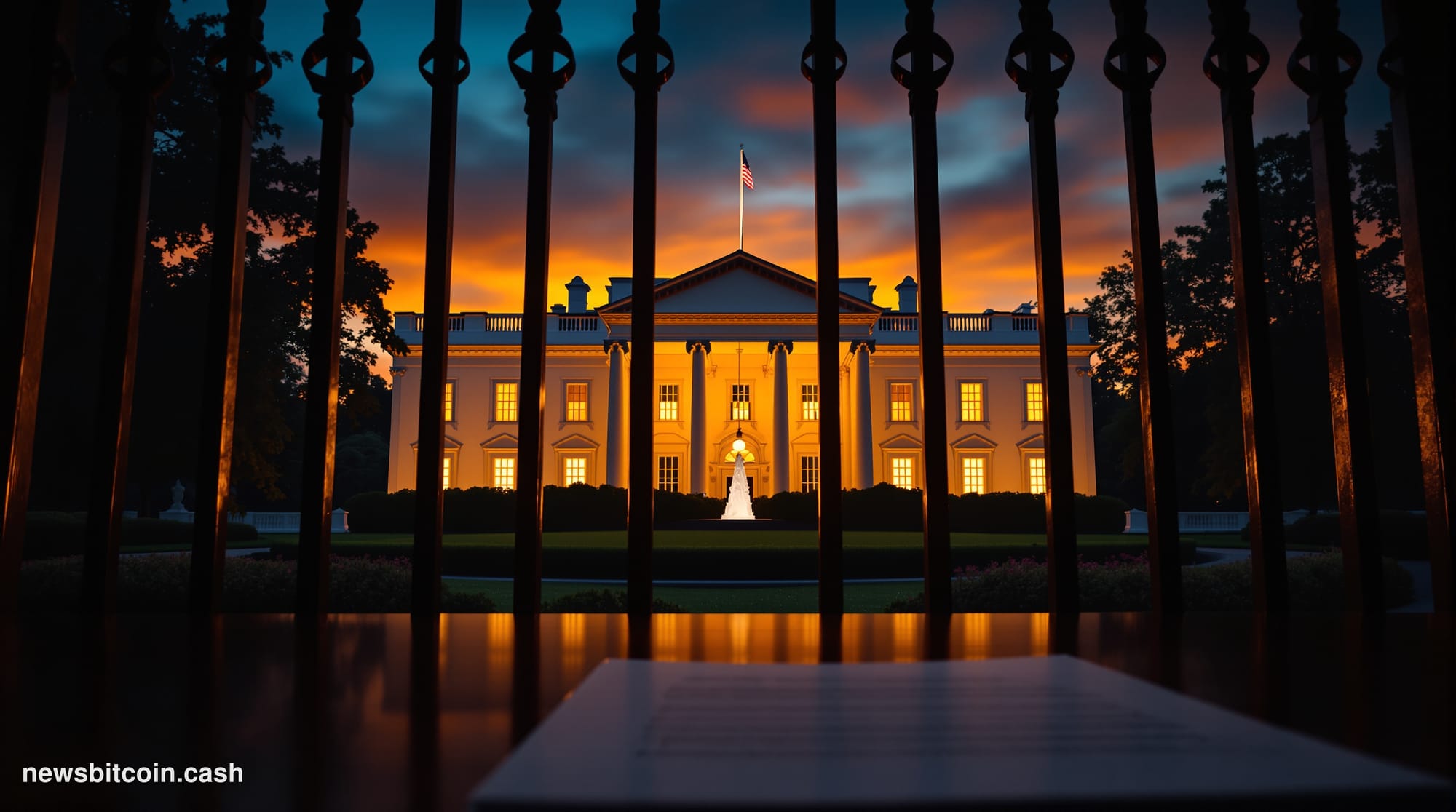
After months of legislative limbo, President Donald Trump is moving to restart negotiations on the Crypto Clarity Act, with White House sources signaling the talks could resume within the next two days. The development marks a pivotal moment for an industry that has spent years navigating a fragmented, often hostile regulatory environment — and signals that digital assets may finally be on the verge of a federal framework with teeth.
The Crypto Clarity Act, if passed, would represent one of the most significant pieces of federal cryptocurrency legislation in American history. The core promise of the bill is in its name: clarity. For too long, exchanges, developers, institutional investors, and retail participants have been forced to operate under a patchwork of guidance, enforcement actions, and contradictory court rulings. A coherent statutory framework would change the foundational conditions under which the entire industry operates.
The timing of Trump's renewed engagement is not incidental. August 2026 finds the digital asset market at a crossroads — caught between surging institutional interest and persistent uncertainty over which tokens qualify as securities, how decentralized finance protocols should be treated, and what compliance obligations apply to cross-border transactions. Market participants have consistently cited regulatory ambiguity as a primary drag on both capital formation and product innovation. Restarting negotiations signals that the administration has heard that message.
What exactly is being negotiated remains tightly held. But the stakes are well understood across the industry. The central questions likely on the table include jurisdictional authority — specifically whether the Securities and Exchange Commission or the Commodity Futures Trading Commission holds primary oversight over digital assets — as well as disclosure requirements for token issuers, custody standards for institutional players, and treatment of decentralized autonomous organizations. Each of these issues carries enormous downstream consequences for how companies build, fundraise, and operate in the United States.
The potential market impact of a successful negotiation cannot be overstated. Regulatory clarity is widely regarded as one of the last remaining structural barriers to deeper institutional participation in cryptocurrency markets. Pension funds, insurance companies, and sovereign wealth vehicles have shown appetite for digital asset exposure, but compliance officers and legal departments have consistently blocked full engagement in the absence of clear rules. A signed Crypto Clarity Act would remove that bottleneck almost immediately, with likely effects on market confidence and capital flows that could dwarf any single product launch or exchange listing.
Innovation is the other dimension. The United States has watched a steady stream of developer talent, protocol launches, and venture capital redirect toward more crypto-friendly jurisdictions in the European Union — where the Markets in Crypto-Assets Regulation, or MiCA, has provided a workable if imperfect framework — as well as Singapore, the United Arab Emirates, and elsewhere. Every month of domestic regulatory uncertainty is another month of competitive disadvantage. If the Crypto Clarity Act reaches a negotiated form that both chambers of Congress can pass, it could trigger a meaningful reversal of that talent and capital flight.
There are, of course, reasons for caution. Legislative negotiations in Washington rarely proceed on the timelines announced, and the crypto industry has seen promising bills stall, fragment, or get absorbed into broader political battles before. The two-day window signaled for resumption of talks is a starting gun, not a finish line. Disagreements over SEC versus CFTC jurisdiction alone have derailed previous legislative attempts. Consumer protection provisions, anti-money laundering obligations, and stablecoin classification are additional fault lines that negotiators will need to navigate carefully before any bill could advance to a floor vote.
Still, the signal from the Trump administration carries weight. Presidential engagement in legislative negotiations — particularly on a technical and politically complex issue like crypto regulation — typically accelerates timelines and forces stakeholders to the table in ways that committee-level drafting processes do not. The fact that the White House is directly involved suggests a level of political priority that earlier crypto legislation proposals never enjoyed.
For the digital asset industry, the next several days represent a moment to watch closely. If negotiations resume as signaled and produce even a preliminary framework for the Crypto Clarity Act, the downstream effects — on market structure, institutional access, innovation incentives, and American competitiveness in a global digital economy — could be profound and lasting.
Written by the editorial team — independent journalism powered by Bitcoin News.