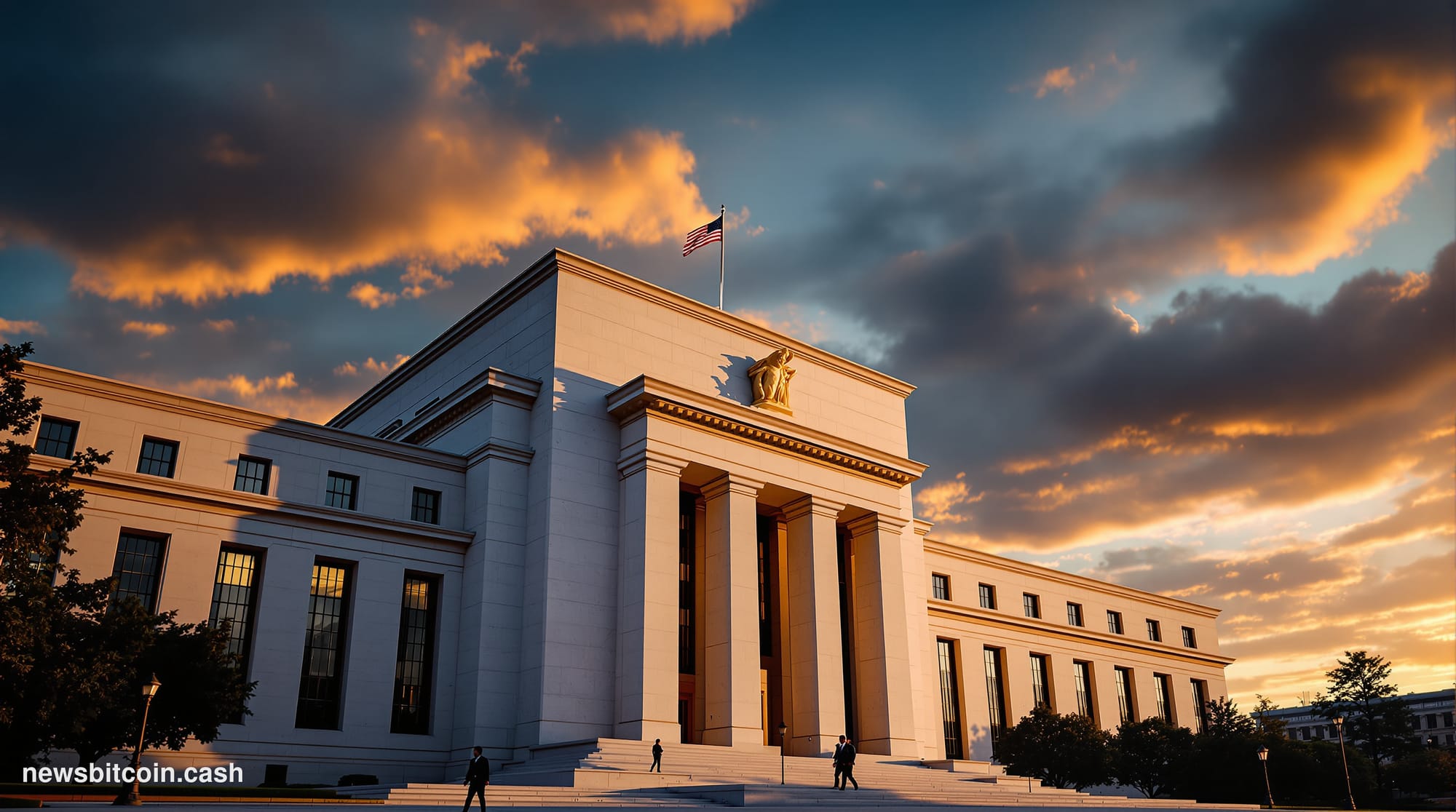
Traditional markets delivered a brutal reminder of digital assets' correlation with risk sentiment as the NASDAQ posted its biggest point drop on record while the S&P 500 hemorrhaged $1.8 trillion in market value. The unprecedented selloff exposes cryptocurrency's persistent vulnerability to monetary policy expectations, setting the stage for potential contagion across digital asset markets as Federal Reserve policy decisions grow increasingly complex.
The scale of the traditional market rout cannot be understated. When the S&P 500 sheds $1.8 trillion in a single session, it represents a tectonic shift in risk appetite that historically cascades through cryptocurrency markets with amplified force. The NASDAQ's record point decline signals that even the most established technology companies cannot escape the gravitational pull of interest rate expectations, a dynamic that places speculative digital assets in an even more precarious position.
This selloff crystallizes the fundamental challenge facing cryptocurrency markets in 2026: their evolution from speculative trading vehicles to institutional assets has paradoxically increased their sensitivity to macroeconomic forces. As pension funds, endowments, and corporate treasuries have allocated portions of their portfolios to digital assets, crypto markets have inherited traditional finance's reflexive response to monetary policy signals. The days when Bitcoin and Ethereum could decouple from broader market dynamics appear increasingly distant.
The Federal Reserve's policy calculus has grown notably more complex as strong job data collides with market expectations for monetary accommodation. This tension creates a particularly hostile environment for risk assets, as investors must simultaneously navigate the prospect of sustained higher interest rates while parsing conflicting economic signals. For cryptocurrency markets, this uncertainty translates into heightened volatility and potential capital flight toward perceived safe havens.
The vulnerability of risk assets to interest rate expectations, as highlighted by the market carnage, suggests that cryptocurrency investors should prepare for extended periods of correlation with traditional market stress. Unlike previous crypto winter cycles driven by sector-specific factors like exchange collapses or regulatory crackdowns, the current environment reflects broader macroeconomic pressures that could persist regardless of positive developments within the digital asset ecosystem.
Institutional adoption, once heralded as cryptocurrency's path to stability and legitimacy, may actually amplify downside volatility during periods of monetary tightening. As traditional financial institutions face margin calls and portfolio rebalancing requirements, cryptocurrency holdings often become the first assets liquidated due to their perceived higher risk profiles and relative ease of disposal. This dynamic creates a feedback loop where institutional adoption increases both upside potential during risk-on periods and downside vulnerability during risk-off environments.
The timing of this traditional market meltdown coincides with cryptocurrency's ongoing struggle to establish clear regulatory frameworks and sustainable business models beyond speculative trading. Major exchanges like Coinbase and infrastructure providers face the dual challenge of navigating regulatory uncertainty while managing operations in an environment where their core asset classes remain hostage to Federal Reserve policy signals.
For cryptocurrency markets moving forward, the trillion-dollar traditional market selloff serves as a stark reminder that digital assets have not achieved the macroeconomic independence that early advocates envisioned. Instead, they have become sophisticated instruments that amplify rather than hedge traditional market movements. As the Federal Reserve weighs policy options against a backdrop of strong employment data and persistent inflation concerns, cryptocurrency investors must recalibrate expectations for a market environment where monetary policy, rather than technological innovation, may drive price action for the foreseeable future.
Written by the editorial team — independent journalism powered by Bitcoin News.