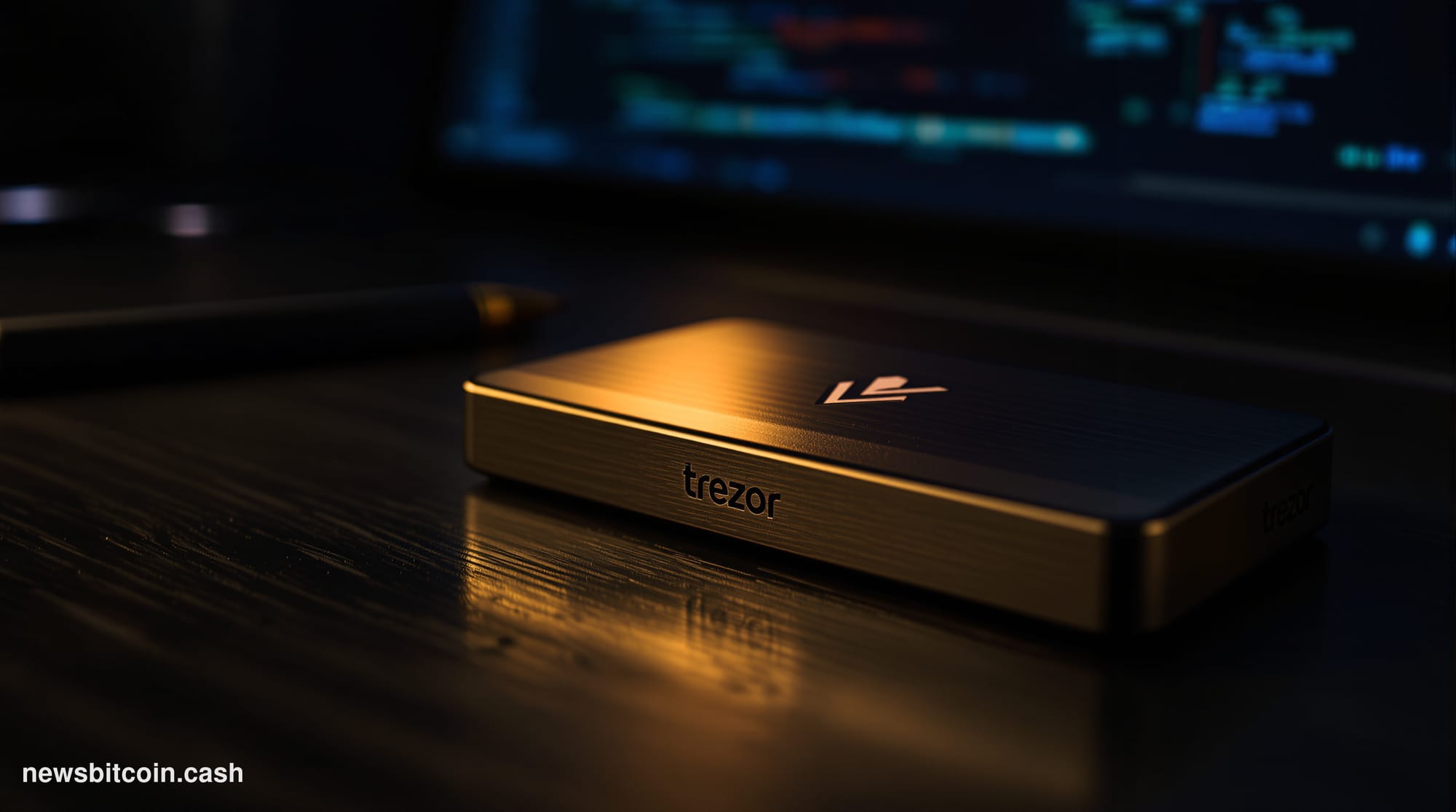
The hardware wallet industry faces fresh scrutiny as Trezor and chip manufacturer Tropic Square publicly disclosed a vulnerability in the TROPIC01 chip that powers the company's Safe 7 wallet. The flaw was uncovered during a security audit conducted by Ledger Donjon, the research arm of Trezor's primary competitor, highlighting the complex dynamics of security research in the cryptocurrency hardware space.
Despite the vulnerability disclosure, Trezor maintains that the Safe 7 wallet and user funds remain secure, positioning the revelation as part of responsible disclosure practices rather than an immediate threat to users. The company's response underscores the delicate balance hardware wallet manufacturers must strike between transparency and user confidence when security flaws emerge in their products.
Cross-Competitor Security Research
The involvement of Ledger Donjon in discovering a Trezor vulnerability represents an unusual but not unprecedented scenario in the hardware wallet ecosystem. Security research teams routinely examine competitor products as part of broader industry security assessments, often leading to discoveries that benefit the entire ecosystem rather than providing competitive advantages. Ledger's disclosure through proper channels rather than public exploitation demonstrates the maturity of security practices within the industry.
This collaborative approach to security research, even between competitors, reflects the broader cryptocurrency community's understanding that hardware wallet vulnerabilities pose systemic risks to the entire ecosystem. When users lose confidence in hardware storage solutions due to security failures, the impact extends far beyond individual manufacturers to affect adoption and trust in cryptocurrency infrastructure generally.
TROPIC01 Chip Architecture
The vulnerability affects the TROPIC01 chip, a critical component developed by Tropic Square specifically for cryptocurrency applications. While Trezor and Tropic Square have not detailed the exact nature of the flaw, chip-level vulnerabilities in hardware wallets typically involve either side-channel attacks that could expose cryptographic operations or firmware vulnerabilities that might allow unauthorized access to private key generation or storage processes.
Hardware security chips represent the foundation of trust for cryptocurrency storage devices, handling the most sensitive operations including private key generation, transaction signing, and secure element isolation. Any vulnerability at this level requires immediate attention, even when manufacturers assess the practical risk to users as minimal under normal operating conditions.
Safe 7 Wallet Impact Assessment
Trezor's assertion that user funds remain safe despite the chip vulnerability suggests the company has implemented additional security layers that mitigate the potential impact of the TROPIC01 flaw. Modern hardware wallets typically employ defense-in-depth strategies, where multiple independent security mechanisms protect user assets even if individual components experience vulnerabilities.
The Safe 7 wallet, as Trezor's flagship device, incorporates multiple security features beyond the base chip functionality, including secure boot processes, encrypted communication protocols, and physical tamper resistance. These additional protections likely provide sufficient security barriers to prevent exploitation of the underlying chip vulnerability under normal usage scenarios.
Industry Disclosure Standards
The coordinated disclosure between Trezor, Tropic Square, and Ledger Donjon exemplifies evolving standards for security vulnerability management in the cryptocurrency hardware sector. Rather than keeping vulnerabilities secret or exploiting them for competitive advantage, leading manufacturers increasingly embrace responsible disclosure practices that prioritize user security over corporate interests.
This approach mirrors established practices in the broader cybersecurity industry, where coordinated vulnerability disclosure has become the standard for handling security flaws in widely-deployed systems. The cryptocurrency hardware wallet sector's adoption of these practices signals increasing maturity and professionalization within an industry that handles billions of dollars in user assets.
The disclosure also highlights the importance of ongoing security research and regular auditing in maintaining trust within the hardware wallet ecosystem. As cryptocurrency adoption expands and hardware wallets become mainstream consumer products, manufacturers face increasing pressure to demonstrate not just initial security but continuous vigilance against emerging threats and attack vectors.
Written by the editorial team — independent journalism powered by Bitcoin News.