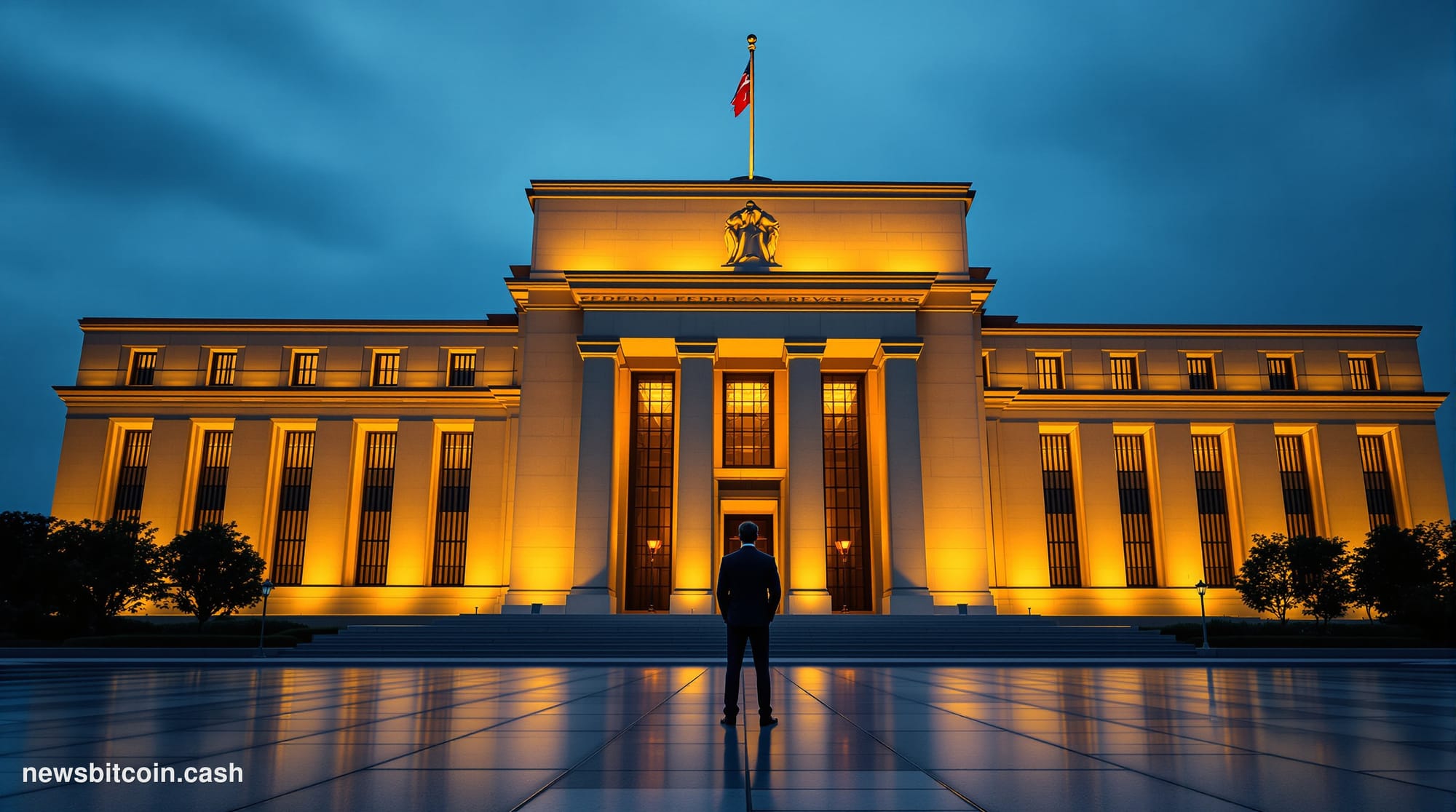
On Wednesday, September 16, 2026, Fundstrat Global Advisors co-founder Tom Lee made a pointed call: the Federal Reserve (Fed) would hike interest rates, and far from being a market killer, that move would serve as the launchpad for a substantial equity rally stretching through the end of the year. It is a counterintuitive thesis that cuts against the instinct of many retail and institutional investors who have long treated rate hikes as unambiguous headwinds for risk assets — including cryptocurrencies.
The Contrarian Logic Behind the Call
Lee's argument rests on the idea that markets hate uncertainty far more than they hate tighter monetary policy. When the Fed's next move is unknown, capital tends to sit on the sidelines and volatility compresses upside just as reliably as it does downside. A confirmed rate hike, in Lee's framework, resolves that uncertainty. Once investors know the policy trajectory, the argument goes, they can reprice equities with confidence — and history suggests that clarity, even painful clarity, often unleashes pent-up buying pressure.
This is not a new playbook for Lee, who has built a reputation as one of Wall Street's more bullish macro strategists. His track record is mixed, as any honest assessment must acknowledge, but he has been correct in notable instances where consensus expected rate-driven sell-offs that never materialized at the severity predicted. The 2026 environment, characterized by persistent inflation concerns and a Fed that has signaled willingness to hold rates higher for longer, gives his thesis both weight and risk in equal measure.
What a Rate Hike Means for Crypto Markets
For Bitcoin and the broader digital asset market, Lee's prediction carries significant downstream implications. Crypto has increasingly traded in correlation with growth equities — particularly since the institutional adoption wave of the early 2020s brought large allocators into the asset class. If Lee is right and equities stage a major year-end rally, Bitcoin and select altcoins would likely catch a meaningful portion of that upside.
The mechanism is relatively straightforward: a risk-on environment lifts allocations across the spectrum of growth assets. Institutional portfolios that treat digital assets as a satellite allocation tend to increase exposure when equity benchmarks are rising and portfolio buffers are healthy. Conversely, the reverse relationship has been brutal for crypto in past tightening cycles where equity markets failed to rally as expected.
There is also the dollar dynamic to consider. Rate hikes historically strengthen the U.S. dollar by widening yield differentials with other currencies. A stronger dollar tends to pressure dollar-denominated commodities and risk assets — including Bitcoin. If Lee's equity rally thesis plays out despite the hike, it would suggest that the market is discounting the dollar-strength headwind in favor of the clarity-and-growth narrative. That would be a meaningful signal for crypto specifically.
Year-End Seasonality and the Analyst's Edge
Lee's year-end framing is deliberate. The fourth quarter has historically been one of the strongest periods for both equities and Bitcoin, with the so-called "Santa Claus rally" baked into the seasonal expectations of professional allocators. Coupling that seasonal tailwind with a cleared policy overhang — if the hike delivers the certainty Lee expects — creates a plausible case for an accelerated move higher across risk asset classes.
Crypto traders will be watching closely. Bitcoin's price behavior in the hours and days following a Fed decision has become one of the most closely observed macro-crypto correlation signals in the market. Options markets typically price in elevated volatility around Federal Open Market Committee (FOMC) meetings, and the resolution of that volatility — in either direction — often produces outsized moves in Bitcoin relative to equities, given the asset's thinner liquidity and higher beta.
What This Means
Tom Lee's rate-hike-as-catalyst argument is a reminder that macro calls in 2026 are rarely simple. A Fed that hikes into a fragile economy produces one outcome; a Fed that hikes to stamp out residual inflation in an otherwise resilient growth environment produces another entirely. Lee is clearly betting on the latter scenario — that the underlying economy can absorb tighter policy while markets re-rate higher on the removal of uncertainty. For Bitcoin holders and crypto portfolio managers, the practical implication is to watch equity price action closely in the days following today's decision. If the major indices confirm Lee's rally thesis, the probability of a corresponding crypto leg higher increases substantially. If equities disappoint, crypto's correlation to growth assets means it will not be sheltered from the fallout. The Fed's move may be the known variable; how markets interpret its meaning is the unknown that will define the fourth quarter of 2026.
Written by the editorial team — independent journalism powered by Bitcoin News.