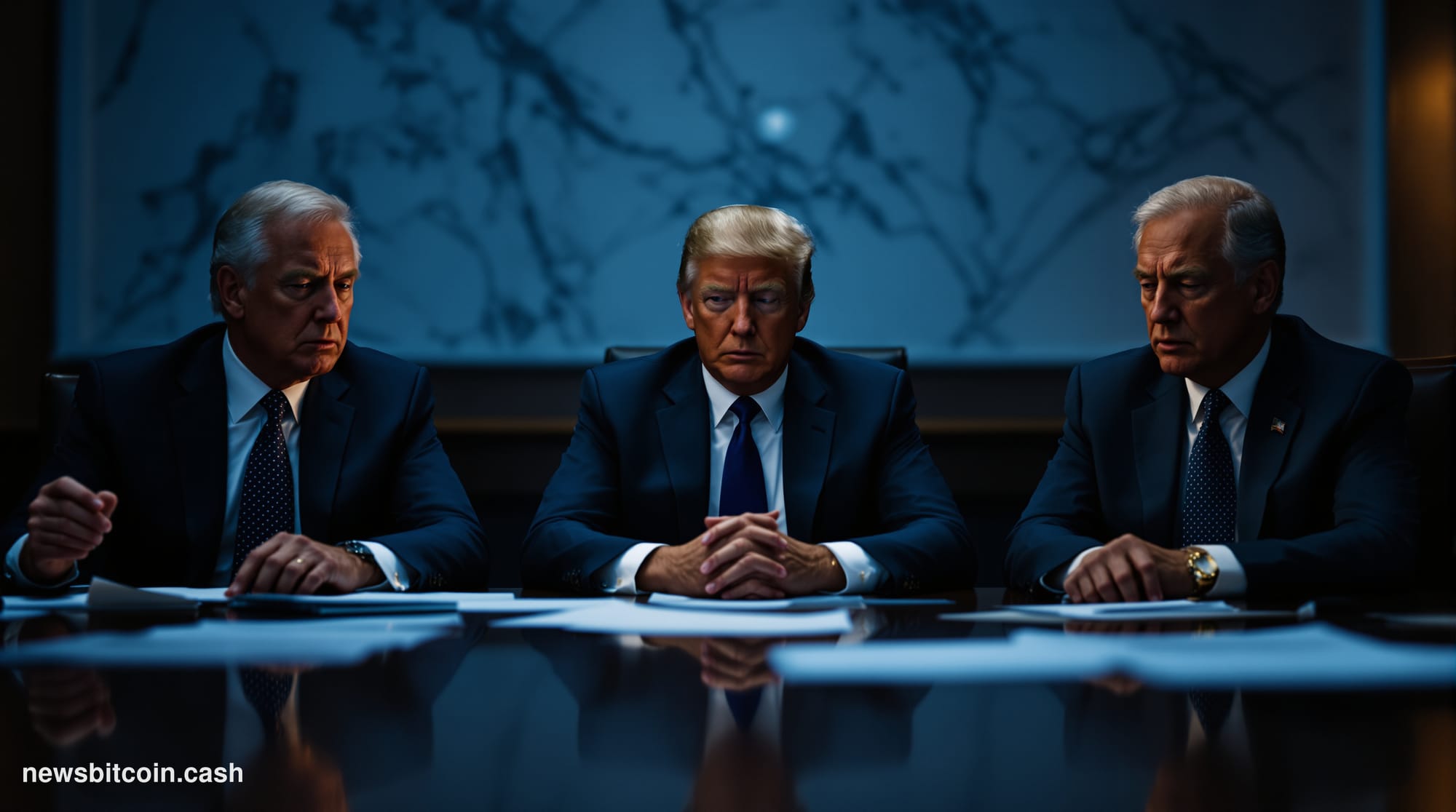
A coalition of three United States senators has announced opposition to the CLARITY Act — one of the most consequential pieces of crypto market structure legislation to reach the Senate floor in years — citing ethical objections that now threaten to derail the bill's momentum at a critical juncture. With a Senate vote imminent, the dissent introduces fresh uncertainty into a legislative process that the digital assets industry had been cautiously optimistic about, and it raises uncomfortable questions about whether the bill's architects can hold together the bipartisan coalition needed to push it across the finish line.
The CLARITY Act has long been viewed as the potential anchor of a coherent federal framework for cryptocurrency regulation in the United States. Its supporters argue that the bill would finally resolve the jurisdictional ambiguity between the Securities and Exchange Commission (SEC) and the Commodity Futures Trading Commission (CFTC) that has left digital asset firms operating in a persistent legal gray zone. Clearing that fog has been the industry's legislative priority for the better part of three years, making any credible threat to the bill's passage a matter of significant consequence — not just for Washington insiders, but for every exchange, protocol, and institutional participant that has been waiting for regulatory clarity before committing further capital to US markets.
The ethics-based objections from the three senators represent a distinct and arguably more durable obstacle than simple policy disagreement. When lawmakers frame their opposition in moral terms rather than technical ones, the path to compromise becomes narrower. You cannot easily split the difference on an ethics concern the way you might negotiate the precise threshold for when a digital asset crosses from commodity to security. The senators have not opposed the underlying architecture of crypto regulation — they have questioned the integrity of the process itself, a charge that can linger in the public record and give other undecided colleagues political cover to withhold their votes.
Bipartisan support was always the load-bearing wall of the CLARITY Act's legislative strategy. Crypto regulation in the United States has been one of the few technology policy areas where Republicans and Democrats have found genuine, if fragile, common ground. Several Democratic senators had backed earlier versions of market structure legislation, and that cross-aisle goodwill was considered essential to reaching the 60-vote threshold typically required to advance major legislation through the Senate. The emergence of ethics concerns — which tend to carry particular resonance with moderate members of both parties — risks fracturing precisely the coalition that sponsors spent months assembling.
Market confidence is already feeling the turbulence. The digital assets sector had priced in a meaningful probability of the CLARITY Act advancing this session, and any signal that the vote could be delayed or derailed translates directly into uncertainty for firms that have calibrated product launches, compliance timelines, and capital allocation decisions around the expectation of an imminent federal framework. Institutional players in particular — the banks, asset managers, and custody providers who have been edging deeper into digital assets — tend to move cautiously when Washington's legislative signals turn ambiguous. A prolonged delay does not kill the industry, but it does push back the timeline for the kind of institutional depth that would structurally mature the US crypto market.
It is also worth considering the timing. Legislative calendars in Washington are unforgiving, and a bill that misses its window in one congressional session rarely emerges from the next one in identical form. The political composition of committees changes, new controversies reshape priorities, and the specific coalition of supporters that made a given bill viable may not reconstitute itself. If the CLARITY Act is delayed substantially by this ethics challenge, the industry could find itself renegotiating terms it had already accepted, with a different set of lawmakers and a different set of demands.
None of this is irreversible. Three senators opposing a bill does not doom it, and the legislative process has mechanisms — from procedural adjustments to direct negotiations with the dissenters — that can absorb and sometimes neutralize this kind of opposition. Bill sponsors will almost certainly move quickly to engage the three holdouts, understand the specific nature of their ethics objections, and determine whether any modifications to the bill's process or language could bring them back into the fold. Whether that process can be completed before the scheduled vote, however, remains an open question that the market will be watching closely.
What this episode ultimately underscores is the fragility of crypto's legislative moment in the United States. The industry has more friends in Congress than at any prior point in its history, and the policy environment has shifted meaningfully in its favor. But converting goodwill into enacted law requires a precision that goes beyond headcounts — it demands airtight process, clean optics, and the kind of ethical armor that makes it difficult for opponents to pivot from substance to scandal. The CLARITY Act's sponsors now face the task of providing exactly that, under deadline pressure, with the Senate floor waiting.
Written by the editorial team — independent journalism powered by Bitcoin News.