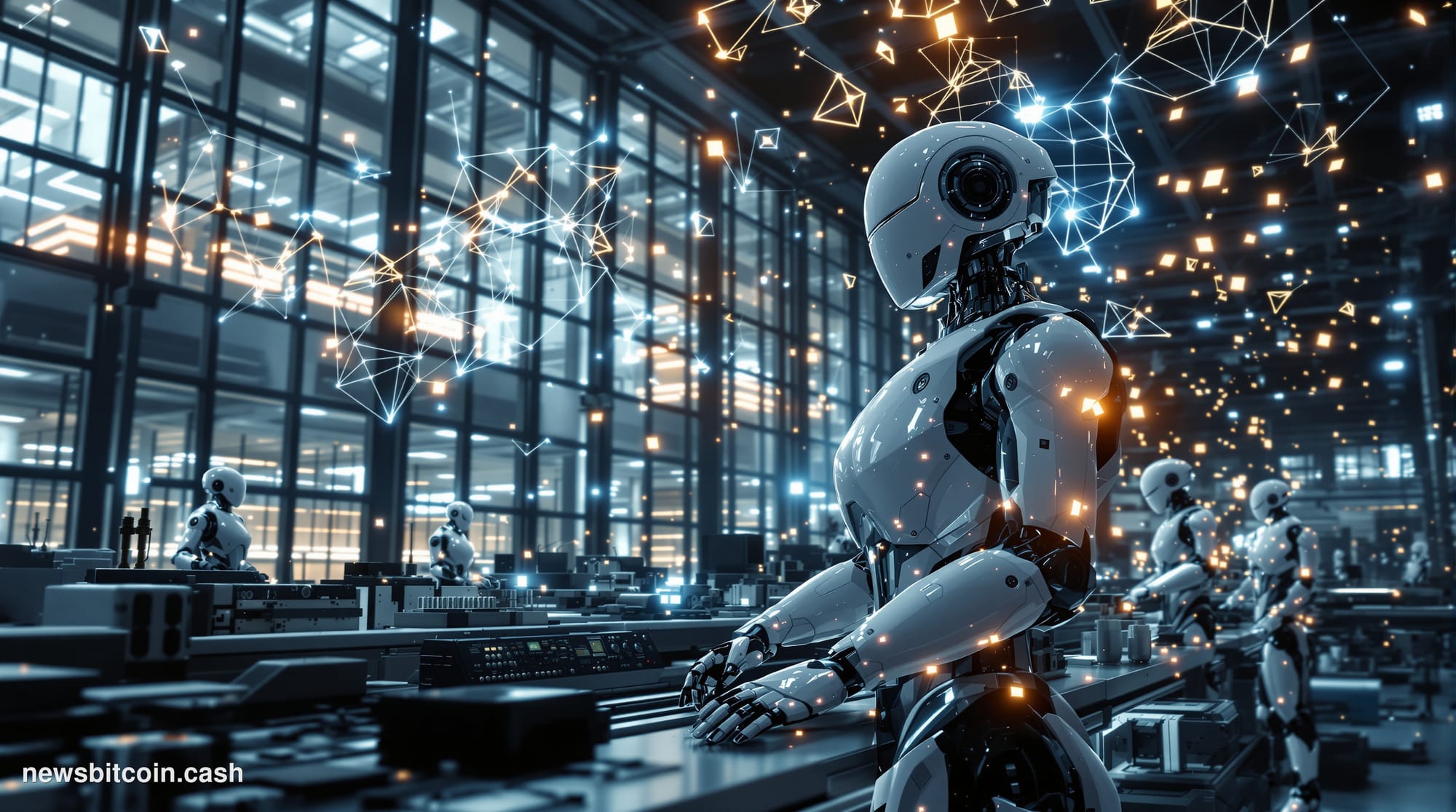
The convergence of cryptocurrency infrastructure and artificial intelligence reached a new milestone as Tether, the world's largest stablecoin issuer, led a massive $1.4 billion Series C funding round for NEURA Robotics. This investment represents one of the largest crypto-adjacent funding deals in recent memory and signals a strategic shift toward building the foundational infrastructure for an autonomous machine economy.
NEURA Robotics, a German company specializing in cognitive robotics, plans to integrate cryptocurrency wallet functionality directly into its robotic systems alongside advanced edge AI capabilities. This technical integration positions the company at the intersection of three rapidly evolving sectors: autonomous robotics, distributed AI computing, and digital asset infrastructure. The funding round's substantial size reflects both the capital intensity of robotics manufacturing and the ambitious scope of creating machines capable of participating independently in economic transactions.
The strategic implications extend far beyond traditional venture capital dynamics. Tether's involvement brings significant technical expertise in digital asset infrastructure and global payment rails, capabilities that could prove essential as robotic systems evolve toward greater autonomy. By embedding cryptocurrency wallet functionality at the hardware level, NEURA's robots could theoretically conduct peer-to-peer transactions, purchase services, and participate in decentralized autonomous organization governance without human intervention.
Edge AI integration represents another critical component of this infrastructure play. Rather than relying on cloud-based processing, NEURA's approach emphasizes local computational capabilities that enable real-time decision-making and reduce dependency on external network connectivity. This architectural choice aligns with the decentralized ethos of cryptocurrency networks and addresses practical concerns around latency and reliability in industrial applications.
The timing of this investment coincides with broader institutional interest in AI-cryptocurrency convergence. Traditional venture capital firms have allocated increasing resources to companies operating at this intersection, recognizing the potential for AI systems to optimize trading strategies, enhance security protocols, and automate complex financial operations. However, Tether's direct involvement suggests a more fundamental integration between stablecoin infrastructure and autonomous systems.
From a market perspective, the $1.4 billion funding round demonstrates significant confidence in the commercial viability of crypto-enabled robotics. The Series C designation indicates NEURA has already achieved meaningful technical milestones and revenue generation, positioning this investment as scaling capital rather than pure research and development funding. This maturation level suggests the company has moved beyond conceptual prototypes toward commercially deployable systems.
The broader implications for cryptocurrency adoption merit consideration. If successful, NEURA's approach could establish a new category of digital asset users: autonomous machines conducting transactions based on programmed logic rather than human decision-making. This development could drive substantial transaction volume across cryptocurrency networks while creating new use cases for stablecoins in machine-to-machine commerce.
However, regulatory complexities surrounding autonomous financial transactions remain unresolved. Questions about liability, compliance monitoring, and anti-money laundering requirements for machine-initiated transactions will likely require significant regulatory clarity before widespread deployment becomes feasible. The involvement of Tether, which has navigated complex regulatory environments globally, suggests these challenges are being addressed proactively.
What emerges from this funding round is a clear signal that cryptocurrency infrastructure companies are positioning for a future where digital assets serve as the native currency for autonomous systems. Rather than viewing AI and robotics as separate technological domains, forward-thinking crypto companies are building the financial rails that could power a new generation of economically autonomous machines. The success or failure of this integration will likely influence how digital assets evolve from speculative instruments toward genuine infrastructure for the automated economy.
Written by the editorial team — independent journalism powered by Bitcoin News.