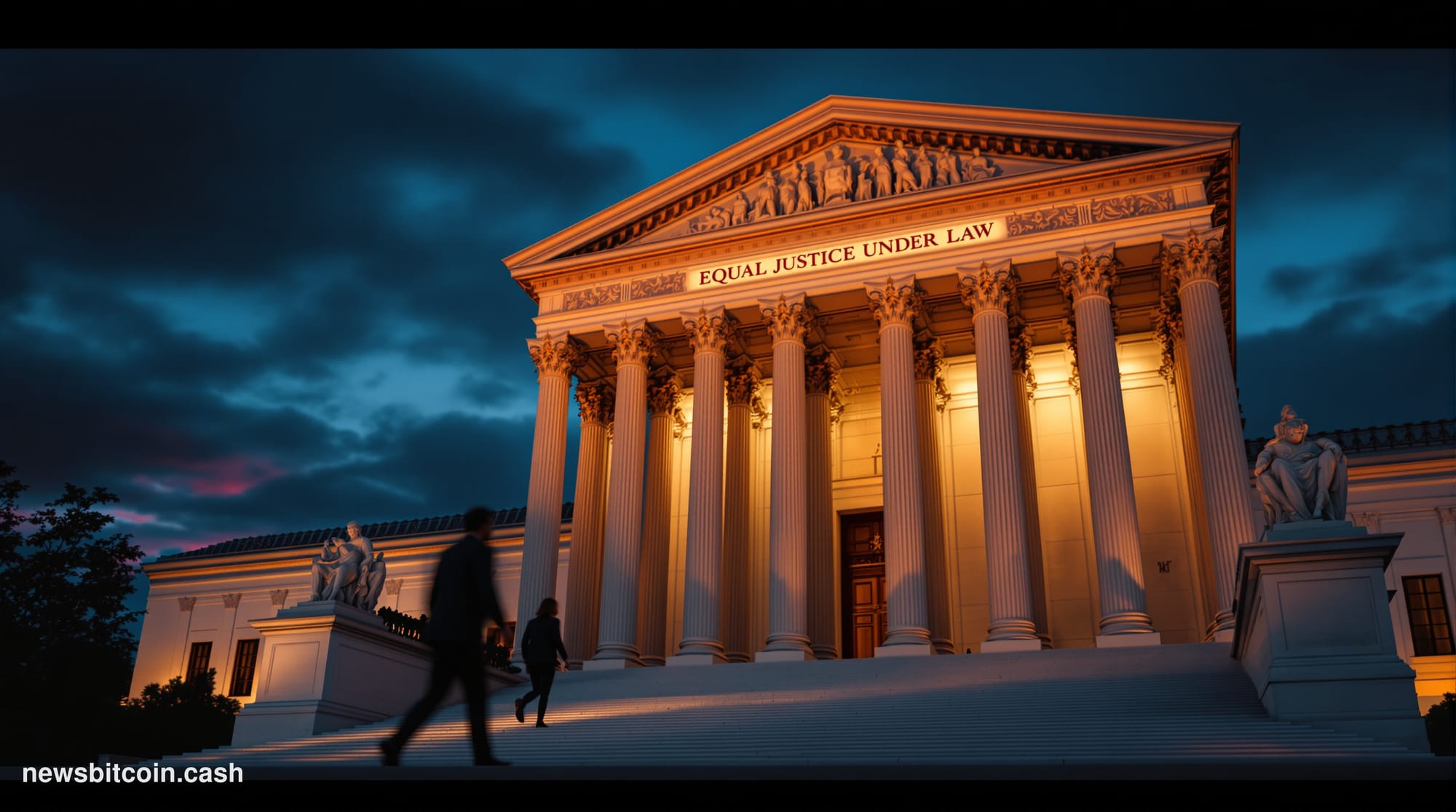
The crypto industry's hopes for a more permissive regulatory environment suffered a significant setback as the US Supreme Court issued rulings that bolster federal agencies' enforcement powers, specifically backing both the Federal Communications Commission (FCC) and the Securities and Exchange Commission (SEC) in their regulatory authority. These decisions arrive at a critical juncture when digital asset companies have been mounting increasingly aggressive challenges to federal oversight, arguing that existing regulatory frameworks stifle innovation and exceed agencies' mandated scope.
The Supreme Court's reinforcement of federal agencies' enforcement capabilities represents more than procedural validation—it signals a judicial endorsement of robust regulatory oversight that extends directly into financial markets where cryptocurrency operations intersect with traditional securities law. This backing comes as the SEC under various administrations has pursued an enforcement-heavy approach to crypto regulation, bringing cases against major exchanges, token issuers, and decentralized finance protocols while arguing that many digital assets constitute unregistered securities.
For the cryptocurrency sector, these rulings eliminate a potential avenue of relief that some industry participants had hoped might constrain aggressive regulatory enforcement. The decisions effectively validate the approach that federal agencies can leverage existing statutory authority to address emerging technologies, even when those technologies weren't explicitly contemplated in original legislation. This judicial backing strengthens the SEC's position in ongoing litigation against prominent crypto entities and provides regulatory cover for future enforcement actions targeting the digital asset ecosystem.
The timing of these rulings proves particularly consequential as the crypto industry navigates a complex regulatory landscape where different agencies assert overlapping jurisdiction. While the Commodity Futures Trading Commission claims authority over certain cryptocurrencies as commodities, and the Treasury Department oversees anti-money laundering compliance, the SEC has maintained that most crypto tokens represent securities requiring registration and compliance with federal securities laws. The Supreme Court's endorsement of broad agency authority reduces the likelihood that courts will constrain these regulatory approaches on constitutional or statutory grounds.
Market participants have increasingly relied on legal challenges to regulatory overreach as a strategy for defending crypto business models that operate in regulatory gray areas. Major exchanges like Coinbase have argued in federal court that the SEC's enforcement actions exceed the agency's statutory mandate and rely on outdated legal frameworks unsuited to blockchain technology. These Supreme Court rulings complicate such arguments by establishing judicial precedent that federal agencies possess broad discretionary authority in interpreting and enforcing existing statutes.
The reinforcement of regulatory oversight powers also impacts compliance strategies across the digital asset industry, where companies must now account for the possibility of sustained and judicially-backed enforcement pressure. This reality may accelerate the trend toward proactive regulatory engagement rather than adversarial litigation, as crypto companies recognize that challenging agency authority in federal courts has become significantly more difficult following these Supreme Court decisions.
Beyond immediate enforcement implications, these rulings shape the broader trajectory of crypto regulation by validating the principle that existing regulatory frameworks can adapt to address technological innovation without requiring new legislation. This judicial endorsement may embolden regulators to pursue more aggressive oversight of decentralized finance protocols, non-fungible token marketplaces, and emerging cryptocurrency derivatives that currently operate with minimal regulatory clarity.
What this means for the crypto industry is a regulatory environment where federal agencies operate from a position of enhanced judicial legitimacy, making successful legal challenges to enforcement actions substantially more difficult. The Supreme Court's backing of the FCC and SEC's regulatory powers signals that the crypto sector's regulatory battles will increasingly focus on compliance and accommodation rather than fundamental challenges to agency authority—a shift that could reshape how digital asset companies approach business strategy and legal risk management in an environment where regulatory deference has received the highest court's explicit endorsement.
Written by the editorial team — independent journalism powered by Bitcoin News.