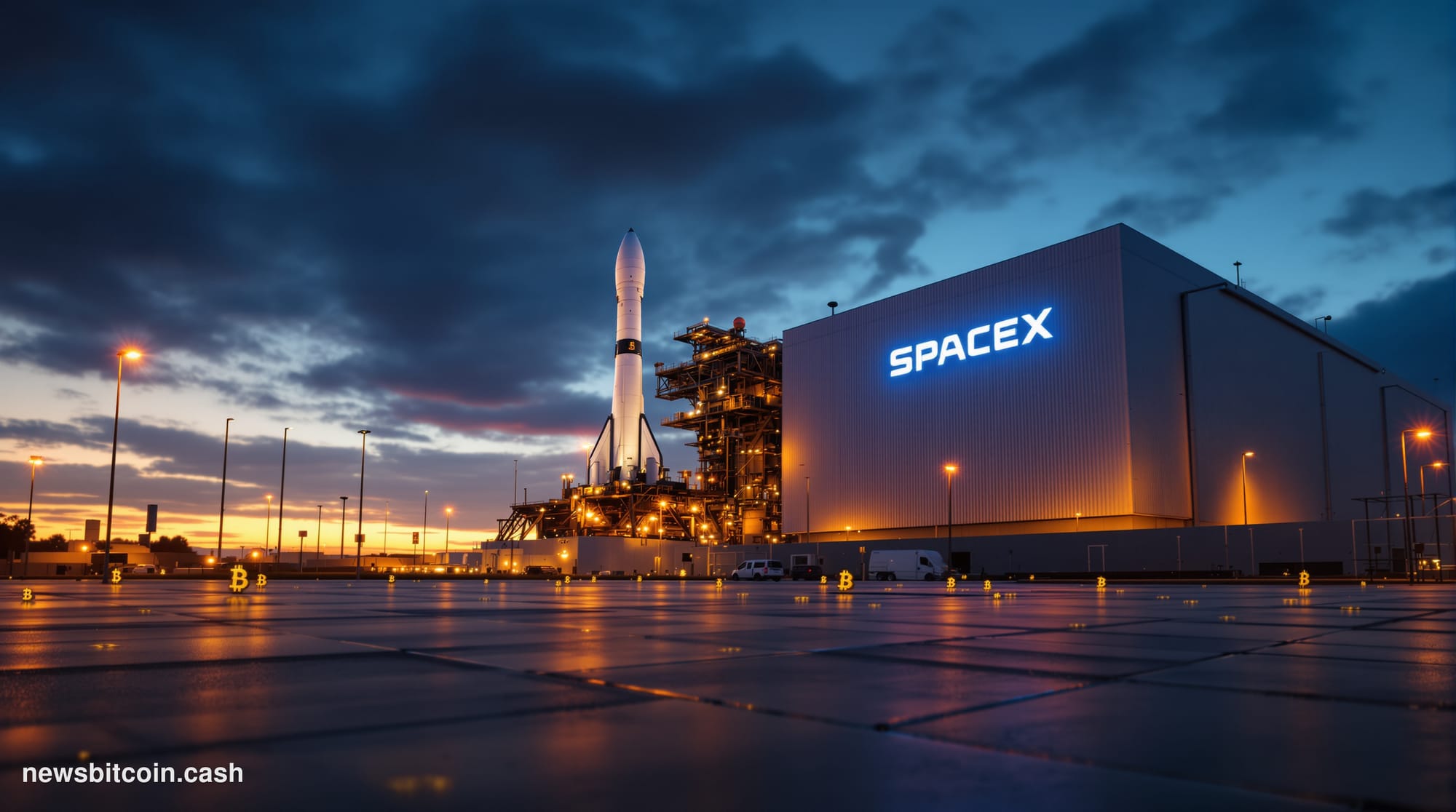
SpaceX, Elon Musk's aerospace and artificial intelligence venture, has disclosed a substantial $1.45 billion Bitcoin position in regulatory filings ahead of its anticipated initial public offering. The revelation positions the rocket manufacturer among the largest corporate Bitcoin holders globally, demonstrating how digital assets have quietly infiltrated the balance sheets of major technology companies.
The Bitcoin treasury allocation, disclosed in SpaceX's IPO documentation, significantly exceeds market expectations for the private space exploration company. This positions SpaceX alongside other major corporate Bitcoin adopters like MicroStrategy and Tesla, Musk's electric vehicle company, in utilizing cryptocurrency as a strategic treasury reserve asset. The $1.45 billion figure represents one of the most significant corporate Bitcoin allocations revealed in recent years.
SpaceX's approach to Bitcoin treasury management reflects broader institutional adoption trends that have accelerated since 2020. Unlike traditional cash holdings that face inflation erosion and minimal yield opportunities, Bitcoin offers these corporations a hedge against currency debasement while providing potential upside exposure to the expanding digital asset ecosystem. The aerospace company's decision to allocate significant capital to Bitcoin suggests confidence in the cryptocurrency's long-term value proposition despite ongoing regulatory uncertainties.
The timing of this disclosure carries particular significance as SpaceX prepares for what industry observers anticipate will be a blockbuster public offering. The company's Bitcoin holdings add another dimension to its investment thesis, combining its core aerospace and AI operations with exposure to digital asset appreciation. This dual strategy could appeal to investors seeking both traditional technology growth and cryptocurrency upside within a single equity vehicle.
Corporate Bitcoin adoption has evolved considerably since early pioneers like MicroStrategy began accumulating digital assets. Companies now view Bitcoin not merely as speculative investment but as a legitimate treasury management tool offering portfolio diversification and inflation protection. SpaceX's substantial position validates this institutional thesis and may encourage other large corporations to consider similar allocations.
The aerospace industry's embrace of Bitcoin through SpaceX demonstrates how digital assets are penetrating sectors beyond traditional technology and financial services. This cross-sector adoption pattern strengthens Bitcoin's institutional legitimacy and suggests continued corporate demand regardless of short-term price volatility. SpaceX's position also highlights how private companies have been accumulating Bitcoin positions away from public market scrutiny.
Market Implications and Strategic Context
SpaceX's Bitcoin disclosure arrives during a period of heightened institutional interest in digital assets. The company's willingness to maintain such a significant position through various market cycles indicates strategic conviction rather than opportunistic speculation. This long-term approach aligns with Bitcoin's designed scarcity and deflationary monetary properties that appeal to treasury managers seeking alternatives to traditional fiat reserves.
The revelation also underscores Elon Musk's consistent support for digital assets across his business empire. From Tesla's Bitcoin purchases to his advocacy for Dogecoin, Musk has positioned his companies at the intersection of traditional business and cryptocurrency innovation. SpaceX's substantial Bitcoin position represents perhaps the most significant manifestation of this strategic direction.
For the broader cryptocurrency market, SpaceX's disclosure provides additional evidence of institutional adoption momentum. Large corporate treasuries holding Bitcoin create a natural price floor through reduced circulating supply while demonstrating sophisticated investor confidence in digital assets. This institutional backing helps legitimize Bitcoin as a store of value alongside traditional reserve assets like gold and government bonds.
As SpaceX prepares for its public market debut, investors will closely monitor how the company's Bitcoin position performs relative to its core aerospace and AI operations. The dual exposure could provide portfolio benefits during periods when traditional technology stocks and digital assets move independently, offering diversification advantages that pure-play investments cannot match.
Written by the editorial team — independent journalism powered by Bitcoin News.