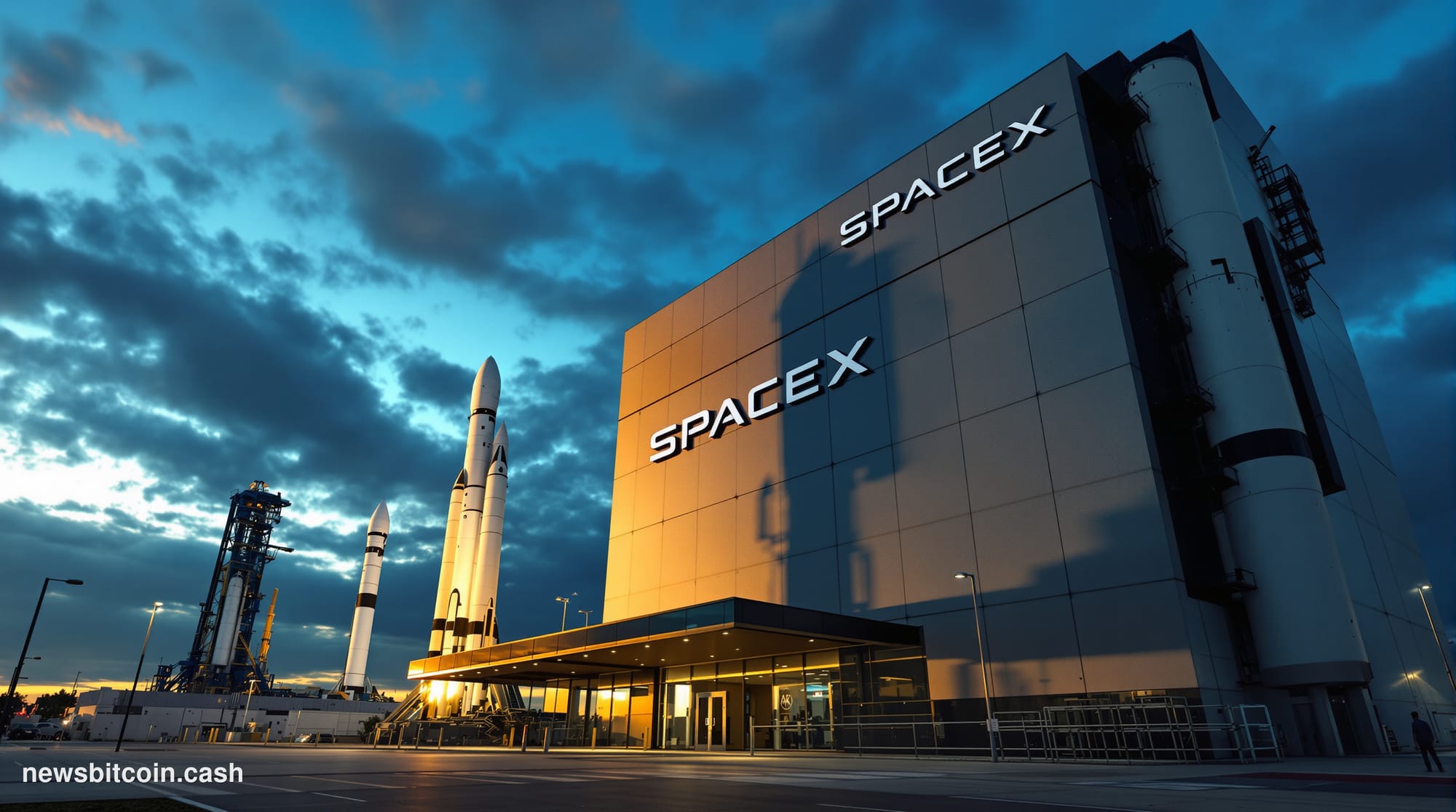
The financial markets witnessed a seismic shift Friday as SpaceX completed its highly anticipated initial public offering on the Nasdaq, achieving a market capitalization that surpassed $2 trillion and establishing new records for public market debuts. Trading under the ticker symbol SPCX, the space exploration company's shares climbed sharply from their opening price, cementing what financial analysts are calling the largest IPO in market history.
The extraordinary valuation milestone represents more than just another successful public offering—it signals a fundamental recalibration of how investors price transformative technology companies in the modern economy. SpaceX's ability to command such unprecedented market value reflects the company's dominant position across multiple high-growth sectors, from satellite internet infrastructure through its Starlink constellation to commercial space transportation and ambitious Mars colonization projects.
The IPO's success carries particular significance for Elon Musk, who now holds the distinction of becoming the world's first trillionaire through his substantial equity stake in the newly public company. This wealth milestone arrives at a time when Musk's influence extends across multiple industries, from electric vehicles through Tesla to social media platforms and artificial intelligence development. The SpaceX public debut effectively consolidates his position as the most financially powerful individual in modern history.
Market dynamics surrounding the offering suggest institutional investors demonstrated remarkable appetite for exposure to the commercial space economy. The sharp share price appreciation from opening levels indicates demand significantly exceeded the available float, a pattern that often emerges when transformative companies transition from private to public ownership. This investor enthusiasm reflects growing recognition that space-based infrastructure represents a critical component of future economic development.
The record-breaking nature of the SpaceX IPO fundamentally rewrites established playbooks for how mega-cap companies approach public market entry. Traditional IPO structures typically involve gradual market introduction with conservative initial valuations, allowing price discovery to occur over extended periods. SpaceX's approach—achieving immediate $2 trillion valuation on debut day—demonstrates that companies with sufficiently compelling value propositions can command unprecedented market premiums from the outset.
From a sector perspective, the successful offering validates the commercial viability of space-based business models at massive scale. SpaceX has systematically transformed space transportation from a government-dominated sector into a thriving commercial marketplace, while simultaneously building the foundation for space-based internet infrastructure through Starlink. The company's ability to generate investor confidence at this valuation level suggests the market now views space commerce as a proven, scalable industry rather than speculative venture capital territory.
The broader implications for public markets extend beyond SpaceX itself. Other private companies operating at similar scale—particularly those in transformative technology sectors—now have a new benchmark for public market potential. The success of this offering may accelerate IPO timelines for other mega-cap private companies that previously viewed public markets as potentially constraining rather than value-enhancing.
What emerges from this historic market debut is a clear signal that investor appetite for transformative infrastructure companies has reached unprecedented levels. SpaceX's achievement of $2 trillion market capitalization on its first day of public trading establishes new parameters for how the financial markets value companies positioned at the intersection of technology, infrastructure, and future economic development. The success of this offering will likely influence corporate finance strategies across multiple industries for years to come, while simultaneously validating the commercial space sector as a cornerstone of 21st-century economic growth.
Written by the editorial team — independent journalism powered by Bitcoin News.