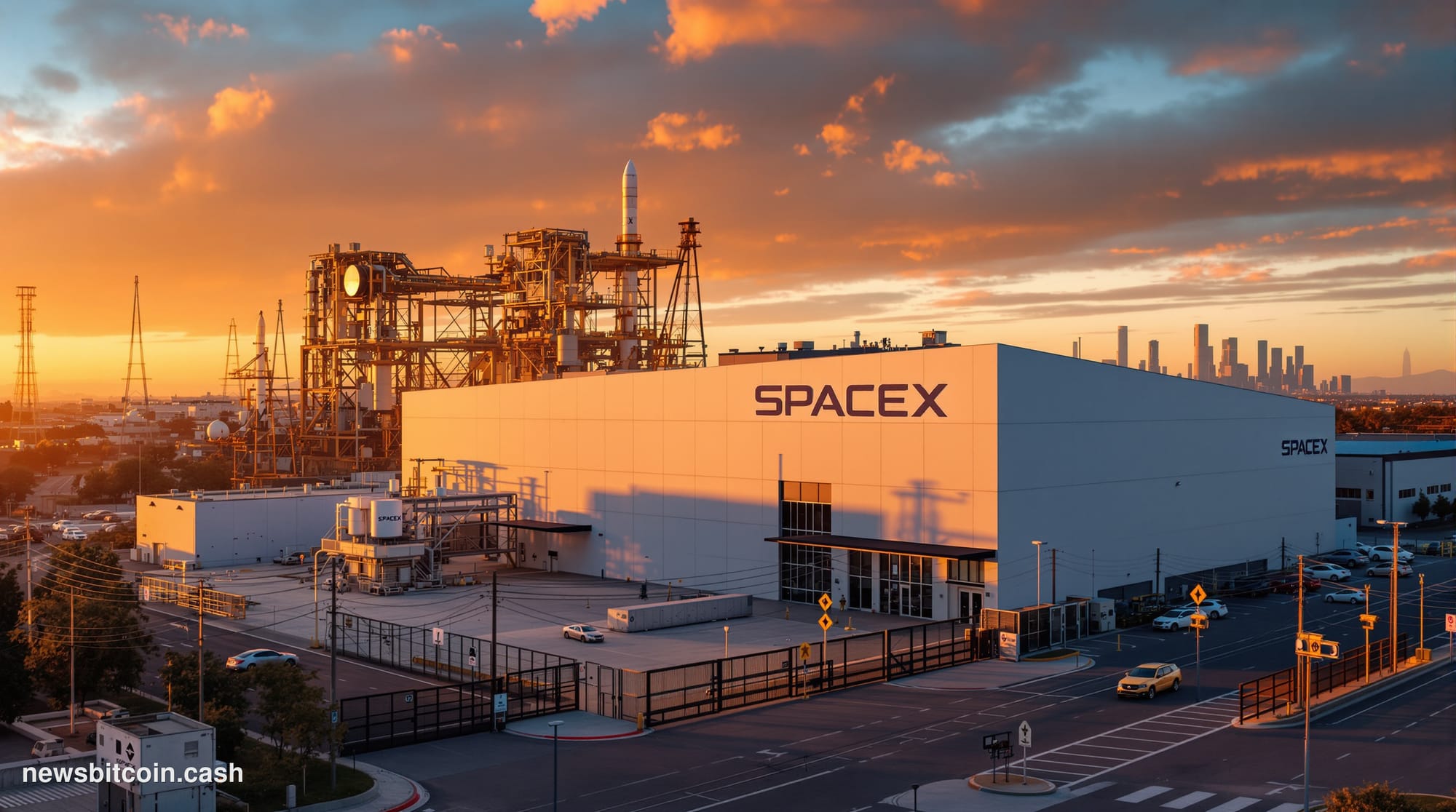
The space economy just received its most definitive validation yet. SpaceX has completed what stands as the largest initial public offering in corporate history, raising $75 billion and achieving a staggering valuation of $1.77 trillion. This unprecedented capital influx represents far more than a single company's financial milestone—it signals a fundamental shift in how institutional investors view the commercial viability of space infrastructure.
The numbers alone tell a remarkable story. At $1.77 trillion, SpaceX now commands a valuation that dwarfs most sovereign wealth funds and rivals the gross domestic product of entire nations. The $75 billion raised through this IPO exceeds the annual defense budgets of most developed countries, illustrating the sheer scale of capital now flowing into space commercialization ventures. For context, this single offering represents nearly double the previous IPO record and positions SpaceX among the most valuable publicly traded companies globally.
What makes this development particularly significant for the broader technology and digital assets ecosystem is the investor composition driving these valuations. The successful completion of such a massive offering suggests that institutional capital—pension funds, sovereign wealth funds, and traditional investment houses—has moved decisively beyond viewing space ventures as speculative moonshots. Instead, these entities are treating space infrastructure as essential economic infrastructure, comparable to telecommunications networks or energy grids.
The timing of this IPO arrival coincides with several converging trends that have matured the space economy into institutional-grade investment territory. Satellite internet constellations have proven their commercial viability, with SpaceX's Starlink network demonstrating consistent revenue generation and global connectivity capabilities. Meanwhile, the company's launch services division has established a dominant market position, handling both government contracts and commercial payloads with unprecedented cost efficiency and reliability metrics.
This massive capital injection will likely accelerate development timelines across SpaceX's entire product portfolio. The company's ambitious Mars colonization program, previously viewed as a long-term research project, now has the financial backing to move toward operational phases. More immediately, the expanded Starlink constellation can achieve global coverage faster, potentially disrupting traditional telecommunications infrastructure and creating new revenue streams that could justify the current valuation multiples.
Reshaping Investment Landscapes
The broader implications extend well beyond aerospace engineering. This IPO success establishes space commercialization as a legitimate asset class capable of attracting institutional-scale capital allocations. Other space economy participants—from satellite manufacturers to asteroid mining ventures—will likely benefit from increased investor attention and more favorable funding environments. The validation effect could trigger a wave of follow-on investments across the entire space technology sector.
For digital assets and blockchain infrastructure companies, SpaceX's achievement offers both inspiration and competition for institutional capital. The success demonstrates that investors remain willing to commit enormous sums to transformative technology platforms, even those with long development cycles and uncertain timelines. However, it also means that crypto and blockchain ventures must compete with increasingly mature technology sectors for the same institutional investment dollars.
The space economy's emergence as an institutional investment category also highlights the importance of demonstrable utility and revenue generation. Unlike many speculative technology investments, SpaceX has built proven business lines generating consistent cash flows from launch services and satellite internet subscriptions. This operational foundation provided the credibility necessary to attract traditional institutional investors who typically avoid purely speculative ventures.
Looking forward, this $1.77 trillion valuation sets new benchmarks for what constitutes "large-scale" technology investment. The success of such an enormous capital raise suggests that global liquidity remains abundant and institutional investors continue seeking exposure to transformative technology platforms. For emerging sectors including blockchain infrastructure, artificial intelligence, and quantum computing, SpaceX's IPO demonstrates both the scale of capital available and the performance standards required to access it.
Written by the editorial team — independent journalism powered by Bitcoin News.