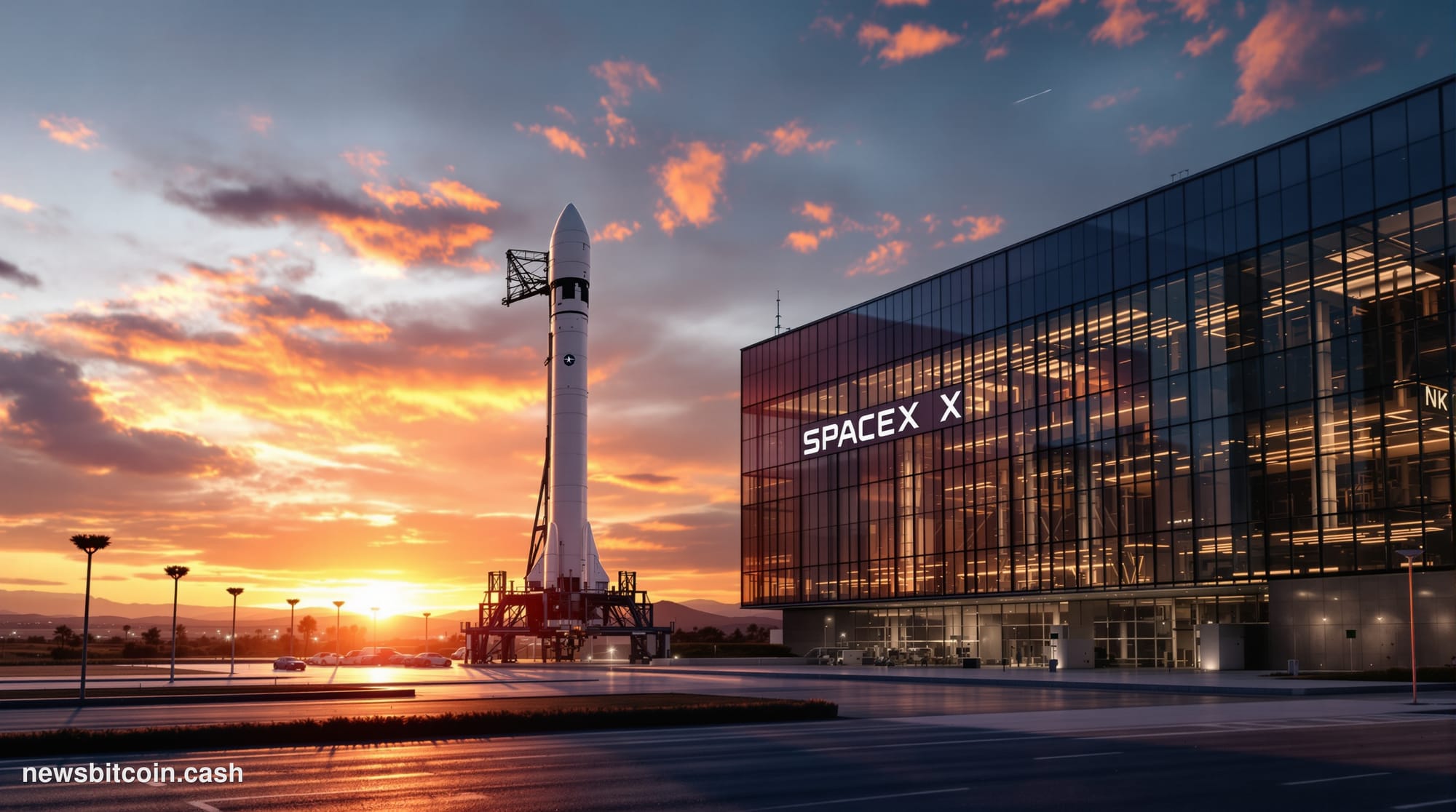
The private space economy has officially entered the trillion-dollar stratosphere. SpaceX's groundbreaking initial public offering raised $75 billion while propelling the company to a staggering $2 trillion valuation, establishing new benchmarks for both capital markets and the commercialization of space technology. The offering represents the largest IPO in market history, underscoring how rapidly private aerospace ventures have evolved from speculative startups into infrastructure-defining enterprises.
The scale of this public debut dwarfs previous market milestones. Investment banks participating as underwriters collected $500 million in fees from the transaction, reflecting the complexity and risk associated with bringing such a massive offering to market. This fee structure, while substantial in absolute terms, represents standard investment banking compensation for deals of this magnitude, particularly given the technical expertise required to price and distribute shares in the emerging space economy.
SpaceX's $2 trillion valuation places it among the world's most valuable publicly traded companies, rivaling established technology giants and demonstrating how space infrastructure has become a critical component of global economic architecture. The company's revenue streams span satellite internet services through Starlink, commercial and government launch contracts, and emerging ventures in space manufacturing and orbital logistics. This diversification has proven essential in achieving the operational scale necessary to support such extraordinary market capitalization.
The timing of this IPO reflects broader institutional recognition that space-based services now constitute essential economic infrastructure rather than experimental technology. Satellite internet connectivity, secure communications networks, and precision navigation systems have become fundamental to both civilian commerce and national security operations. SpaceX's successful monetization of these capabilities has established a template for other private space ventures seeking to access public capital markets.
Investment demand for the offering exceeded available shares by significant margins, indicating institutional appetite for exposure to space economy growth. Pension funds, sovereign wealth funds, and technology-focused investment firms competed for allocations, viewing SpaceX's market position as analogous to early investments in telecommunications or internet infrastructure. The company's demonstrated ability to reduce launch costs while maintaining operational reliability has created sustainable competitive advantages that justify premium valuations.
The broader implications extend beyond aerospace markets. SpaceX's successful transition to public ownership validates the private space sector's maturation into a legitimate asset class, potentially accelerating capital formation for competing ventures. Traditional defense contractors, satellite manufacturers, and emerging space mining companies are likely monitoring investor response to gauge optimal timing for their own public market entries.
Regulatory frameworks governing space commerce have evolved to accommodate this expansion, with government agencies establishing clearer guidelines for licensing, safety protocols, and international coordination. These developments have reduced regulatory uncertainty that previously deterred institutional investment in space-focused enterprises, creating conditions necessary for companies like SpaceX to achieve mainstream market acceptance.
The $75 billion capital raise provides SpaceX with substantial resources for accelerating development of next-generation technologies, including interplanetary transportation systems and advanced manufacturing capabilities. This funding capacity positions the company to maintain technological leadership while competitors struggle with capital constraints, potentially creating self-reinforcing advantages in an increasingly competitive market environment.
SpaceX's historic public offering represents more than a single company's financial milestone. It signals the emergence of space infrastructure as a foundational component of global economic systems, comparable to telecommunications networks or energy grids. As private space ventures continue demonstrating commercial viability, the $2 trillion valuation achieved by SpaceX may prove to be an early indicator of the sector's ultimate economic significance rather than its peak achievement.
Written by the editorial team — independent journalism powered by Bitcoin News.