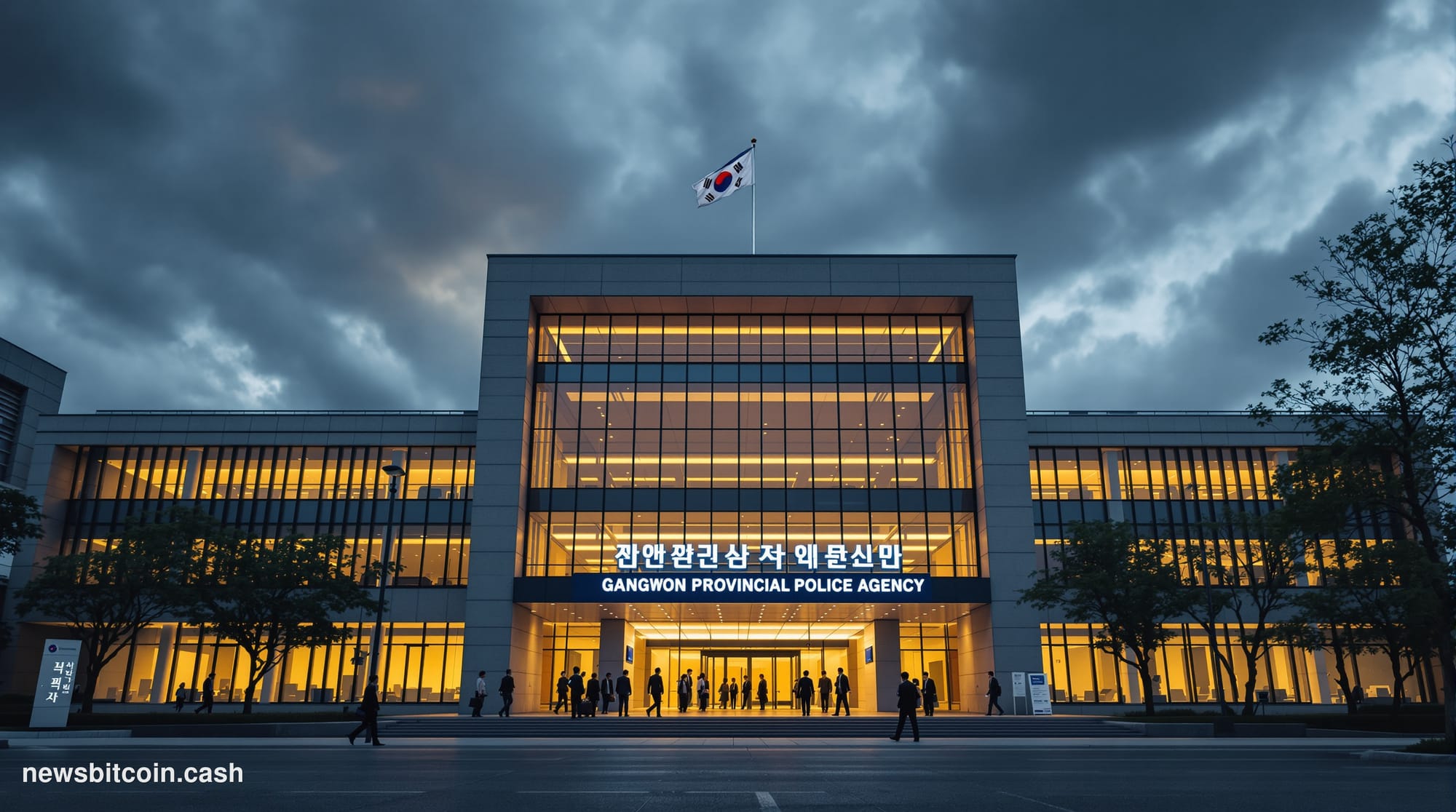
South Korean law enforcement has crossed a regulatory Rubicon with the launch of its first criminal investigation targeting domestic users of Polymarket, the blockchain-based prediction market platform. The probe marks a watershed moment for decentralized finance platforms operating in jurisdictions where regulatory frameworks struggle to keep pace with technological innovation.
The Gangwon Provincial Police Agency is spearheading the investigation at the directive of the Korean National Police Agency, casting a nationwide net to identify users who participated in what authorities classify as illegal gambling activities. This coordinated enforcement action represents the most aggressive regulatory stance taken by any major economy against prediction market platforms, potentially setting a precedent for similar crackdowns across Asia-Pacific jurisdictions.
The timing of this investigation is particularly significant given Polymarket's surge in mainstream attention during recent election cycles and major geopolitical events. The platform, which operates on the Polygon blockchain, allows users to bet on the outcomes of real-world events ranging from political elections to sports competitions and economic indicators. What distinguishes Polymarket from traditional gambling platforms is its positioning as an information aggregation tool that theoretically provides market-based predictions about future events.
However, this distinction appears to carry little weight with South Korean regulators, who have historically maintained some of the world's strictest gambling laws. The country's regulatory approach treats most forms of betting as illegal unless explicitly licensed by the government, creating a particularly hostile environment for blockchain-based prediction markets that operate without traditional regulatory oversight.
The legal gray area surrounding Polymarket stems from fundamental questions about how to classify prediction markets within existing financial and gambling regulations. Proponents argue these platforms serve legitimate information discovery functions, helping to aggregate collective wisdom about uncertain future outcomes. Critics contend that regardless of the underlying technology or stated purpose, these platforms fundamentally enable gambling activities that circumvent local laws and consumer protections.
For the broader cryptocurrency ecosystem, this investigation represents a critical test case for how authorities will treat decentralized applications that blur traditional regulatory boundaries. The outcome could influence enforcement approaches across multiple jurisdictions, particularly in countries where regulators have expressed skepticism about DeFi applications that enable activities prohibited in traditional financial systems.
The investigation also highlights the practical challenges facing users of global DeFi platforms in jurisdictions with restrictive regulations. Unlike centralized platforms that can implement geographic restrictions or comply with local licensing requirements, truly decentralized applications often operate beyond the reach of traditional regulatory mechanisms, leaving individual users potentially exposed to criminal liability.
Looking ahead, the South Korean probe may catalyze broader discussions about how to regulate prediction markets and similar DeFi applications that operate across jurisdictional boundaries. The investigation's scope and eventual outcomes will likely influence regulatory approaches in other countries grappling with similar questions about blockchain-based financial services that challenge existing legal frameworks. As authorities worldwide observe how this first-of-its-kind enforcement action unfolds, the precedent set in South Korea could reshape the regulatory landscape for decentralized prediction markets globally.
Written by the editorial team — independent journalism powered by Bitcoin News.