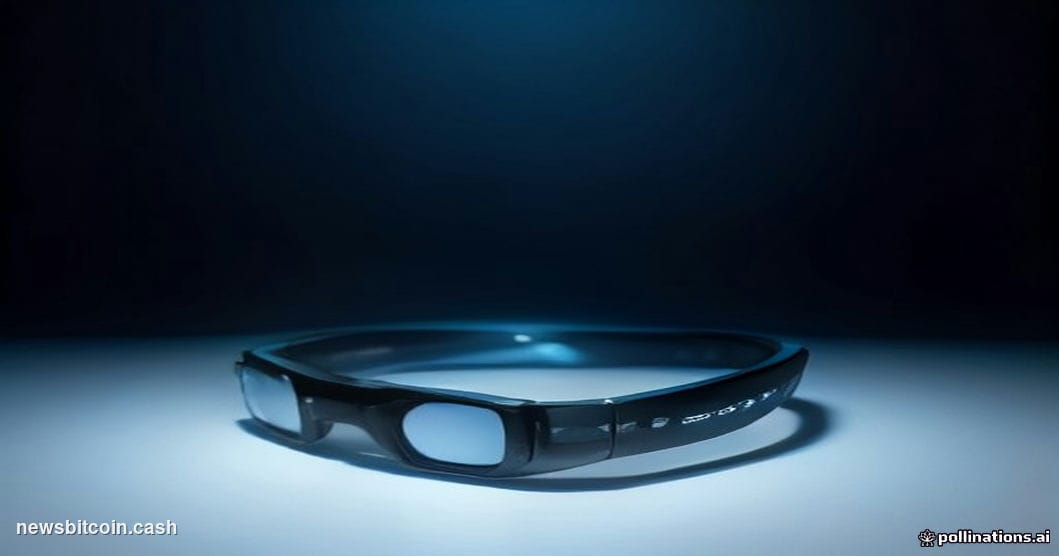
Snap has never been shy about swinging for the cultural fences, but recruiting Robert Downey Jr. — the actor whose portrayal of Tony Stark effectively defined an entire generation's image of wearable technology — to front its forthcoming augmented reality (AR) glasses marks a new level of intentionality. The company has named Downey its "honorary experience chief" ahead of the commercial launch of Snap Specs, its $2,195 AR eyewear that represents one of the most ambitious consumer hardware bets in tech right now.
The optics, pun very much intended, are deliberate. Downey spent over a decade wearing fictional heads-up displays, holographic interfaces, and AI-powered armor as Iron Man across the Marvel Cinematic Universe. His association with futuristic wearable tech is culturally baked in at a depth no advertising budget alone could manufacture. When Snap's marketing team looked at the problem of making a $2,195 pair of glasses feel aspirational rather than eccentric, casting the man who embodied Tony Stark was arguably the most efficient solution available.
The Price Problem in Consumer AR
Consumer AR hardware has long suffered from a brutal positioning paradox. The technology capable of delivering genuinely useful overlays of digital information onto the physical world is expensive to produce, which forces manufacturers into premium price tiers that most mainstream consumers will not enter voluntarily. At $2,195, Snap Specs sit firmly in that territory — well above impulse-purchase range, and in the same bracket as high-end laptops or entry-level professional equipment. Convincing a consumer to spend that amount on a pair of glasses, a product category historically associated with either medical necessity or fashion accessories priced in the hundreds, is a genuine marketing challenge.
Celebrity partnerships are a time-honored tool for navigating exactly this kind of perception gap. But the choice of ambassador matters enormously. A generic celebrity endorsement at this price point risks feeling cynical. Downey's appointment as honorary experience chief carries a different weight precisely because his public persona is already entangled with the product category itself. His role is not simply to appear in advertisements; the "experience chief" framing positions him as a creative stakeholder, someone whose name and identity are architecturally connected to how users are supposed to feel when they put the glasses on.
Snap's Broader Hardware Ambitions
Snap has been investing in AR infrastructure for years, building out its Lens Studio ecosystem and pursuing hardware development in parallel with its core social platform. The Specs launch represents the company's most direct attempt yet to move from being a software and camera company into being a genuine hardware player in the spatial computing space — a category that Apple, Meta, and a cluster of well-funded startups are all competing to define.
The stakes for Snap are significant. Hardware is a different business from advertising-funded social media. Margins are tighter, return cycles are longer, and consumer expectations around build quality and reliability are unforgiving. A stumble at launch — whether on product performance, supply chain, or simply failure to generate sufficient consumer interest — carries reputational consequences that advertising revenue cannot easily absorb. The Downey partnership is partly a hedge against that risk: it ensures that Snap Specs enter the public conversation with cultural momentum before a single unit ships.
What the AR Glasses Market Actually Needs
The broader question this move raises is whether AR glasses as a consumer product are ready for mainstream adoption, or whether Snap is attempting to accelerate a transition that the underlying technology has not yet fully enabled. The $2,195 price point suggests the company is targeting early adopters and technology enthusiasts rather than the mass market — a rational strategy for a first-generation consumer device, but one that requires a different kind of marketing than volume-driven consumer electronics typically demand.
Early adopters at this price tier are sophisticated buyers. They will read hardware reviews, benchmark performance, and form opinions based on real-world utility. Downey's involvement can open the door and generate initial buzz, but the glasses themselves will need to deliver an experience that justifies the premium. No amount of Iron Man association will sustain a product that underwhelms on the fundamentals of optical clarity, battery life, software integration, and ergonomics.
What Snap has done intelligently, however, is recognize that the battle for consumer AR is partly a battle for cultural legitimacy. By anchoring Snap Specs to Downey's persona before launch, the company is attempting to establish the product in the imagination before it arrives in the hands. In a market where first impressions are disproportionately sticky, that pre-launch narrative work may prove to be as important as anything that ships inside the box. Whether the glasses themselves can live up to the Iron Man myth — that is the harder question, and one only the product can answer.
Written by the editorial team — independent journalism powered by Bitcoin News.