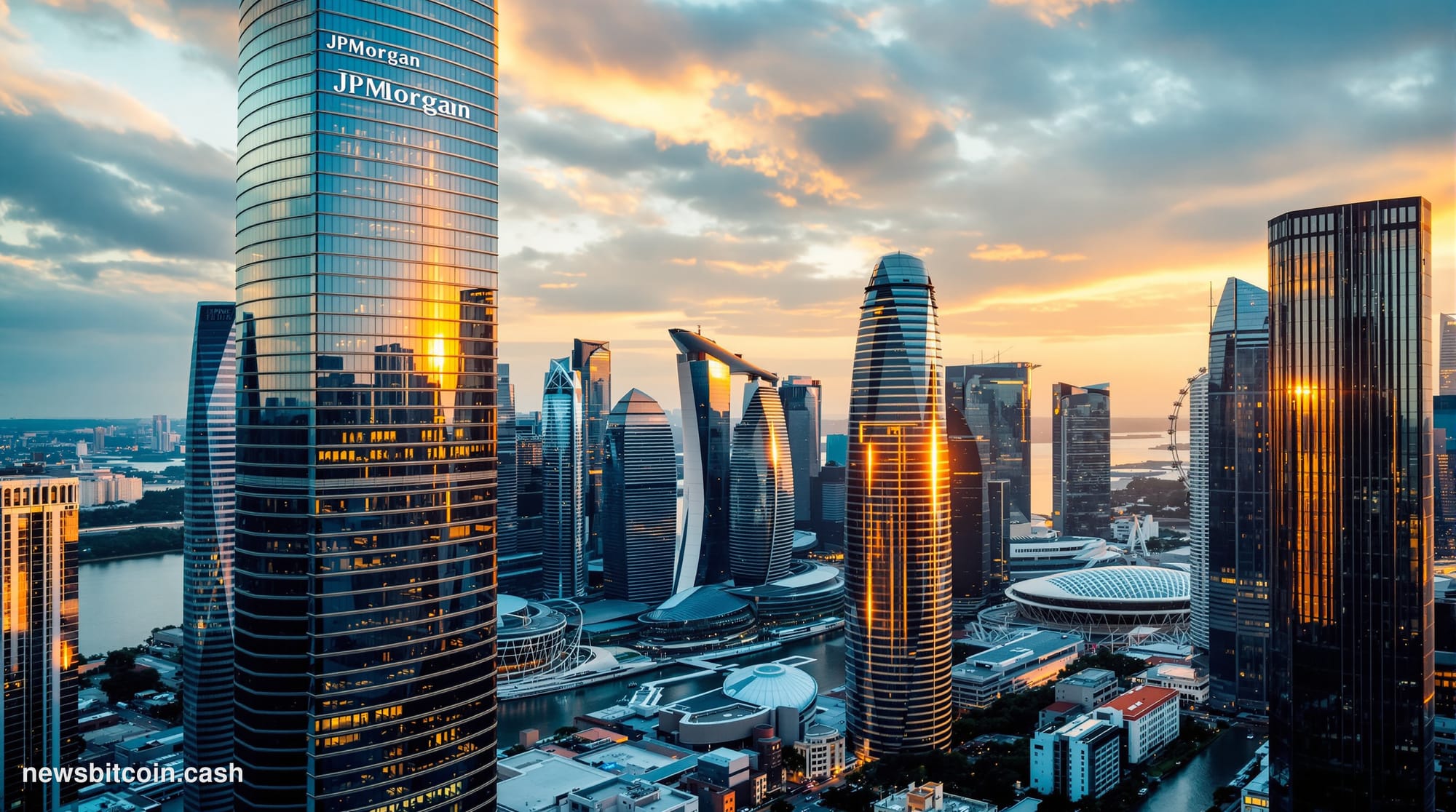
Singapore's ambitious plan to establish a gold-clearing system with JPMorgan and other major financial institutions represents more than just another infrastructure project—it signals Asia's calculated push toward financial sovereignty in precious metals markets that have long been dominated by Western clearing houses.
The initiative positions Singapore to challenge London's historical stranglehold on global gold trading, where the London Bullion Market Association has served as the primary clearing mechanism for decades. By developing its own clearing infrastructure with backing from established banking giants, Singapore aims to capture a larger share of Asia's growing appetite for precious metals trading while reducing the region's dependence on European financial infrastructure.
This move reflects broader geopolitical shifts in financial markets, where Asian economies increasingly seek to establish independent trading mechanisms that bypass traditional Western chokepoints. Singapore's strategic location, regulatory clarity, and established relationships with major financial institutions make it an ideal candidate to serve as Asia's gold trading hub. The participation of JPMorgan, one of the world's largest precious metals dealers, lends institutional credibility to the project and signals confidence in Singapore's regulatory environment.
The timing proves particularly significant as central banks across Asia have been accumulating gold reserves at unprecedented rates, driven by concerns about currency stability and geopolitical tensions. China, India, and Southeast Asian nations have collectively added hundreds of tons to their official gold holdings in recent years, creating demand for more efficient regional trading infrastructure that can handle increased volumes without routing through London's traditional clearing mechanisms.
From a technological perspective, Singapore's gold-clearing system could incorporate modern digital infrastructure that streamlines settlement processes and reduces counterparty risks compared to legacy systems. The city-state's embrace of financial technology and digital assets positions it well to create a more efficient alternative to existing precious metals trading infrastructure, potentially incorporating blockchain-based settlement systems or tokenized gold products that appeal to both traditional and digital asset investors.
The competitive implications extend beyond precious metals into broader commodity trading, where Singapore already serves as a major hub for oil, liquefied natural gas, and agricultural products. Establishing dominance in gold clearing could strengthen Singapore's position across multiple commodity sectors, creating network effects that attract additional trading volume and financial services providers to the jurisdiction.
For global banks, Singapore's gold-clearing initiative offers an opportunity to diversify their clearing and settlement operations away from single geographic concentrations. JPMorgan's participation suggests major institutions recognize the strategic value of supporting alternative clearing infrastructure that could reduce operational risks and provide competitive advantages in serving Asian clients increasingly focused on regional financial solutions.
The success of Singapore's gold-clearing system will largely depend on its ability to attract sufficient trading volumes to achieve the liquidity depths necessary for efficient price discovery and market making. London's dominance stems not just from historical precedent but from the deep liquidity pools that enable large transactions without significant price impact. Singapore will need to demonstrate similar capabilities while offering compelling advantages in terms of cost, settlement efficiency, or regulatory benefits to justify market participants' migration from established systems.
What this means for the broader financial landscape is a potential acceleration of the multipolar trend in global markets, where no single jurisdiction maintains overwhelming dominance across all asset classes. If Singapore successfully establishes itself as Asia's premier gold-trading center, it could serve as a template for similar initiatives in other commodities and financial instruments, further fragmenting global financial infrastructure along regional lines while potentially creating more resilient and competitive market structures.
Written by the editorial team — independent journalism powered by Bitcoin News.