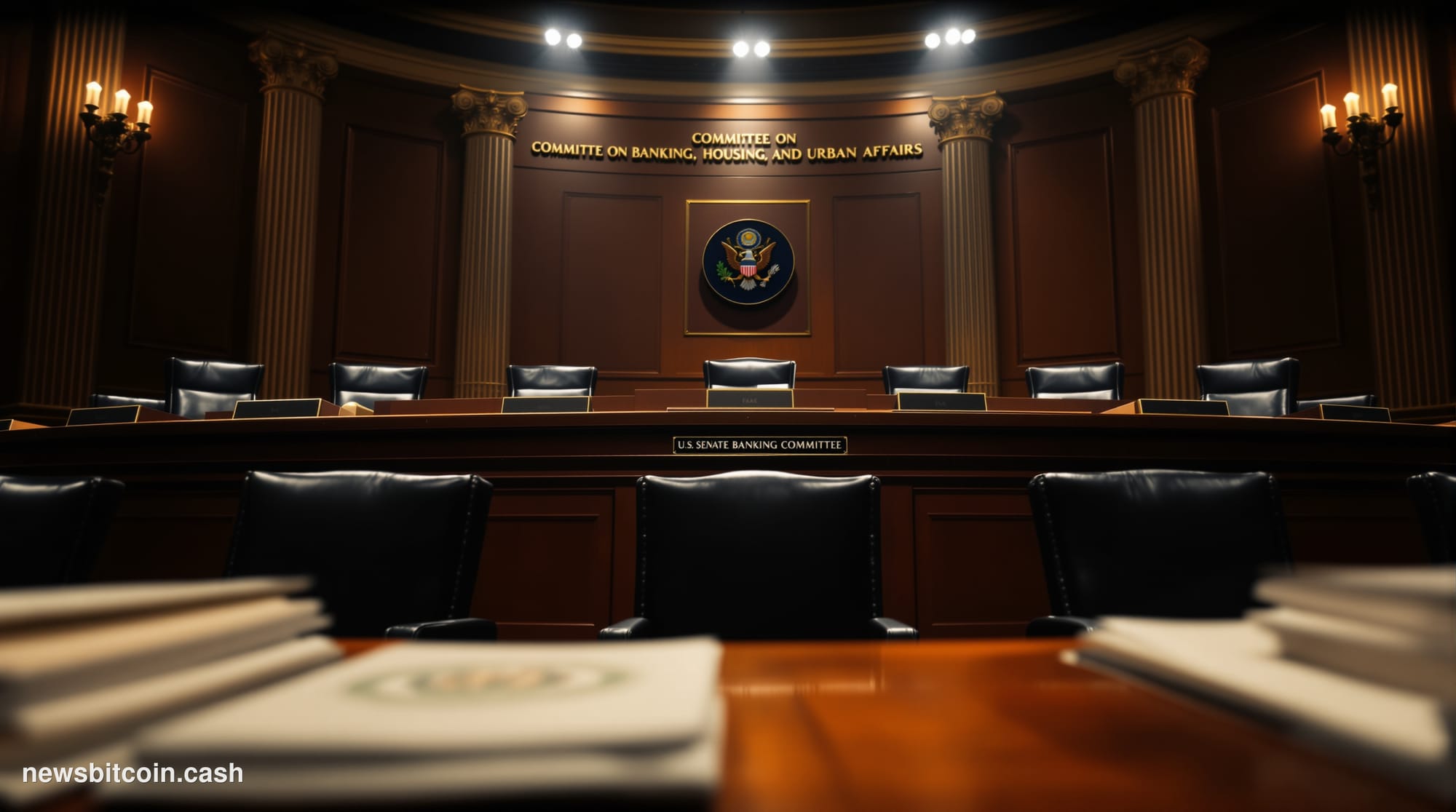
The US Senate Banking Committee has voted to advance the CLARITY Act, marking a significant milestone in the legislative journey toward comprehensive digital asset regulation. The committee's decision sets the stage for a full Senate floor vote on what could become landmark legislation defining the regulatory framework for cryptocurrencies and digital assets in the United States.
The advancement comes after lawmakers engaged in substantive debates over proposed amendments, particularly focusing on ethics provisions and other structural issues within the digital asset market structure bill. These deliberations underscore the complex regulatory challenges that lawmakers face as they attempt to balance innovation with consumer protection in the rapidly evolving cryptocurrency sector.
The CLARITY Act represents one of the most comprehensive attempts by Congress to establish clear regulatory guidelines for digital assets. The legislation aims to provide the market structure certainty that industry participants have long demanded, potentially resolving years of regulatory ambiguity that have hampered institutional adoption and hindered innovation in the United States cryptocurrency ecosystem.
Legislative Momentum Builds
The committee's vote signals growing bipartisan recognition that the United States needs definitive cryptocurrency regulation to maintain its competitive position in the global digital economy. The advancement through the Banking Committee, which holds jurisdiction over financial services regulation, demonstrates that lawmakers are taking seriously the need to provide regulatory clarity for an industry that has grown to represent trillions of dollars in market capitalization.
The focus on ethics amendments during the committee debate reflects lawmakers' awareness of the reputational challenges facing the cryptocurrency industry. These provisions likely address concerns about market manipulation, disclosure requirements, and conflicts of interest that have plagued various segments of the digital asset ecosystem in recent years.
Industry observers have been closely watching the CLARITY Act's progress, as its passage could fundamentally reshape how digital assets are regulated, traded, and integrated into the broader financial system. The legislation's advancement comes at a crucial time when other jurisdictions, including the European Union and the United Kingdom, are implementing their own comprehensive cryptocurrency regulatory frameworks.
Regulatory Infrastructure Takes Shape
The bill's progression through the committee process represents more than procedural advancement—it signals a maturation of congressional understanding around digital asset regulation. The substantive amendments debate suggests lawmakers are grappling with the nuanced technical and policy considerations that effective cryptocurrency regulation requires.
The timing of this advancement is particularly significant given the broader context of cryptocurrency adoption across traditional financial institutions. Major banks, asset managers, and payment processors have increasingly integrated digital assets into their offerings, creating pressure for clear regulatory guidelines that can support institutional-grade compliance frameworks.
For the cryptocurrency industry, the committee's action represents validation of years of lobbying efforts aimed at securing comprehensive federal legislation rather than relying on the current patchwork of state regulations and federal agency guidance. The CLARITY Act's advancement suggests that Congress is moving beyond reactive policy-making toward proactive regulatory framework development.
The path to a Senate floor vote will likely involve additional legislative maneuvering, as supporters work to build the coalition necessary for passage. The bill's success will depend on lawmakers' ability to balance the competing interests of innovation promotion, consumer protection, and financial stability—a challenge that has defined cryptocurrency policy debates for years.
What emerges from this legislative process will likely establish the United States' regulatory approach to digital assets for the foreseeable future, making the upcoming Senate floor vote one of the most consequential cryptocurrency policy decisions in congressional history. The Banking Committee's advancement of the CLARITY Act represents a critical step toward that defining moment.
Written by the editorial team — independent journalism powered by Bitcoin News.