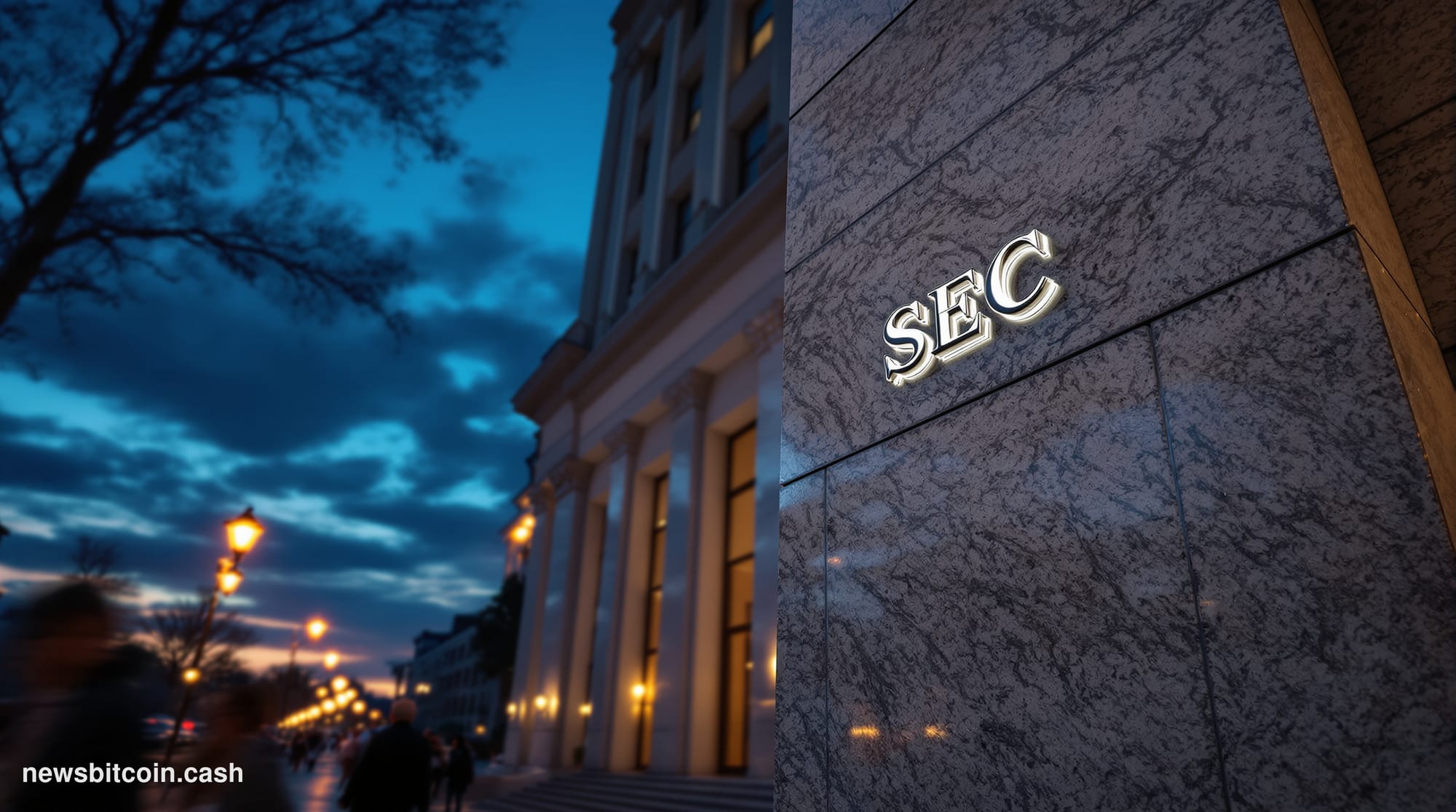
After years of regulatory ambiguity, jurisdictional turf wars, and fitful legislative starts, the U.S. Securities and Exchange Commission appears poised to do something it has long resisted: provide a concrete, workable framework for tokenized stocks. According to reporting from Decrypt, the announcement could arrive as soon as Friday, August 14, 2026 — and if it does, it stands to be the single most consequential development for the crypto industry this year.
That is not hyperbole. Tokenized stocks — blockchain-based representations of equity in publicly traded companies — have hovered at the frontier of digital asset markets for the better part of a decade, perpetually promising but never fully delivered. The infrastructure to issue them has existed for years. The demand from retail and institutional investors has been documented repeatedly. What has been absent, stubbornly, is regulatory clarity from the body that governs U.S. equity markets. The SEC's silence on the subject has functioned as a ceiling on the entire sector, and that ceiling may be about to lift.
Why Tokenized Stocks Matter More Than Most Realize
The promise of tokenized equities is straightforward but profound. By representing shares of, say, Apple or Tesla on a blockchain, issuers can enable fractional ownership, near-instant settlement, 24/7 trading, and programmable compliance — all without dismantling the existing equity infrastructure wholesale. For retail investors in emerging markets who have historically been locked out of U.S. equities, tokenized stocks represent a genuine access revolution. For institutional players, the efficiency gains in settlement and collateral management alone are worth billions of dollars annually.
Several platforms have attempted to operate in this space in recent years, always navigating an uncomfortable gray area. Projects backed by serious capital have launched tokenized stock products only to pull back or pivot when regulatory pressure mounted. The fundamental problem was never technology — it was legal standing. Without SEC guidance on how tokenized equities fit into existing securities law, every product launch was a calculated legal risk, and most sophisticated institutions were unwilling to take it.
What a Framework Could Actually Change
The specifics of the SEC's anticipated framework remain unknown ahead of the formal announcement, but the directional implications are already significant. A formal rulemaking or guidance document from the Commission would, at minimum, establish whether tokenized stocks are treated as securities under existing law, what disclosure requirements apply, how custodial obligations intersect with blockchain-based ownership records, and which intermediaries — broker-dealers, transfer agents, custodians — are required to be involved in the issuance and trading process.
Each of those questions, answered clearly, unlocks a different layer of the market. Clear securities classification gives issuers the legal footing to build products and seek investment. Defined disclosure rules let compliance teams scope the work. Custodial clarity allows banks and qualified custodians to hold tokenized equities for institutional clients. And intermediary requirements, while potentially burdensome, provide the institutional comfort that large asset managers need before allocating capital to a new asset class at scale.
The timing matters as well. The U.S. has watched the European Union advance its Markets in Crypto-Assets Regulation (MiCA) framework and its DLT Pilot Regime for tokenized securities, while jurisdictions including Singapore, the UAE, and Switzerland have all carved out regulatory space for blockchain-based equity instruments. Washington's inaction has not stopped the global tokenization industry from developing — it has simply relocated much of that development offshore. A Friday announcement would signal a meaningful shift in that competitive posture.
The Infrastructure Ecosystem Watching Closely
Across the digital asset industry, the actors with the most to gain from SEC clarity are those who have spent years building the rails in anticipation of exactly this moment. Blockchain networks capable of handling compliant financial instruments, tokenization platforms, digital asset custodians, and regulated broker-dealers with crypto capabilities have all made long-duration bets that regulatory legitimacy would eventually arrive. For them, the SEC's framework is not a surprise — it is a catalyst.
Secondary effects will ripple through adjacent sectors as well. Stablecoin issuers and decentralized finance protocols stand to benefit from increased institutional interest in on-chain financial products. If tokenized stocks become a regulated, accessible product class, the infrastructure connecting them to liquidity — settlement layers, cross-chain bridges, compliance tooling — gains immediate commercial relevance.
What This Means
A regulatory framework for tokenized stocks from the SEC would represent a structural shift, not merely a policy update. It would transform a speculative category into a regulated asset class, give compliant builders the legal standing they have lacked, and likely accelerate a wave of product launches from institutions that have been waiting on the sidelines. Whether Friday's expected announcement delivers broad clarity or narrow guidance, the direction of travel is now unmistakable: the SEC is no longer treating tokenized equities as a problem to defer. That alone changes the calculus for every serious participant in the digital asset market.
Written by the editorial team — independent journalism powered by Bitcoin News.