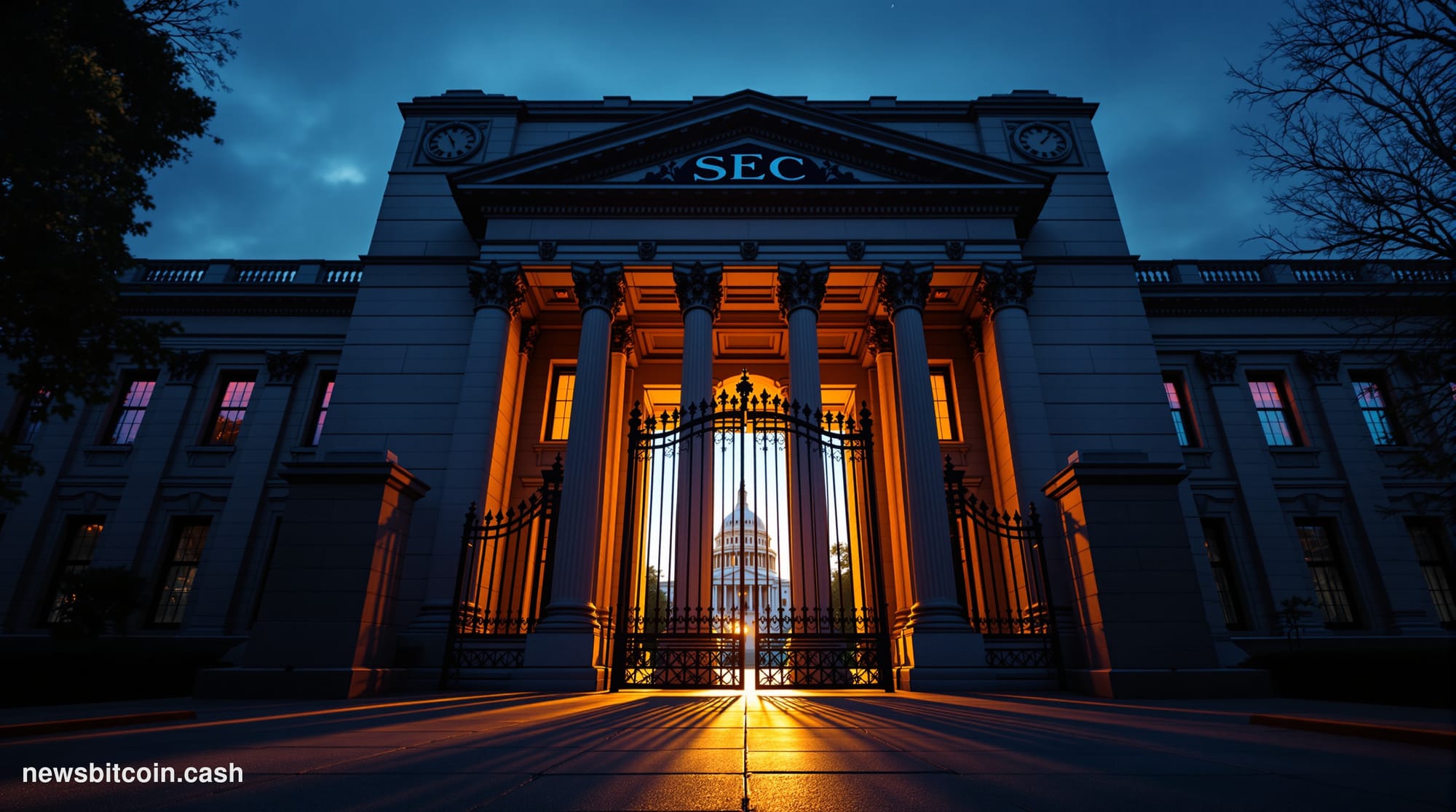
When the chair of the Securities and Exchange Commission stands before an audience and uses the word "weaponization" to describe his own agency's conduct toward an entire industry, it is not a routine policy update. It is an institutional confession — one that carries significant weight for the millions of Americans who built businesses, wrote code, and took legal risks inside a regulatory vacuum that Washington deliberately refused to fill. SEC Chair Paul Atkins has now said out loud what the crypto industry has argued for years: the SEC, under prior leadership, was used as an instrument of suppression rather than investor protection.
The acknowledgment did not emerge in a vacuum. It arrives as the CLARITY Act — legislation designed to draw a workable boundary between digital assets that qualify as securities and those that do not — is making its way through the legislative process. The timing is not coincidental. Atkins' public admission of the agency's past overreach functions as both a political signal and a substantive concession, suggesting that the regulatory environment surrounding digital assets is undergoing a structural recalibration, not merely a change in tone.
For context, the critique of the SEC's prior posture toward crypto has long centered on a strategy critics labeled "regulation by enforcement." Rather than issuing clear guidance on how existing securities law applied to digital tokens, the agency under former Chair Gary Gensler repeatedly sued first and answered questions later. Exchanges, token issuers, decentralized finance protocols, and lending platforms were all targeted through enforcement actions that left the broader market guessing which activities were lawful. Atkins' use of the term "weaponization" is a direct repudiation of that approach — and coming from the sitting chair, it carries institutional authority that no outside critic could replicate.
The pivot toward transparency that Atkins is now championing represents more than a rhetorical shift. A regulator committed to transparency in its rulemaking process operates fundamentally differently from one that relies on after-the-fact litigation to define the rules. Transparent regulatory processes invite comment, create predictable compliance pathways, and reduce the legal risk premium that has historically driven crypto infrastructure development offshore. If the SEC under Atkins genuinely operationalizes this commitment, the downstream effects on where companies choose to domicile, build, and list assets could be considerable.
The CLARITY Act itself is the legislative vehicle most directly shaped by this new environment. The Act seeks to resolve what has been crypto's most persistent legal problem: the absence of a clear statutory framework distinguishing securities from commodities in the digital asset context. For years, both the SEC and the Commodity Futures Trading Commission claimed overlapping jurisdiction over different corners of the market, creating a regulatory no-man's-land that invited inconsistent enforcement and made compliance genuinely difficult. A chair of the SEC publicly conceding that the agency overstepped strengthens the political case for legislation that formally constrains that overreach by statute.
Legislative observers have noted that Atkins' posture could meaningfully influence the CLARITY Act's prospects in Congress. Regulatory agency support — or at minimum, the absence of opposition — is often determinative for technical financial legislation. When the SEC was positioned as an adversary to crypto legislation, it created headwinds in committee. An SEC chair who acknowledges the agency's own misconduct and signals support for greater regulatory clarity removes a significant institutional obstacle from the Act's path. That does not guarantee passage, but it substantially changes the political calculus.
What remains to be seen is whether the transparency Atkins is promising translates into concrete rulemaking that the industry can actually use. Acknowledgment of past wrongs is necessary but insufficient. The crypto sector — particularly the infrastructure layer of exchanges, custodians, and protocol developers — needs affirmative guidance: clear definitions, safe harbors, and a registration pathway that does not require a decade of litigation to navigate. The CLARITY Act, if passed, would provide that statutory foundation. But even before legislation is finalized, the SEC has tools available to issue guidance, establish no-action frameworks, and signal enforcement priorities in ways that reduce market uncertainty immediately.
The broader significance of this moment should not be understated. A sitting SEC chair using the word "weaponization" to describe his own agency's prior conduct is an extraordinary event in the history of American financial regulation. It validates years of industry argument, reframes the political debate around the CLARITY Act, and sets a new baseline for what the crypto industry can reasonably expect from its primary federal regulator. Whether that expectation is met will depend entirely on what follows the admission — in rulemaking, in enforcement priorities, and ultimately in the legislative architecture that Congress builds around it.
Written by the editorial team — independent journalism powered by Bitcoin News.