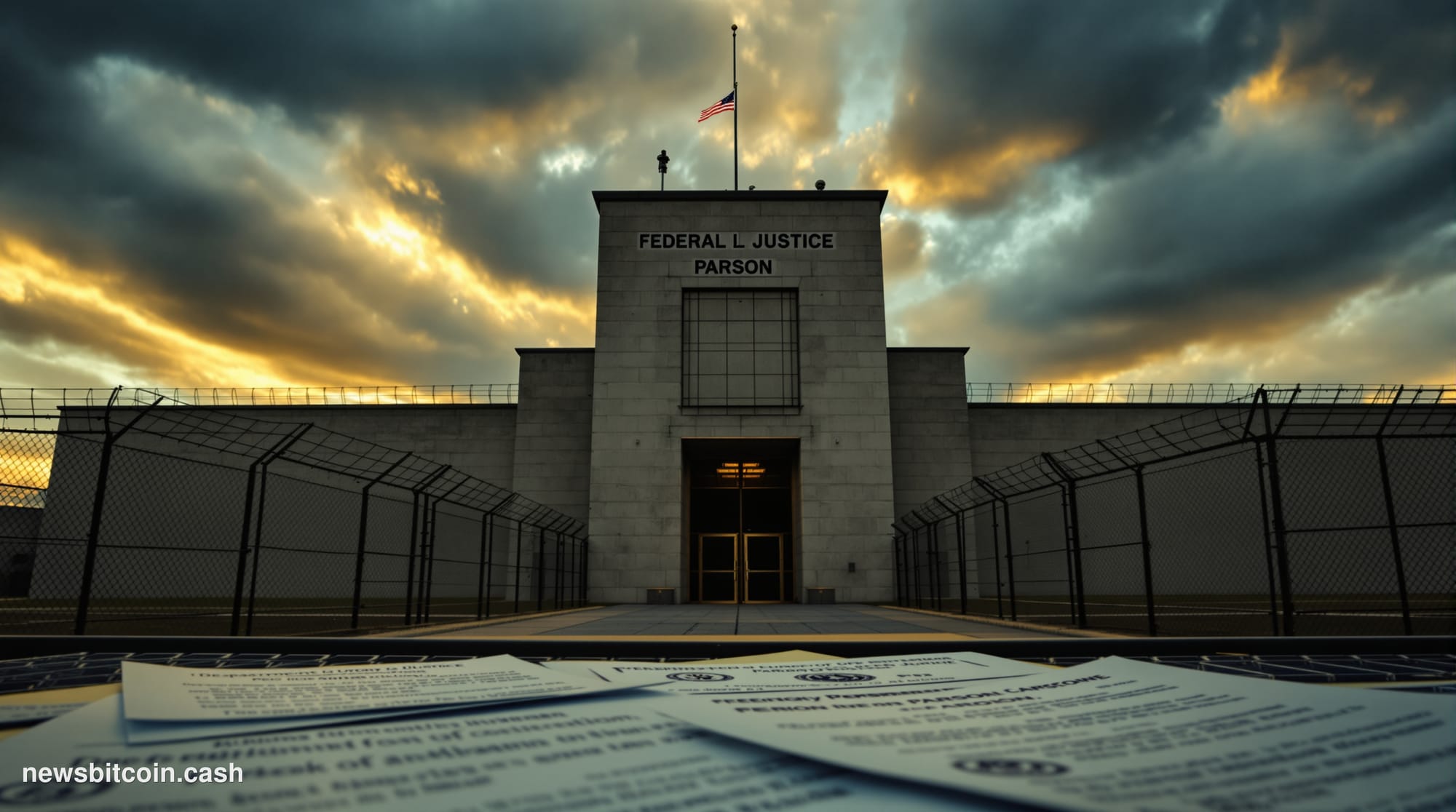
The formal submission of FTX founder Sam Bankman-Fried's presidential pardon application through the Department of Justice website represents more than a desperate legal maneuver—it crystallizes the crypto industry's ongoing struggle with accountability and consequences. Despite President Trump's repeated rejections of similar requests, the convicted executive's latest bid for clemency underscores fundamental questions about justice in the digital asset sector.
Bankman-Fried is currently serving a 25-year federal sentence handed down on March 28, 2024, for orchestrating what prosecutors characterized as fraud that stole over $8 billion in customer funds. The magnitude of this theft places it among the largest financial crimes in American history, yet the pardon application suggests an expectation that political intervention might somehow supersede judicial process.
The timing of this formal application reveals strategic calculation despite its apparent futility. Presidential pardons for financial crimes of this scale remain extraordinarily rare, particularly when the conviction involved systematic theft from retail customers rather than regulatory technicalities. The $8 billion figure represents real money from real people—teachers, retirees, and ordinary investors who trusted their savings to what appeared to be a legitimate cryptocurrency exchange.
Political Reality Meets Legal Precedent
Trump's consistent rejection of previous pardon overtures suggests this latest formal submission faces similar prospects. The former and current president has shown little appetite for controversial clemency decisions involving major financial fraud, particularly cases that attracted significant public attention and involved clear victim harm. The political cost of pardoning someone convicted of stealing billions from ordinary Americans would likely outweigh any perceived benefits.
The pardon application process itself requires detailed justification and typically involves extensive background investigation by the Department of Justice. For cases involving fraud of this magnitude, the review process alone can take months or years—time that works against any urgent clemency strategy. Federal sentencing guidelines for financial crimes specifically account for victim impact and loss amounts, making the $8 billion theft a particularly heavy anchor against clemency considerations.
More fundamentally, this pardon bid highlights the crypto industry's complex relationship with traditional legal frameworks. While the sector has matured significantly in terms of regulatory compliance and institutional adoption, high-profile cases like FTX continue to shape public perception and policy responses. The spectacle of a convicted crypto executive seeking presidential intervention reinforces narratives about the industry's relationship with established legal norms.
Broader Implications for Crypto Governance
The formal nature of this pardon application carries implications beyond Bankman-Fried's personal circumstances. It signals to other industry participants that criminal conviction for customer fund theft remains a serious matter with genuine consequences. The 25-year sentence has already served as a deterrent signal throughout the crypto sector, and successful clemency could potentially undermine that deterrent effect.
From a precedent standpoint, presidential pardons in major financial fraud cases typically require extraordinary circumstances—whistleblowing, cooperation with ongoing investigations, or evidence of prosecutorial misconduct. Public records suggest none of these factors apply to the FTX case, where prosecutors successfully demonstrated systematic misappropriation of customer funds through multiple channels and over extended periods.
The application also raises questions about resource allocation within both the crypto industry and the federal justice system. Legal teams pursuing long-shot clemency strategies represent significant financial investment, while DOJ resources spent reviewing obviously frivolous applications could theoretically be directed toward active investigations or other enforcement priorities.
What This Means
Bankman-Fried's formal pardon application represents the final chapter of a legal strategy that began with claims of regulatory ambiguity and has evolved into outright appeals for political intervention. The systematic nature of this approach—from initial denial through appeals and now clemency—demonstrates how high-stakes financial crime cases can generate extended legal battles even after conviction.
For the broader cryptocurrency ecosystem, this pardon bid serves as a reminder that digital assets remain subject to traditional legal frameworks and consequences. The $8 billion theft and resulting 25-year sentence established clear precedent for customer fund misappropriation, regardless of technological innovation or regulatory complexity. The industry's continued growth and institutional adoption depends partly on demonstrating that criminal behavior faces appropriate consequences, making successful clemency potentially counterproductive for sector-wide legitimacy.
The ultimate resolution of this pardon application will likely reinforce existing precedent rather than create new exceptions, but the formal submission itself ensures continued public attention on crypto accountability standards and the relationship between innovation and established legal norms.
Written by the editorial team — independent journalism powered by Bitcoin News.