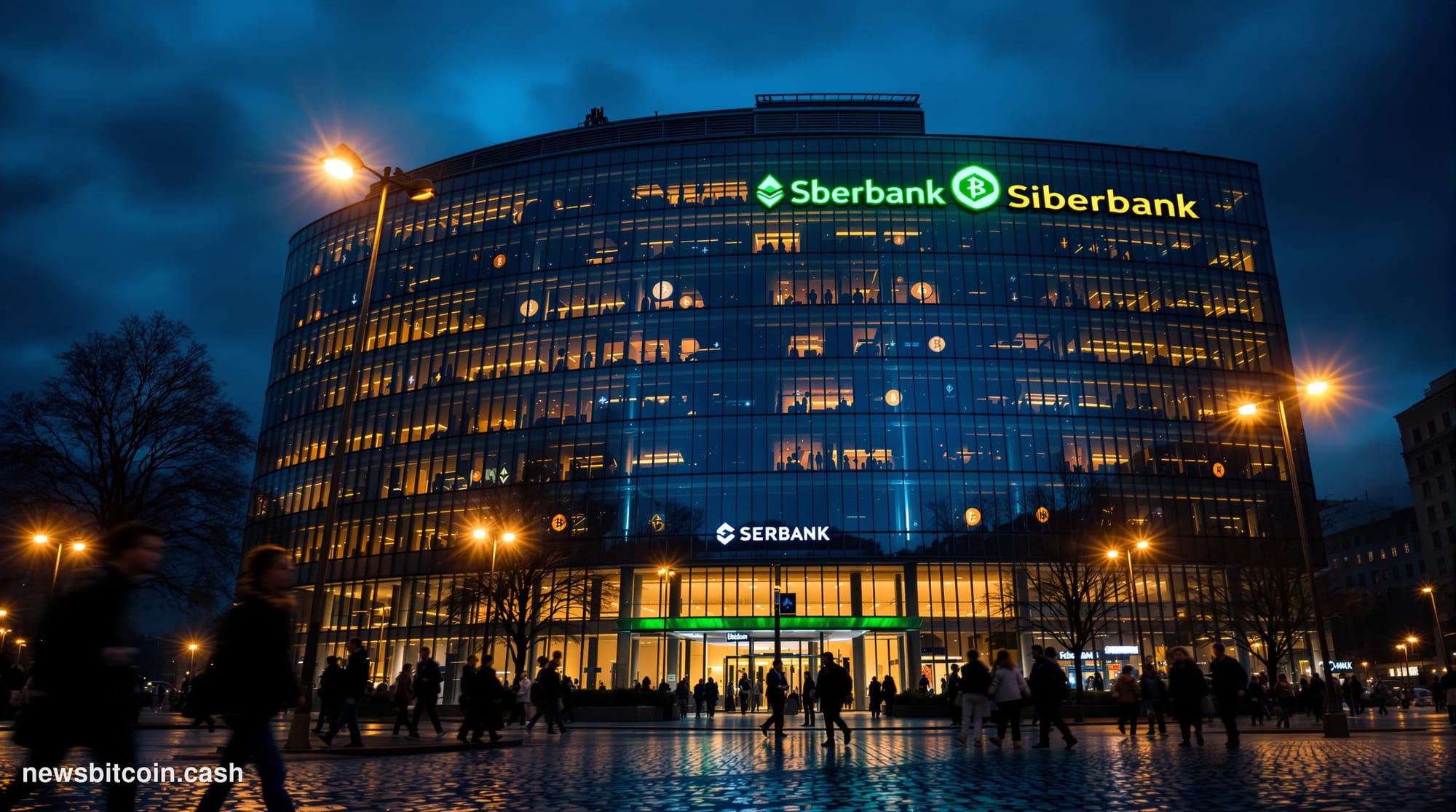
Russia's largest state-controlled lender, Sberbank, has secured regulatory clearance to trade cryptocurrencies, becoming one of the first major Russian financial institutions to obtain both custody and exchange status under the country's newly enacted crypto legislation. The bank intends to roll out trading in Bitcoin, Ethereum, and USDT directly through its existing consumer applications — platforms already used by 110 million retail clients. The scale is extraordinary. This is not a niche crypto startup targeting early adopters; this is the backbone of Russian retail banking deploying digital assets to a client base roughly the size of France and Germany combined.
A Dual License That Changes the Game
What makes the Sberbank authorization particularly significant is the breadth of its regulatory scope. The bank has been granted both custody and exchange licenses under Russia's new crypto law — a dual designation that allows it to hold clients' digital assets on their behalf and to facilitate the actual buying and selling of those assets within a single institutional framework. That combination matters enormously from an infrastructure standpoint. It removes the need for Sberbank clients to interact with third-party custodians or offshore exchanges, consolidating the entire crypto value chain inside one of the most systemically important banks in the Russian Federation. For regulators attempting to bring crypto activity onshore and under surveillance, having Sberbank as the delivery vehicle is a calculated choice: the bank already operates one of the most comprehensive know-your-customer and anti-money-laundering frameworks in the country.
The Asset Selection Is Telling
The three assets selected for the initial rollout — Bitcoin, Ethereum, and USDT — represent a deliberate and pragmatic shortlist. Bitcoin is the store-of-value anchor that institutional and retail demand consistently gravitates toward in periods of macroeconomic stress. Ethereum provides exposure to the programmable-asset layer, keeping the door open for future smart contract and tokenization use cases within the bank's ecosystem. USDT, Tether's dollar-pegged stablecoin, is the most operationally loaded of the three choices. For a country operating under sweeping Western financial sanctions, access to a dollar-denominated digital instrument through a domestic banking interface represents a meaningful workaround for both corporate treasury managers and individual savers seeking dollar exposure without access to conventional foreign exchange channels. Whether that use case was explicitly anticipated by regulators or merely tolerated is a question that will define how aggressively Sberbank pushes USDT adoption in the months ahead.
110 Million Clients: The Distribution Advantage
The distribution angle may be the most consequential aspect of this development for the global crypto industry. No single regulated institution has ever had the ready-made retail reach that Sberbank brings to this moment. Exchanges like Binance and Coinbase have spent years and billions of dollars building consumer bases measured in the tens of millions globally. Sberbank's 110 million retail clients are already embedded in its app ecosystem, already verified under Russian financial law, and already habituated to managing their financial lives through the bank's digital interface. The activation barrier for crypto adoption within that user base is dramatically lower than anything a standalone crypto exchange can replicate. If even a fraction of that client base engages with Bitcoin or USDT trading in the first year, the resulting volume figures will demand attention from anyone tracking global crypto market structure.
Russia's Regulatory Pivot Takes Shape
The Sberbank approval is not an isolated event — it is the most visible manifestation yet of a structured regulatory pivot that Russia has been executing on digital assets. The country's new crypto law created defined licensing categories for custody and exchange operations, a framework specifically designed to bring previously gray-market crypto activity under state oversight rather than prohibit it outright. That shift reflects lessons absorbed from earlier, blunter prohibition attempts and from watching other jurisdictions — most notably the European Union's Markets in Crypto-Assets, or MiCA, framework — demonstrate that structured legalization produces more revenue, more data, and more control than bans ever achieved. Sberbank's dual authorization is the first truly large-scale test of whether Russia's legislative architecture can support institutional-grade crypto infrastructure.
What This Means for the Broader Market
The geopolitical dimension cannot be extracted from this story. Sberbank is a sanctioned entity in multiple Western jurisdictions, and the assets it will be trading — particularly USDT — have been subjects of intense regulatory scrutiny globally. The approval signals that Moscow views a state-bank-mediated crypto layer as strategically valuable, not merely as a financial product offering. For the rest of the industry, the more immediate implication is structural: when a 110-million-user institution enters the custody and exchange space under a national legal framework, it sets a template that other state-linked banks in non-Western markets will observe closely. The friction between that template and the compliance requirements of the Western-dominated financial system will generate regulatory turbulence for years. The Sberbank crypto license is, in the most precise sense, an infrastructure event — and its downstream effects on market access, stablecoin flows, and cross-border capital movement deserve more sustained analytical attention than a single regulatory approval typically receives.
Written by the editorial team — independent journalism powered by Bitcoin News.