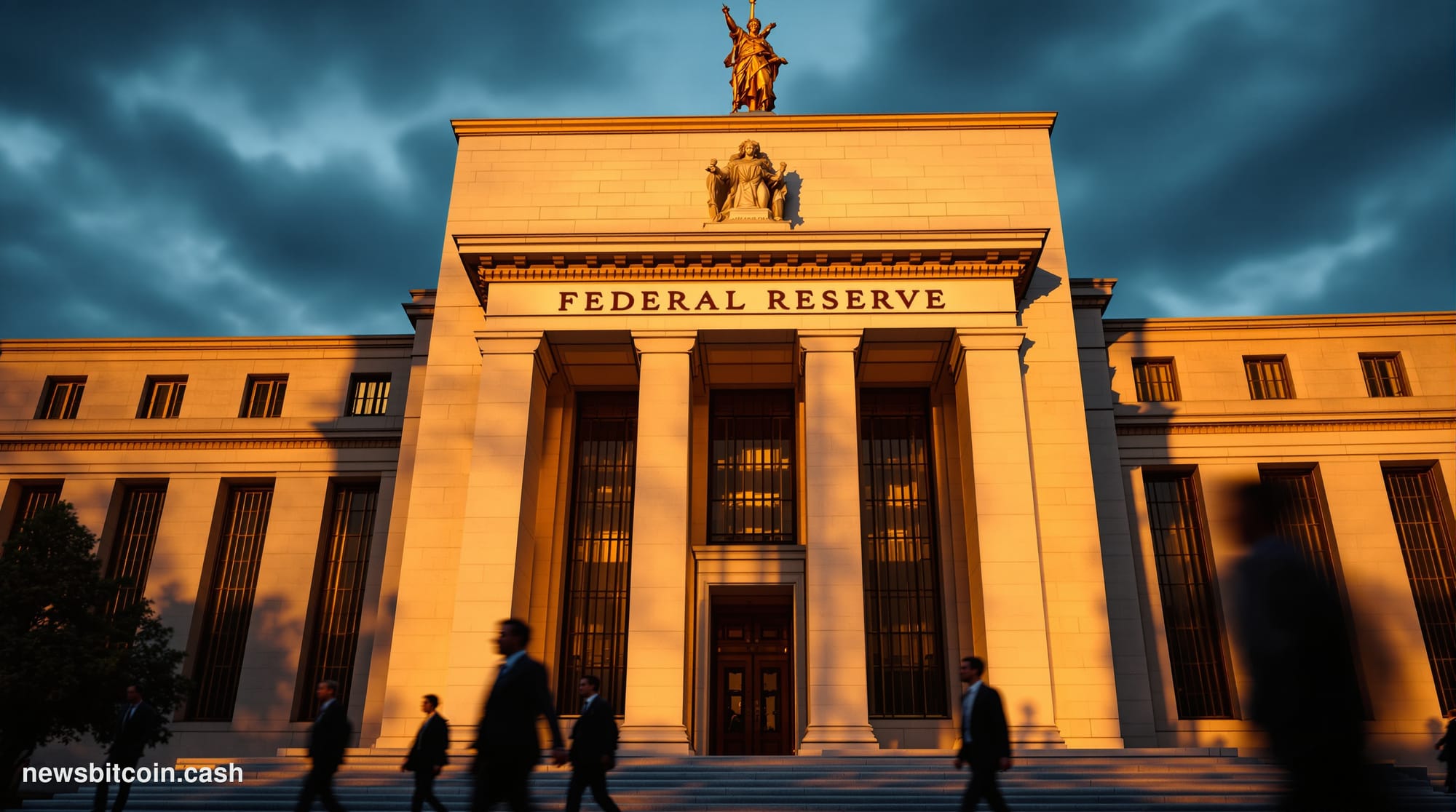
When the United States placed VTB on its sanctions blacklist over the bank's connections to Iran, the intent was isolation — cutting Russia's second-largest financial institution off from the arteries of the global dollar system. What American regulators may not have fully anticipated was that the institution would eventually find a different artery: Bitcoin. VTB has now moved into cryptocurrency sales, a development that lands at the precise intersection of geopolitical sanctions enforcement and the ideological promises of permissionless money.
The move is not purely symbolic. VTB is not a minor regional lender or a scrappy fintech startup looking for a niche. It is one of the most systemically significant banks in Russia, deeply embedded in the country's state financial architecture. For an institution of that stature — one explicitly named on a US sanctions list tied to Iran — to begin selling Bitcoin is a signal worth reading carefully. It tells us something about where crypto fits in the toolkit of sanctioned economies, and it tells us something about the limits of financial coercion in the digital age.
Who Gets to Buy, and What Can Be Frozen
VTB's Bitcoin sales are not open to everyone. Access is restricted, with eligibility criteria determining who can participate in the bank's crypto offering. That selectivity matters: it suggests the bank is not operating a freewheeling exchange but rather a controlled, institutionally managed channel — one that lets Russia maintain some governance over who within its borders accumulates digital assets through state-linked infrastructure.
Equally significant is the question of which cryptocurrencies remain vulnerable to US intervention. Not all digital assets are created equal from an enforcement standpoint. Stablecoins like Tether's USDT and Circle's USD Coin (USDC) carry issuer controls that allow for freezing — the companies behind them have demonstrated willingness to blacklist wallet addresses at the request of law enforcement. Bitcoin, by contrast, has no issuer. No corporation can freeze a Bitcoin wallet address in the same way. That architectural distinction is almost certainly not lost on the strategists inside VTB who designed this program.
Crypto as Sanctions Infrastructure
Russia's broader relationship with crypto has evolved dramatically since the country's financial system was placed under sustained Western pressure following geopolitical escalations in 2022. What began as a contested regulatory conversation inside Moscow — with competing voices arguing for bans, for tight controls, or for cautious embrace — has since shifted toward pragmatic adoption. The state has increasingly viewed crypto not as a speculative curiosity but as a potential instrument for maintaining economic activity outside the reach of SWIFT and dollar-denominated settlement networks.
VTB entering the Bitcoin sales business fits squarely into that strategic logic. A sanctioned bank selling a censorship-resistant asset to a curated pool of buyers is not a rogue act — it looks more like deliberate policy. It raises immediate questions for the US Treasury's Office of Foreign Assets Control (OFAC) and for the broader international sanctions enforcement community: how do you apply financial pressure on an institution that is actively routing around the pressure through decentralized infrastructure?
The Freeze Problem and Protocol-Level Politics
The distinction between freezable and non-freezable crypto assets is now a live regulatory and geopolitical question, not an academic one. When Centre freezes a USDC address or Tether blacklists a wallet, they are functioning as extensions of compliance infrastructure — private companies enforcing public law. Bitcoin's protocol has no such hook. There is no CEO to call, no compliance team to pressure, no server to subpoena. Transactions validate through distributed consensus, indifferent to the nationality or sanctions status of the parties involved.
This is precisely why VTB's choice of Bitcoin — rather than a ruble-pegged stablecoin or a state-controlled digital currency — matters. It reflects an understanding at the institutional level that the asset's value as a sanctions workaround depends on its resistance to exactly the kind of intervention that makes other digital assets controllable. Whether that calculation ultimately serves VTB's customers, Russia's economy, or only its geopolitical adversaries' arguments for tighter crypto regulation remains an open question.
What This Means for Crypto's Global Role
VTB's entry into Bitcoin sales forces a reckoning that the crypto industry has long deferred. The same properties that make Bitcoin genuinely useful — permissionlessness, censorship resistance, the absence of a controlling issuer — are the properties that make it attractive to sanctioned actors. That is not a bug introduced by bad actors; it is an emergent consequence of the design. Western regulators, exchanges like Coinbase and Binance, and the broader compliant crypto ecosystem will face renewed pressure to demonstrate that on-ramps and off-ramps can be policed even when the underlying asset cannot.
For infrastructure builders, compliance teams, and policymakers alike, VTB's move is less a scandal than a stress test. The question it poses is not whether sanctioned entities can access Bitcoin — it is whether the ecosystem built around Bitcoin is capable of making that access consequential enough to matter strategically. The answer will shape crypto regulation for years to come.
Written by the editorial team — independent journalism powered by Bitcoin News.