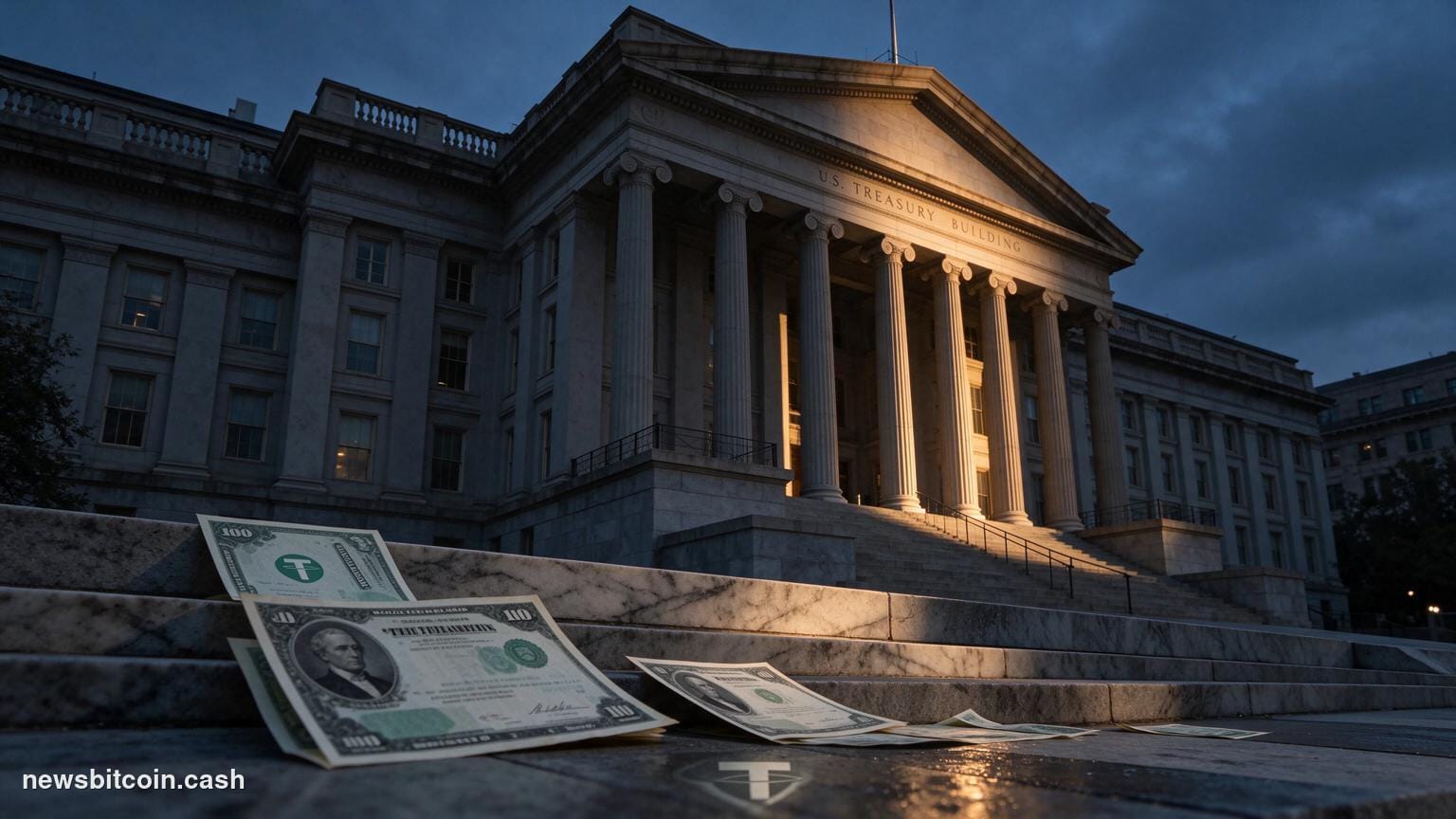
The world's largest stablecoin operator, Tether, sits at a peculiar crossroads of crypto finance and global geopolitics. The company holds $132.4 billion in US Treasury bills — a position that makes it one of the most consequential buyers of American sovereign debt on the planet. Now, a report from the Financial Times adds a combustible variable to that equation: a Russian venture capitalist holds a multibillion-dollar ownership stake in the firm.
The revelation demands more than passing attention. Tether's treasury holdings are not a footnote — they are the foundational collateral that underpins every USDT token in circulation. When a stablecoin issuer of this scale is revealed to have significant ownership tied to a Russian national, the conversation shifts rapidly from monetary plumbing to national security infrastructure. The question is no longer just whether Tether is adequately reserved. It is who, ultimately, benefits from and exerts influence over a private entity that has quietly become a major creditor of the United States government.
The Scale of Tether's Treasury Footprint
To understand the stakes, consider the numbers. At $132.4 billion in US Treasury bills, Tether's holdings would rank it alongside sovereign wealth funds and central banks as a systemically meaningful participant in the US debt market. For context, many mid-sized nations carry smaller foreign exchange reserves than Tether's Treasury position. This is not a crypto startup dabbling in safe assets — it is a private, offshore-domiciled company with an outsized role in sustaining demand for American government paper.
Tether has long argued that this Treasury exposure is precisely what makes USDT trustworthy: liquid, dollar-denominated assets backing each token at a one-to-one ratio. That argument has gained traction in Washington as stablecoin legislation advances. But the Financial Times report complicates the narrative that Tether is simply a neutral financial utility. If a Russian venture capitalist holds a multibillion-dollar stake, then the profits generated by those Treasury holdings — and the strategic decisions made about them — flow in part to an ownership structure with ties to a country currently under sweeping US and European sanctions regimes.
Ownership, Influence, and the Sanctions Dimension
The identity and precise stake size of the Russian investor have not been fully detailed in what the Financial Times published, and the snippet of information available raises more questions than it answers. What is the nature of the ownership — equity, economic interest, or voting rights? Has the stake been disclosed to any regulatory authority? And critically, does it fall within the scope of existing sanctions frameworks targeting Russian capital?
These are not rhetorical questions. The US Office of Foreign Assets Control maintains strict rules about American persons — and by extension, US-domiciled financial infrastructure — transacting with sanctioned entities or jurisdictions. Tether operates outside the US, primarily through its registration in the British Virgin Islands and operational presence in El Salvador, which complicates direct regulatory jurisdiction. But the fact that it holds over $132 billion in US government instruments creates an indirect and deeply uncomfortable entanglement.
Stablecoin advocates in Washington have spent considerable energy arguing that dollar-backed stablecoins like USDT extend US financial influence globally, acting as a soft-power tool that keeps international commerce denominated in dollars. That argument becomes structurally awkward when the entity doing the extending has an ownership layer that includes capital from a geopolitical adversary.
Regulatory Timing Could Not Be Worse — or More Significant
The disclosure arrives precisely as the US Congress is working through competing stablecoin regulatory frameworks. Both the Senate and House versions of proposed stablecoin legislation include provisions around reserve requirements, audit standards, and issuer registration. What neither bill has fully resolved is the question of foreign ownership and national security vetting for stablecoin issuers — an oversight this report throws into sharp relief.
Tether's CEO Paolo Ardoino has consistently maintained that the company is transparent about its reserves and committed to working constructively with regulators. The firm publishes quarterly attestations of its holdings, and those documents show the Treasury bill position prominently. But attestations of reserve composition are not the same as full corporate transparency. Ownership structures, profit distribution, and investor identities are a different layer of disclosure entirely — one that existing frameworks have not yet required from stablecoin issuers operating offshore.
What This Means
This story will not fade quietly. The combination of Tether's $132.4 billion Treasury footprint and a Russian venture capitalist's multibillion-dollar ownership stake is exactly the kind of geopolitical data point that congressional oversight committees, the US Treasury, and the Financial Crimes Enforcement Network cannot ignore. It injects a foreign-ownership vetting requirement into the stablecoin debate with an urgency that abstract policy arguments rarely achieve. Whether Tether is ultimately found to have violated any law is almost secondary — the structural opacity that allowed this situation to remain undisclosed for so long is itself the regulatory failure that legislators will now feel compelled to address. The world's most widely used stablecoin, backstopped by American sovereign debt, may soon face the most consequential scrutiny in its history.
Written by the editorial team — independent journalism powered by Bitcoin News.