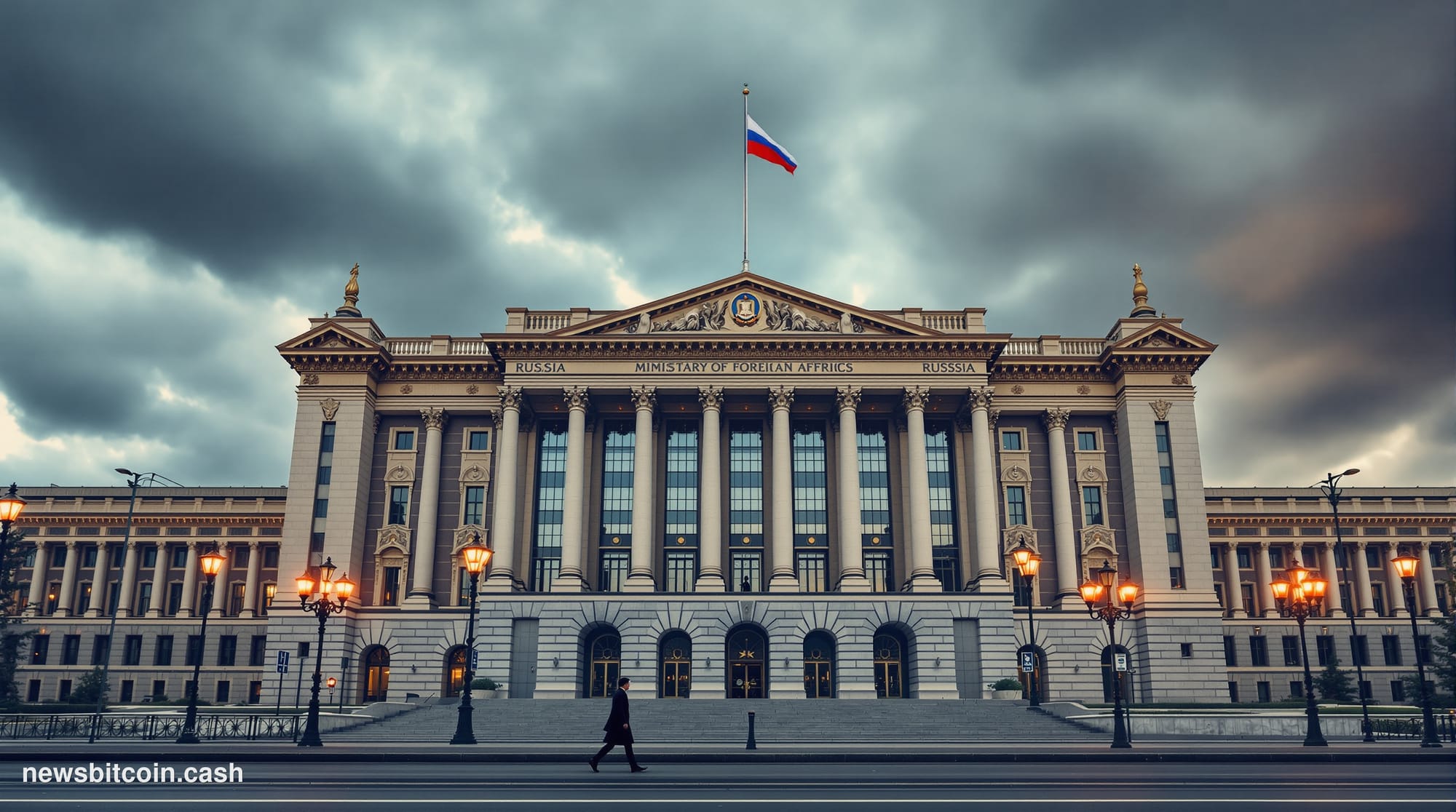
Russia has imposed sanctions on a British teenager whose research allegedly exposed Moscow's use of cryptocurrency to circumvent international sanctions, marking an unprecedented escalation in the geopolitical battle over digital asset surveillance and state accountability.
The sanctions targeting the young researcher represent a stark illustration of how cryptocurrency's role in modern statecraft extends far beyond traditional financial markets into the realm of information warfare and cross-border retaliation. The teenager's investigation into Russia's alleged illicit crypto flows appears to have struck a particularly sensitive nerve within the Kremlin, prompting what amounts to diplomatic reprisal against a private citizen conducting independent research.
This extraordinary development underscores the increasingly sophisticated methods nations are employing to monitor and potentially circumvent sanctions regimes through digital assets. While traditional banking systems remain subject to comprehensive oversight and compliance frameworks, cryptocurrency networks have provided alternative pathways that require different investigative approaches. The British teenager's work evidently succeeded in mapping these alternative financial flows with sufficient precision to warrant Moscow's attention and ire.
The incident reveals the broader tensions surrounding cryptocurrency's dual nature as both a tool for financial sovereignty and a potential mechanism for sanctions evasion. As international pressure on Russia intensified following various geopolitical developments, digital assets have emerged as a critical battleground where traditional regulatory frameworks struggle to maintain comprehensive oversight. Independent researchers, particularly those with technical expertise in blockchain analysis, have increasingly filled gaps left by slower-moving institutional oversight.
Russia's decision to sanction a teenager for research activities signals a new phase in how authoritarian states respond to decentralized investigation and transparency efforts. Unlike previous eras where state secrecy could be more effectively maintained, blockchain technology's inherent transparency creates permanent records that skilled analysts can interpret to reveal financial flows that governments might prefer to keep hidden.
The case also highlights the vulnerability of individual researchers working on sensitive geopolitical topics involving cryptocurrency. While blockchain analysis has democratized financial surveillance capabilities, it has also exposed practitioners to potential retaliation from state actors who view such research as hostile intelligence gathering. This dynamic could have chilling effects on independent research into cryptocurrency's role in international sanctions regimes.
For the broader cryptocurrency ecosystem, this incident demonstrates how digital assets have become central to modern geopolitical conflicts. The technology's pseudonymous nature and global accessibility make it an attractive tool for circumventing traditional financial controls, but the same characteristics that enable such circumvention also create investigative opportunities for determined researchers.
The implications extend beyond this specific case to broader questions about cryptocurrency regulation and international cooperation. As digital assets become more deeply integrated into both legitimate commerce and illicit financial flows, the need for sophisticated monitoring and analysis capabilities grows correspondingly. Independent researchers have proven capable of conducting such analysis, but their work now carries potential personal costs that governments and international organizations must consider when developing comprehensive responses to sanctions evasion.
This development may also influence how cryptocurrency exchanges and other service providers approach compliance with sanctions regimes. The attention drawn to Russian crypto activities through independent research could prompt enhanced scrutiny of transactions originating from or connected to sanctioned jurisdictions, potentially affecting the broader digital asset ecosystem's approach to geopolitical risk management.
Written by the editorial team — independent journalism powered by Bitcoin News.