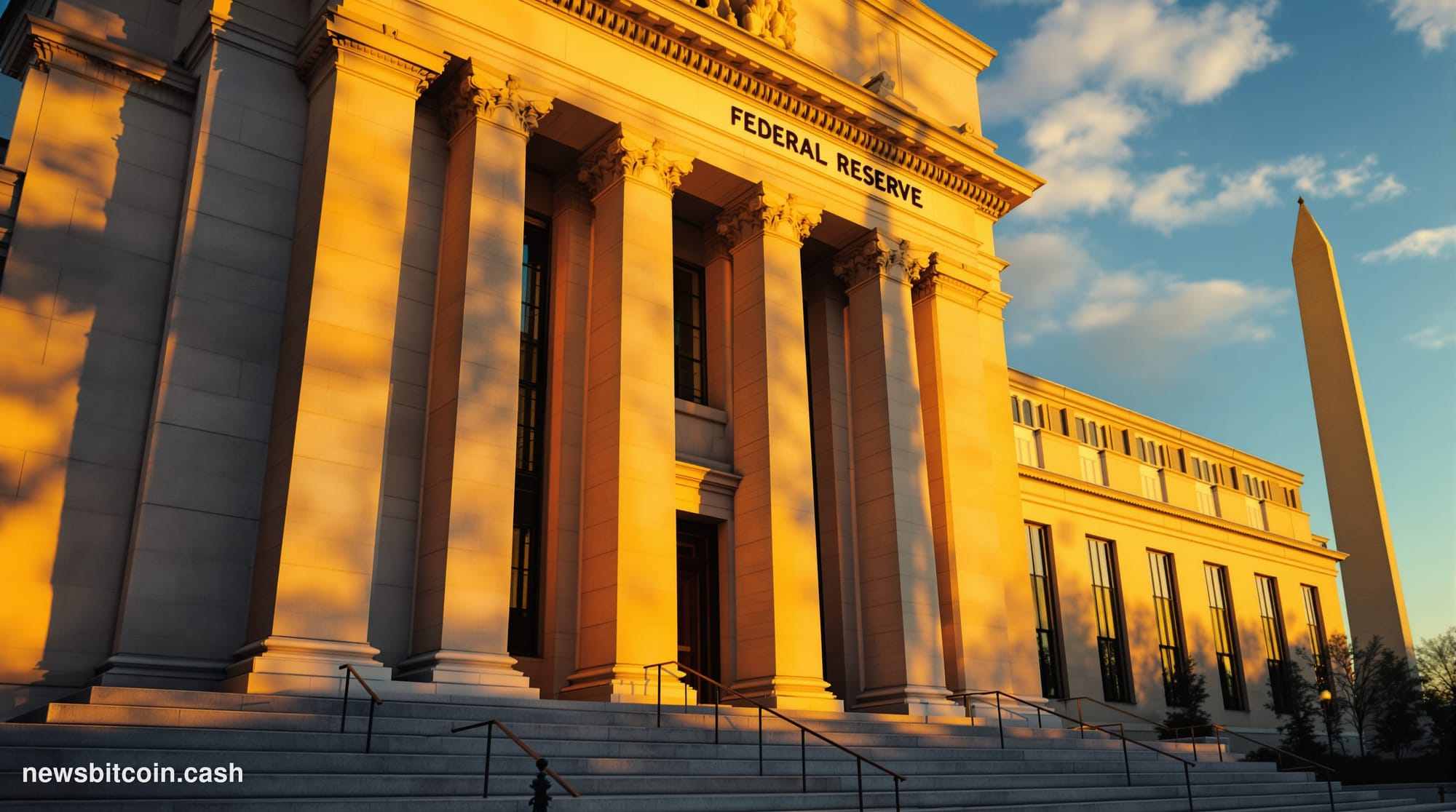
Jerome Powell's tenure as Federal Reserve Chair has reached its conclusion, marking the end of an era that witnessed unprecedented monetary experiments, pandemic-era stimulus, and the emergence of central bank digital currencies as a legitimate policy consideration. His departure creates a leadership vacuum at the world's most influential central bank precisely when digital assets and traditional monetary policy stand at a critical juncture.
The spotlight now falls on Kevin Warsh, whose potential nomination represents more than a simple changing of the guard. Warsh brings a unique perspective to monetary policy, having served on the Fed's Board of Governors during the 2008 financial crisis and subsequently becoming a vocal critic of prolonged quantitative easing programs. His appointment could signal a fundamental recalibration of how America's central bank approaches both traditional economic challenges and the growing influence of digital currencies.
Powell's exit comes at a pivotal moment for U.S. monetary policy, occurring amid ongoing debates about inflation control, interest rate trajectories, and the Federal Reserve's evolving stance toward cryptocurrencies and blockchain technology. During his leadership, the Fed maintained a cautious approach to digital assets while simultaneously exploring the development of a central bank digital currency. This measured stance helped establish regulatory clarity in some areas while leaving significant questions unanswered about the future of decentralized finance and cryptocurrency integration into the broader financial system.
The timing of this leadership transition amplifies its significance. Global central banks are grappling with persistent inflationary pressures, geopolitical uncertainties, and the rapid evolution of financial technology. Warsh's nomination potentially alters future economic strategies by introducing a perspective that has historically favored more traditional monetary approaches over experimental policies. His previous criticisms of aggressive quantitative easing suggest a Fed under his leadership might pursue more conventional tools, potentially affecting liquidity conditions that have historically benefited risk assets including cryptocurrencies.
Warsh's background presents an intriguing profile for the digital asset ecosystem. As a former Morgan Stanley investment banker and Fed governor, he possesses deep knowledge of both traditional finance and regulatory frameworks. His academic work at Stanford's Hoover Institution has focused on monetary policy effectiveness and financial market structure, areas directly relevant to ongoing debates about cryptocurrency regulation and central bank digital currency implementation. Unlike some Fed officials who have expressed skepticism about digital assets, Warsh has generally avoided inflammatory rhetoric while maintaining focus on systemic risk considerations.
The nomination process itself will provide crucial insights into the incoming administration's broader economic philosophy. Senate confirmation hearings will likely probe Warsh's views on cryptocurrency regulation, central bank digital currency development, and the Fed's role in overseeing stablecoin markets. His responses could shape market expectations about future policy directions and regulatory approaches toward digital assets. The crypto industry will particularly scrutinize his positions on issues like stablecoin backing requirements, decentralized finance oversight, and the potential for a U.S. central bank digital currency.
Market participants should expect volatility as investors parse the implications of this leadership transition. Historical precedent suggests that Fed Chair changes often coincide with policy recalibrations that ripple through all asset classes. For cryptocurrency markets, which remain sensitive to liquidity conditions and regulatory signals, Warsh's appointment could introduce new variables affecting everything from institutional adoption patterns to regulatory enforcement priorities.
This transition represents more than bureaucratic reshuffling—it embodies a potential inflection point where traditional monetary policy intersects with emerging financial technologies. The Federal Reserve's next chapter under new leadership will likely determine whether the United States maintains its cautious approach toward digital assets or embraces more definitive regulatory frameworks that could either accelerate or constrain cryptocurrency integration into mainstream finance. The stakes extend beyond domestic policy, as international competitors continue advancing their own central bank digital currency initiatives while American policymakers deliberate.
Written by the editorial team — independent journalism powered by Bitcoin News.