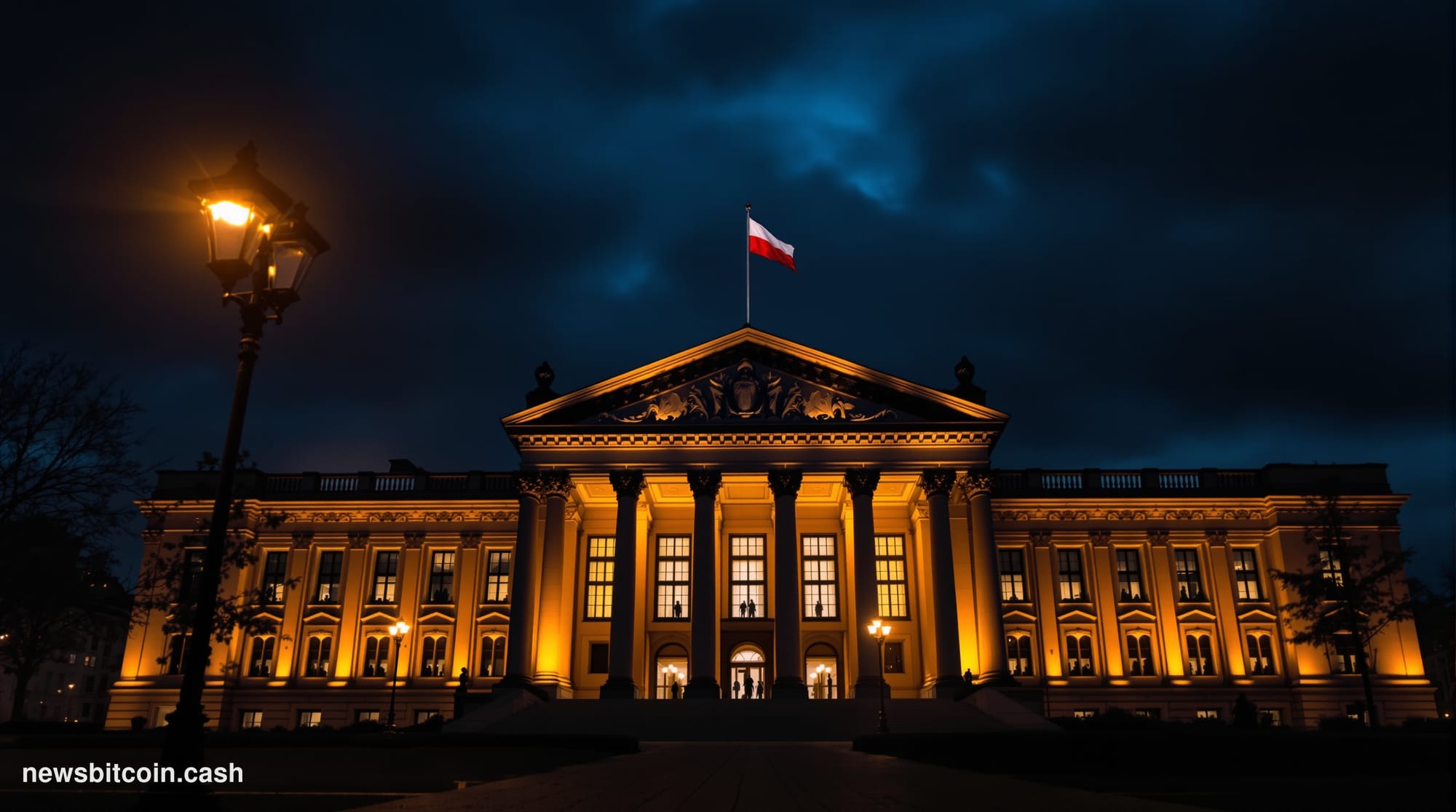
Poland has finally broken through months of regulatory gridlock, with lawmakers narrowly approving cryptocurrency legislation that aligns the country with the European Union's sweeping digital asset framework. The Ministry of Finance-backed bill passed by a razor-thin margin of 241 to 200 votes, marking a crucial victory for crypto compliance advocates after a series of legislative setbacks.
The approved legislation implements the EU's Markets in Crypto-Assets (MiCA) regulation domestically, bringing Poland into compliance with the bloc's comprehensive approach to digital asset oversight. This parliamentary breakthrough comes after repeated vetoes that had stalled the country's crypto regulatory progress, leaving Polish digital asset businesses in regulatory limbo while neighboring EU countries advanced their implementation timelines.
The narrow 41-vote margin reveals the deep divisions within Poland's political establishment over cryptocurrency policy. The tight vote count suggests that crypto regulation remains a contentious issue even as European governments rush to implement MiCA requirements. This legislative tension mirrors broader European debates about balancing innovation with consumer protection in the rapidly evolving digital asset sector.
Poland's regulatory approval carries significant implications beyond its borders. As one of the EU's largest economies, Poland's embrace of the MiCA framework strengthens the bloc's unified approach to crypto oversight. The country's previous hesitation had created potential gaps in the EU's regulatory architecture, particularly given Poland's substantial tech sector and growing fintech ecosystem. Major exchanges like Binance and Coinbase have been watching these developments closely as they navigate varying national implementations of MiCA across member states.
The Ministry of Finance's backing proved crucial in securing passage, lending governmental credibility to legislation that had previously faced resistance. This official support signals a strategic shift in Poland's approach to digital assets, moving from skepticism toward regulatory accommodation. The ministry's involvement also suggests that crypto policy has moved from the periphery to mainstream government priorities, reflecting the technology's growing economic importance.
For Polish crypto businesses, the bill's passage ends a period of regulatory uncertainty that had complicated compliance planning and business development. Local exchanges and service providers can now align their operations with clear legal frameworks, potentially attracting investment that had been deterred by regulatory ambiguity. The legislation also provides clarity for international firms considering Polish market entry, removing a significant barrier to cross-border crypto commerce within the EU.
The repeated vetoes that preceded this approval highlight the complexity of translating EU directives into national law. Each country must adapt MiCA's broad framework to local legal systems and regulatory structures, a process that has proven more challenging than initially anticipated. Poland's struggle reflects similar implementation challenges across Eastern Europe, where crypto adoption has often outpaced regulatory development.
This legislative victory positions Poland to participate more fully in the EU's emerging digital asset ecosystem. As MiCA creates standardized requirements across member states, countries that delay implementation risk being left behind as crypto businesses gravitate toward jurisdictions with clear regulatory pathways. Poland's approval ensures it remains competitive in attracting digital asset innovation and investment.
The narrow margin also suggests that crypto policy will remain politically sensitive in Poland, potentially affecting future regulatory adjustments or enforcement approaches. However, the bill's passage establishes a foundation for regulatory development that can evolve with the rapidly changing crypto landscape. This creates opportunities for Polish policymakers to refine their approach based on implementation experience and market developments.
Poland's breakthrough represents a significant milestone in European crypto regulation, demonstrating that even politically divided legislatures can find common ground on digital asset policy. As other EU members watch Poland's implementation process, this vote may provide a template for overcoming similar legislative obstacles across the bloc.
Written by the editorial team — independent journalism powered by Bitcoin News.