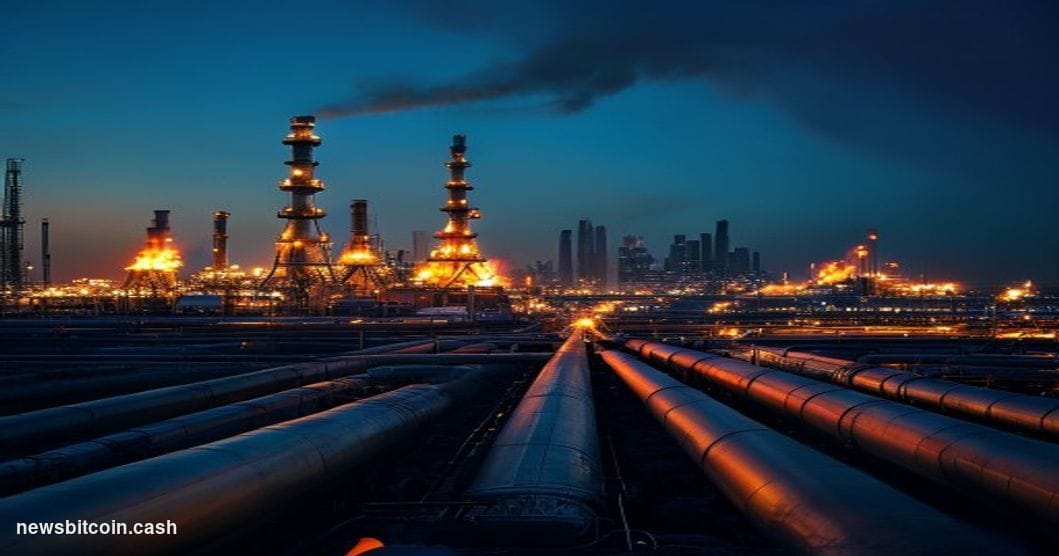
The Organization of the Petroleum Exporting Countries and its allies — the coalition known as OPEC Plus — has agreed to increase collective oil production by 188,000 barrels per day beginning in July 2026. On its surface, the decision is a conventional supply management move. Dig one layer deeper, however, and the implications ripple well beyond the crude futures desk, touching energy-intensive industries from data centers to Bitcoin mining operations that track electricity costs the way equity traders track the fed funds rate.
The scale of the increase is meaningful without being seismic. Roughly 188,000 additional barrels per day represents a measured loosening rather than a shock-therapy flood of supply — the kind of calibrated gesture OPEC Plus favors when it wants to signal market confidence without triggering a price collapse that would punish its own member-state revenues. Analysts reading this as a stabilizing move are not wrong; the phrasing of the decision itself acknowledges that the output bump is designed to support steadier market conditions heading into the second half of 2026.
But stabilization is not the same as predictability, and the coalition has been careful — or perhaps simply honest — in acknowledging that geopolitical tensions remain a wild card capable of disrupting supply chains regardless of what any production schedule says on paper. The Middle East, which anchors OPEC Plus output, continues to carry elevated geopolitical risk. Shipping lanes, sanctions regimes, and intra-coalition compliance disputes have each, at various moments in recent history, turned a carefully planned output trajectory into an overnight crisis. That caveat is not boilerplate — it is the core uncertainty that markets are pricing.
The Energy-Crypto Feedback Loop
For readers of a digital assets publication, the relevance may not be immediately obvious. Oil is not priced in Bitcoin. Energy markets and token markets operate on different clocks and respond to different catalysts. Yet the connection is structural. Electricity costs are the single largest variable expense for proof-of-work mining, and electricity costs are in turn heavily influenced by the price of natural gas and oil, particularly in regions where gas-fired generation dominates the grid. When oil supply increases and energy prices soften, mining margins widen. When supply is disrupted and energy spikes, marginal miners are pushed offline, hash rate drops, and the network's economics shift.
More broadly, global macro liquidity — which oil price stability tends to support — has been one of the most reliable tailwinds for risk assets including cryptocurrencies over the past several years. A calmer energy market reduces inflationary pressure, gives central banks more room to hold or cut rates, and generally keeps institutional capital in a more generous mood toward high-volatility asset classes. The 188,000-barrel-per-day increase, if it delivers on its stabilizing intent, quietly improves the macro backdrop that crypto assets trade within.
Where Geopolitical Risk Enters the Equation
The caveat embedded in OPEC Plus's own framing — that geopolitical tensions could still disrupt supply — is worth taking seriously rather than dismissing as routine hedging language. Commodity markets in 2024 and 2025 were repeatedly reminded that production agreements mean little when physical infrastructure is at risk or when coalition unity fractures under the pressure of competing national interests. Several OPEC Plus members have a documented history of producing above their agreed quotas when domestic fiscal pressure mounts, and enforcement mechanisms within the group remain largely political rather than legal.
If a disruption does materialize — whether from regional conflict, sanctions escalation, or internal coalition breakdown — the stabilization narrative unravels quickly. Oil prices would spike, energy costs would follow, and the benign macro environment that crypto markets have been quietly benefiting from would come under pressure. Crypto traders who ignore commodity markets as irrelevant to their world do so at some risk.
What This Means for Digital Asset Markets
The OPEC Plus production increase is not a crypto story in any direct sense. No token is priced in barrels, and no blockchain protocol cares about output quotas. But energy policy, macro liquidity, and inflation dynamics are the water in which digital assets swim, and a decision affecting nearly 200,000 barrels of daily global supply changes the temperature of that water. A stable or softening oil price environment heading into the second half of 2026 would represent a quiet tailwind — not a catalyst, but a supporting condition — for risk assets broadly. The persistent geopolitical uncertainty that OPEC Plus itself flags, however, means that tailwind could reverse on short notice. Miners, macro-aware traders, and institutional allocators with energy-sensitive cost structures would be well served to treat this development not as background noise, but as a variable worth monitoring as the year unfolds.
Written by the editorial team — independent journalism powered by Bitcoin News.