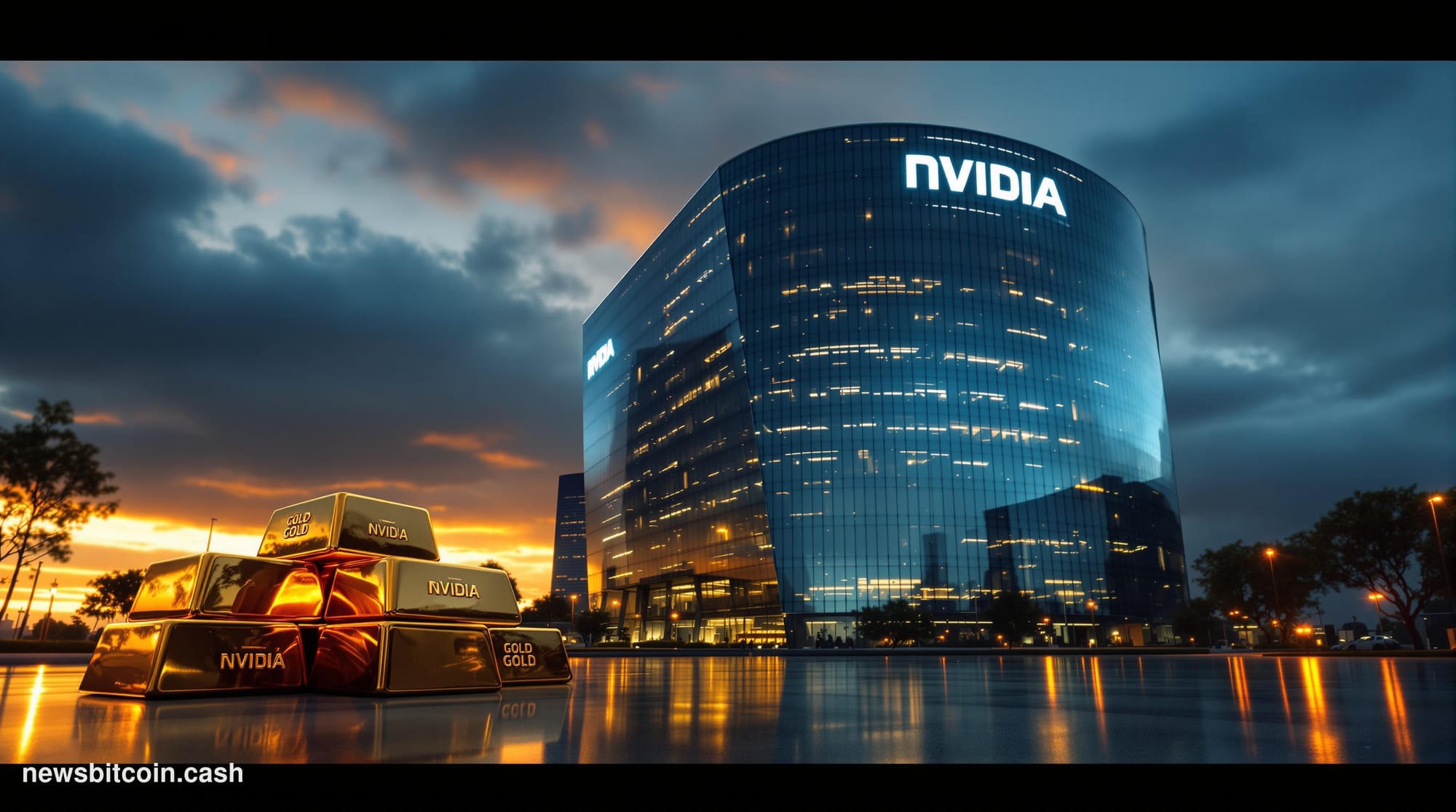
NVIDIA is preparing to tap debt markets for at least $20 billion in its first corporate bond sale since 2021, a move that sent shares climbing 1.35% in pre-market trading and signals the chipmaker's aggressive push to capitalize on artificial intelligence infrastructure demand. The offering marks a strategic return to high-grade debt markets after three years of self-funded growth, underscoring both the company's confidence in AI market expansion and the substantial capital requirements needed to maintain its dominant position.
The timing of this massive debt raise reflects NVIDIA's evolution from a graphics card manufacturer serving gamers and cryptocurrency miners to the undisputed leader in AI processing chips. While crypto mining demand has fluctuated dramatically over recent cycles, enterprise AI adoption has created more predictable, high-margin revenue streams that justify increased leverage. The bond proceeds will likely fund expanded manufacturing capacity, research and development initiatives, and potential strategic acquisitions as competition intensifies from Advanced Micro Devices, Intel, and emerging challengers.
NVIDIA's decision to enter debt markets now comes as interest rates show signs of stabilizing after the Federal Reserve's aggressive tightening cycle. Corporate bond yields remain elevated compared to the ultra-low rate environment of 2021, but strong investor appetite for high-grade technology debt has created favorable conditions for large issuances. The company's stellar financial performance, driven by data center revenue growth exceeding 200% year-over-year in recent quarters, provides ample coverage ratios that bond investors demand.
The $20 billion target represents one of the largest corporate bond offerings in recent memory, reflecting both NVIDIA's scale and the capital-intensive nature of semiconductor manufacturing. Building advanced chip fabrication facilities requires multi-billion dollar investments, while maintaining technological leadership demands sustained research spending that can consume significant cash flows. By accessing debt markets, NVIDIA preserves cash reserves while funding expansion without diluting shareholders through equity issuance.
For cryptocurrency markets, NVIDIA's capital allocation strategy carries important implications. The company has historically benefited from crypto mining booms, particularly during Ethereum's proof-of-work era, but has pivoted focus toward enterprise AI applications that offer more stable demand patterns. This bond offering enables continued investment in next-generation architectures that serve both AI training and cryptocurrency mining applications, though the latter represents a smaller strategic priority than in previous cycles.
Wall Street's positive reception, evidenced by the pre-market share price increase, suggests investors view the debt raise as prudent capital management rather than distress financing. NVIDIA's strong balance sheet and dominant market position in AI accelerators provide substantial flexibility in debt servicing, while the proceeds can fund growth initiatives that maintain competitive advantages. Bond investors are likely attracted to the company's diversified revenue base spanning gaming, professional visualization, automotive, and data center markets.
The broader implications extend beyond NVIDIA to the entire technology infrastructure sector. As AI adoption accelerates across industries, chip manufacturers face unprecedented capital requirements to scale production and develop next-generation processors. NVIDIA's willingness to leverage its balance sheet signals confidence in sustained AI demand growth and sets a precedent for other semiconductor companies contemplating similar financing strategies. The success of this bond offering could encourage peers to pursue debt financing for their own expansion plans.
This financing move positions NVIDIA to maintain its AI chip leadership while markets undergo continued evolution. Whether cryptocurrency mining demand resurges or enterprise AI applications continue driving growth, the additional capital provides strategic flexibility to adapt to changing market dynamics. For investors in both traditional markets and digital assets, NVIDIA's capital allocation decisions serve as a bellwether for broader technology infrastructure investment trends.
Written by the editorial team — independent journalism powered by Bitcoin News.