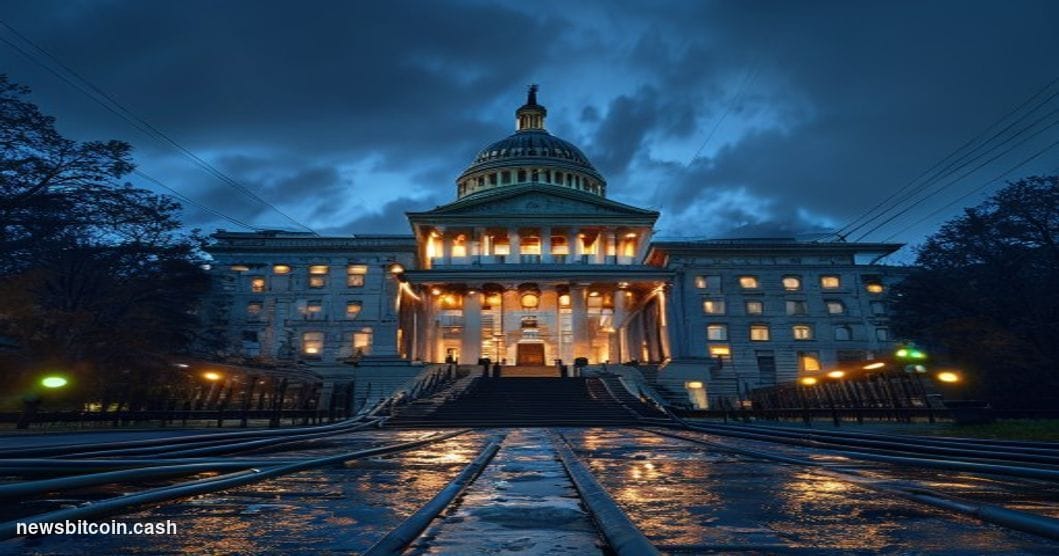
New York has drawn a line in the grid. Becoming the first U.S. state to impose a moratorium on approvals for large-scale data centers, Albany has thrust itself into the center of a widening national debate over energy consumption, infrastructure capacity, and the future of power-hungry digital industries — including cryptocurrency mining. The decision is blunt by design, and its ripple effects are already being felt far beyond the Empire State's borders.
The moratorium is sweeping in scope. By halting the approval process for large data centers wholesale, New York has effectively put on ice a category of industrial development that has surged in recent years alongside the explosive growth of artificial intelligence workloads, cloud computing, and blockchain-based operations. Crypto mining, which was not the singular target of the policy, has nonetheless been caught squarely in the crossfire — a telling sign of how regulators are increasingly willing to treat digital asset infrastructure as an energy problem first and an economic opportunity second.
For the mining industry, the timing is particularly consequential. Bitcoin miners have long faced localized opposition over their grid demands, but a statewide moratorium issued by one of America's most economically influential states carries a different kind of weight. New York is not a fringe jurisdiction experimenting with novel policy. It is a legislative trendsetter, and when Albany moves, other state capitals take notice. The concern among industry participants is straightforward: if New York's approach proves politically durable, it could become the template that other energy-stressed states reach for when facing similar pressures.
The energy dimension of this story cannot be overstated. Data centers — whether housing AI inference clusters, hyperscale cloud infrastructure, or proof-of-work mining rigs — are among the most electricity-intensive facilities that any jurisdiction can permit. Grid operators across the northeastern United States have been sounding alarms for several years about load growth outpacing generation and transmission capacity. New York's moratorium is, at its core, a grid management decision dressed in permitting language. The state is not necessarily hostile to the technology itself; it is reacting to the infrastructure reality that large power draws create for a grid system still navigating the transition from fossil fuels to renewables.
That context matters when assessing the policy's fairness. Crypto mining is a visible and politically convenient target, but it shares the dock with data center operators serving Fortune 500 companies, artificial intelligence firms, and government agencies. The moratorium's broad application is either its most defensible feature — treating all heavy power consumers equally — or its most damaging one, depending on where you sit in the industry. Mining advocates will argue that proof-of-work operations are uniquely flexible load participants, capable of powering down rapidly when grid stress peaks, a characteristic that makes them more grid-friendly than the constant-draw servers running large language models. Whether New York policymakers are receptive to that argument remains to be seen.
What is already clear is that the moratorium's precedent-setting nature is its most consequential characteristic. Other states watching their own grid capacity numbers deteriorate — Texas, Virginia, Georgia, and the Carolinas among the most data-center-dense — now have a ready-made policy instrument to consider. The political calculus in each state will differ, shaped by local energy markets, the strength of the fossil fuel and renewable lobbies, and the degree to which digital industries have embedded themselves in local economies. But New York has demonstrated that a statewide halt is legally and politically achievable, lowering the activation energy for similar moves elsewhere.
For crypto miners specifically, the strategic response is already apparent: jurisdictions that cannot or will not deliver reliable, affordable, and permittable power will accelerate the industry's migration to those that can. That means states with abundant hydroelectric resources, deregulated energy markets, or politically favorable administrations will continue attracting the industrial-scale mining operations that New York is now effectively turning away. The geographic concentration of hash rate within the United States may shift as a result, but the hash rate itself will not disappear — it will simply relocate.
The deeper question New York's moratorium poses is whether the United States has a coherent national framework for managing the energy demands of its fastest-growing digital industries, or whether it will default to a patchwork of state-level responses that create regulatory arbitrage, energy inequities, and investment uncertainty. Right now, the answer appears to be the latter — and New York has just placed the first piece on the board.
Written by the editorial team — independent journalism powered by Bitcoin News.