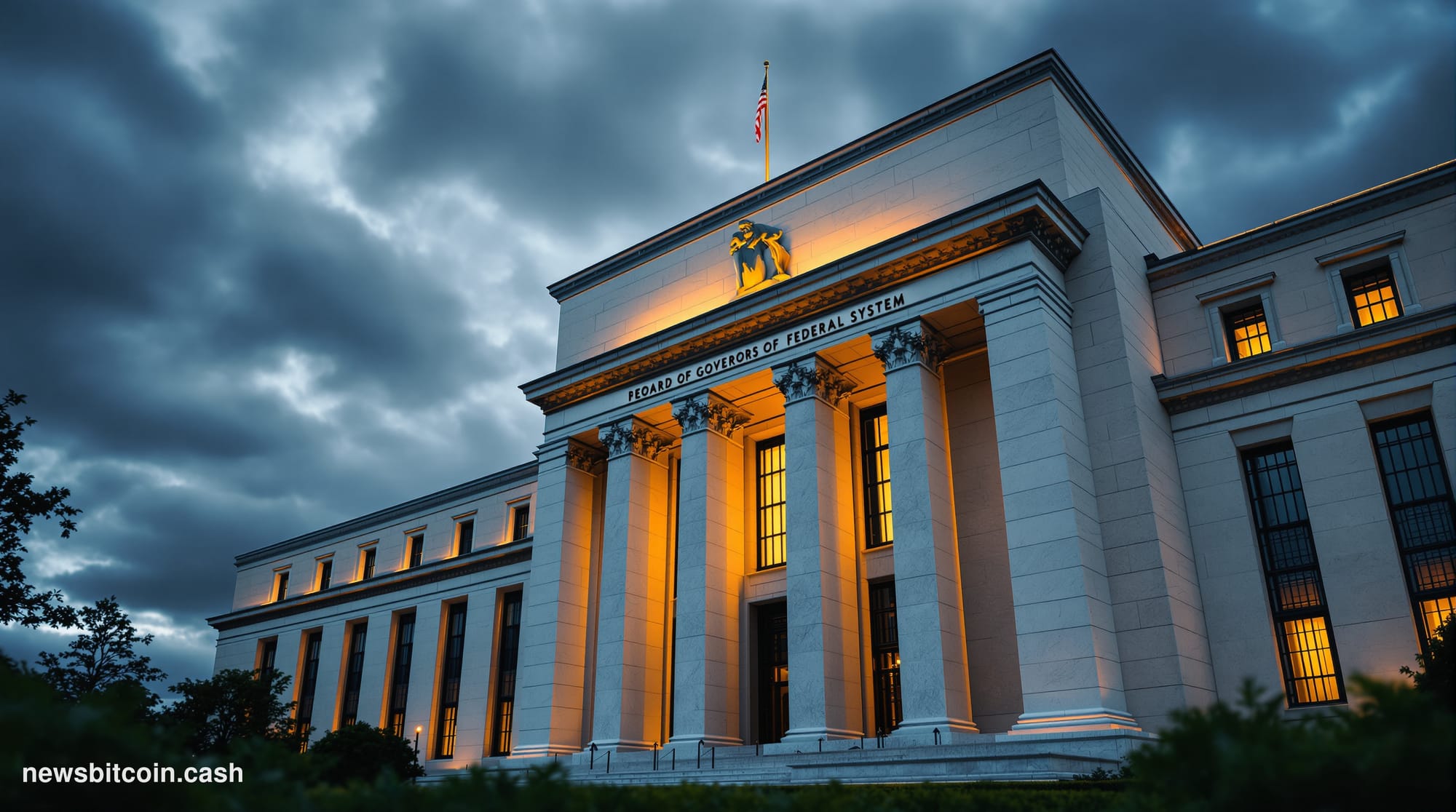
The Federal Reserve has entered a new chapter under Kevin Warsh's leadership, as the former investment banker and economic advisor formally assumed the central bank's top position this week. Warsh took the oath of office with unanimous backing from the Federal Open Market Committee, inheriting an institution grappling with persistent inflation pressures and internal disagreements over monetary policy direction.
The timing of Warsh's ascension presents immediate challenges. Inflation remains elevated despite the Fed's previous tightening cycle, while the FOMC itself faces internal divisions that could complicate future policy decisions. The central bank has maintained its current interest rate range of 3.50% to 3.75% through its most recent meeting, reflecting the delicate balance between fighting inflation and supporting economic growth.
For digital asset markets, Warsh's appointment carries particular significance. His previous tenure at the Fed from 2006 to 2011 coincided with the early development of Bitcoin and nascent cryptocurrency technologies. While serving during the financial crisis, Warsh witnessed firsthand the limitations of traditional monetary tools and the emergence of alternative financial systems that would eventually challenge conventional banking.
The unanimous FOMC support for Warsh suggests a desire for stability and continuity, even as committee members remain divided on broader policy questions. This internal friction could prove crucial for crypto markets, which have historically been sensitive to Federal Reserve communications and policy shifts. The 3.50% to 3.75% rate range represents a middle ground that neither aggressively combats inflation nor fully accommodates growth concerns.
Warsh's background spans both private finance and public service, having worked at Goldman Sachs before joining the Fed as its youngest governor in decades during his previous stint. His market experience could influence how the central bank approaches emerging technologies and digital assets, particularly as regulatory clarity remains a pressing concern for the cryptocurrency industry.
The elevated inflation environment that Warsh inherits complicates traditional monetary policy transmission mechanisms. Digital assets have shown varying correlations with both inflation expectations and interest rate movements, making Fed policy increasingly relevant to crypto market dynamics. The persistence of inflation despite previous policy measures suggests conventional tools may need supplementation or recalibration.
Internal FOMC divisions that Warsh must navigate likely center on the pace and magnitude of future policy adjustments. Some committee members may favor more aggressive action to combat inflation, while others could prioritize economic stability and employment considerations. These debates will shape not only traditional financial markets but also the regulatory environment for digital assets and blockchain technologies.
The Federal Reserve's approach under Warsh's leadership will likely determine whether digital assets continue evolving as alternative stores of value or face increased regulatory pressure. His previous experience during the 2008 financial crisis, when alternative monetary systems gained conceptual appeal, may inform his perspective on cryptocurrency's role in the broader financial ecosystem. The unanimous committee support provides Warsh with initial political capital to pursue potentially controversial policies while managing both inflation concerns and FOMC cohesion.
Written by the editorial team — independent journalism powered by Bitcoin News.