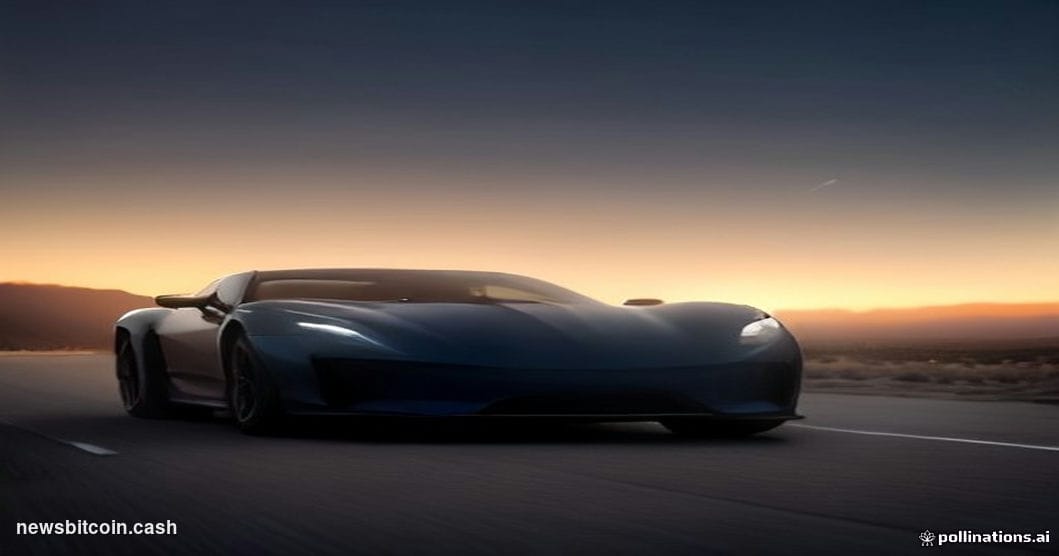
Elon Musk took to Texas last week to unveil what may be the most audacious — and openly dangerous — consumer vehicle ever pitched to the public: a flying version of the Tesla Roadster. The demonstration, equal parts engineering spectacle and high-stakes marketing exercise, raised immediate questions about consumer safety, pricing opacity, and who exactly this machine is built for. The short answer, based on Musk's own words: not necessarily people who prioritize coming home alive.
The reveal drew sharp attention for one line above all others. When asked about the vehicle's safety profile, Musk did not reach for reassuring corporate language. Instead, he stated plainly that the Roadster is "not necessarily a safety-optimized car." In any other industry, that admission from a chief executive would trigger regulatory scrutiny and a media firestorm. In the theater of Musk product launches, it lands as a feature, not a bug — a signal to a certain class of buyer that this machine exists at the edge of what is legally and physically permissible.
The product itself splits into two distinct variants, and the distinction matters enormously. Only the "Rocket" version actually flies — the headline capability that drove coverage and crowds in Texas. The second variant, dubbed "Thrust," remains ground-bound, yet it carries a financial barrier that would give pause even to serious enthusiasts: Tesla is demanding $250,000 upfront before it will even disclose final pricing to prospective buyers. That structure — pay a quarter of a million dollars first, learn the price later — is a deposit model that inverts the most basic logic of consumer commerce.
There is a precedent for this kind of tiered, exclusivity-first pricing in the ultra-luxury automotive segment. Ferrari has run allocation systems for decades; Bugatti and Koenigsegg routinely close order books before the public learns what a car costs. But those brands operate in a market where buyers have legal and financial counsel advising on purchases of this scale. Tesla's Roadster program, carrying Musk's public-persona gravity and the brand's mass-market association, blurs those lines in ways that invite scrutiny.
For readers of this publication, the intersection with digital assets is not incidental. The demographic that queues for $250,000 deposits on unpriced vehicles overlaps substantially with the cohort that holds concentrated positions in Bitcoin, Ethereum, and high-conviction altcoin portfolios. Musk's orbit — spanning Tesla, SpaceX, and his intermittent but market-moving commentary on cryptocurrency — means his product launches carry weight beyond the automotive press cycle. A flying Roadster priced at multiples of a quarter-million dollars, sold via opaque deposit structures, fits a pattern of high-risk, high-asymmetry propositions that resonate in crypto-native circles.
The geography of the reveal also carries meaning. Texas has become the symbolic and increasingly literal home of American frontier capitalism in both the tech and crypto industries. Coinbase, Binance US, and a string of Bitcoin mining operations have planted flags in the state, drawn by regulatory permissiveness and energy infrastructure. Musk staging a flying car demonstration in Texas is not coincidental optics — it is a deliberate alignment with a particular vision of innovation that asks forgiveness rather than permission.
What remains genuinely unclear from the available facts is the timeline, full pricing structure, regulatory pathway, and what $250,000 actually reserves for a Thrust buyer. No aviation or transportation regulator has publicly signed off on a consumer flying vehicle at this stage, and Musk's own safety caveat suggests the Rocket variant in particular would face significant certification hurdles before any commercial delivery could occur. The deposit structure for Thrust may be a mechanism precisely for managing that uncertainty — collect capital now, determine feasibility later.
What This Means
The flying Tesla Roadster reveal in Texas is less a product announcement than a capital and attention allocation event. Musk has secured public mindshare, likely collected meaningful deposits, and positioned Tesla at the center of a conversation about the outer limits of personal transportation — all while openly acknowledging the vehicle may not prioritize keeping its occupants alive. Whether regulators, insurers, and ultimately buyers treat that admission as disqualifying or as an invitation depends entirely on the appetite for risk that defines this particular moment in technology and finance. For anyone tracking where serious speculative capital flows next, the $250,000 Thrust deposit structure is worth watching as carefully as any token launch.
Written by the editorial team — independent journalism powered by Bitcoin News.