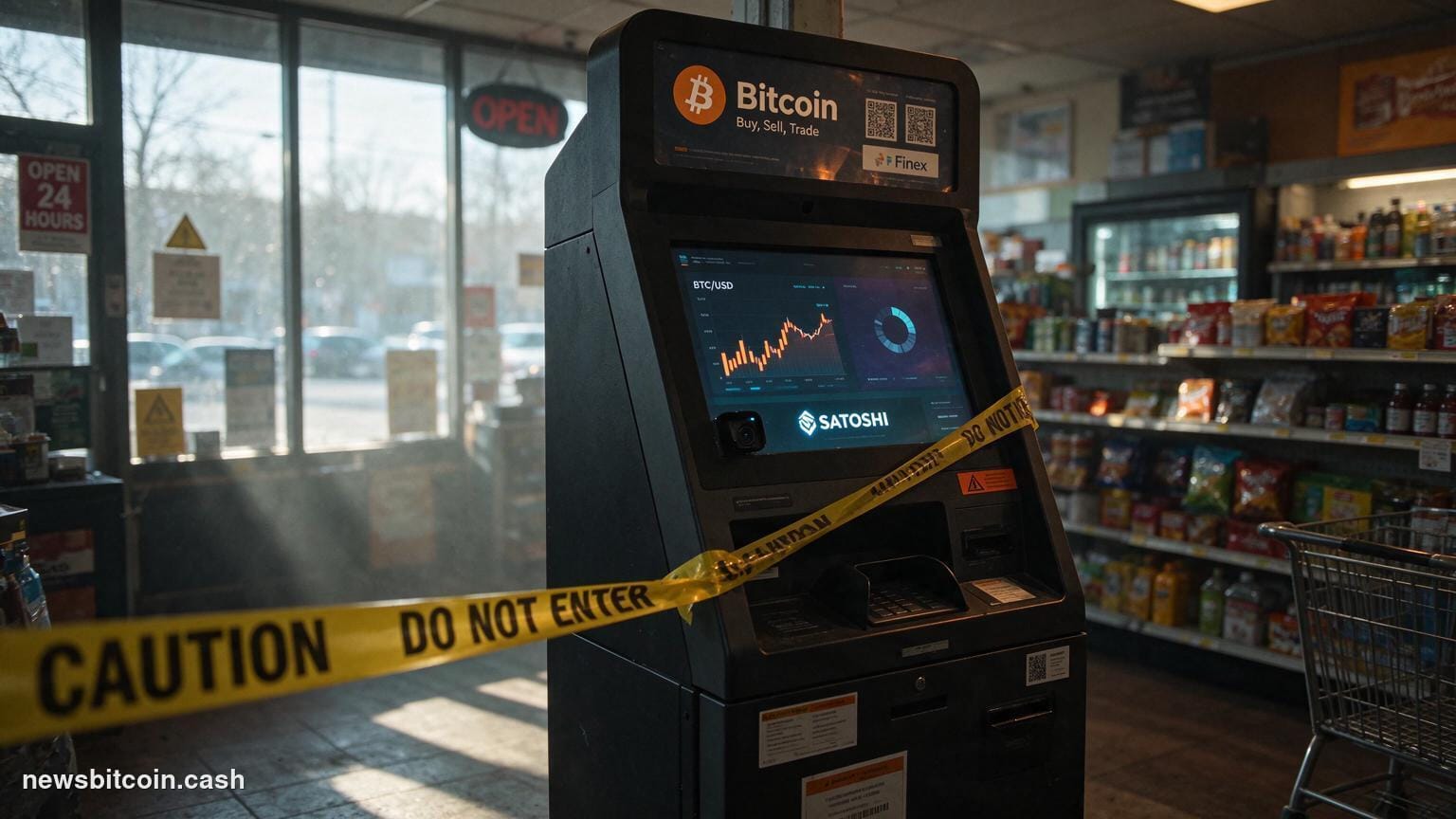
A regulatory clock may be ticking for cryptocurrency ATM operators doing business in Massachusetts. According to reports, the state could impose a hard deadline as early as January that would force kiosk operators to meet new compliance standards or face the consequences — a signal that the broader American crackdown on crypto ATMs is entering a more aggressive phase.
The push in Massachusetts does not exist in a vacuum. States and municipalities across the country have been systematically tightening the screws on crypto ATM operators, driven by a troubling pattern: residents, often elderly or financially vulnerable, being manipulated by scammers into feeding cash into these machines and routing it directly to criminal accounts. The kiosks, which allow users to convert physical cash into digital assets within minutes and with minimal friction, have become a preferred tool in the scammer's arsenal precisely because transactions are fast, pseudonymous, and largely irreversible.
The appeal of crypto ATMs was always their accessibility. Unlike exchange platforms that require identity verification, account creation, and sometimes days of onboarding, a kiosk on a convenience store corner lets anyone walk up with cash and walk away with digital assets. For the crypto industry's early adopters, that frictionless quality was a feature. For regulators and law enforcement watching fraud reports pile up, it has increasingly looked like a design flaw — or worse, a liability.
What makes the Massachusetts situation particularly significant is its timing. A January deadline, if confirmed and enforced, would force operators to either retrofit their compliance infrastructure rapidly or suspend operations in the state altogether. That is not a trivial ask. Many crypto ATM operators run lean businesses built around low-overhead kiosk deployment, and layering on know-your-customer (KYC) and anti-money laundering (AML) requirements — the kind regulators are increasingly demanding — fundamentally changes the unit economics of the business.
The scam mechanics that have prompted these crackdowns are disturbingly consistent. A fraudster contacts a victim, typically by phone, impersonating a government agency, utility company, or even a family member in distress. The victim is told they owe money urgently — a tax debt, an overdue bill, bail for a loved one — and that the only acceptable payment method is cryptocurrency. They are directed to a nearby ATM kiosk, walked through the transaction step by step, and the funds disappear into wallets controlled by criminal networks, often operating overseas. By the time the victim realizes what happened, the trail is cold and the money is gone.
This is not a marginal problem. Consumer protection agencies and law enforcement at both state and federal levels have flagged crypto ATM fraud as one of the fastest-growing vectors for financial crime targeting ordinary people. The Federal Trade Commission (FTC) has previously documented hundreds of millions of dollars in losses attributed to crypto-related scams broadly, with ATM-facilitated fraud representing a substantial and growing subset. The visibility of the kiosks — sitting in gas stations, pharmacies, and grocery stores — makes them an easy political target as much as a regulatory one.
The industry's response to these pressures has been uneven. Some operators have proactively introduced transaction caps, warning screens, and customer service interventions designed to flag suspicious behavior — particularly large transactions initiated by older users during off-hours. Others have lobbied against restrictions, arguing that blanket regulation punishes legitimate users and operators for the behavior of criminals who would simply find another channel. That argument carries some logical weight, but it has been losing political ground as constituent complaints reach state legislators.
Massachusetts joining the roster of states drawing hard lines is a marker worth watching carefully. It reflects a broader regulatory maturation — not necessarily hostile to digital assets as a category, but increasingly unwilling to allow infrastructure that demonstrably facilitates consumer harm to operate under light-touch oversight. For operators who have built sustainable, compliant businesses, tighter standards may ultimately serve as a competitive moat. For those running on minimal compliance infrastructure, a January deadline could be an existential moment.
The question for the industry going forward is whether it gets ahead of this wave or keeps reacting to it. Each new state deadline, each municipal ordinance, each consumer fraud headline makes the case for a unified federal framework — one that sets baseline KYC and AML standards for ATM operators nationally, rather than leaving a patchwork of fifty different deadlines and fifty different definitions of compliance. Until that framework materializes, Massachusetts in January is just the next data point in an accelerating pattern.
Written by the editorial team — independent journalism powered by Bitcoin News.