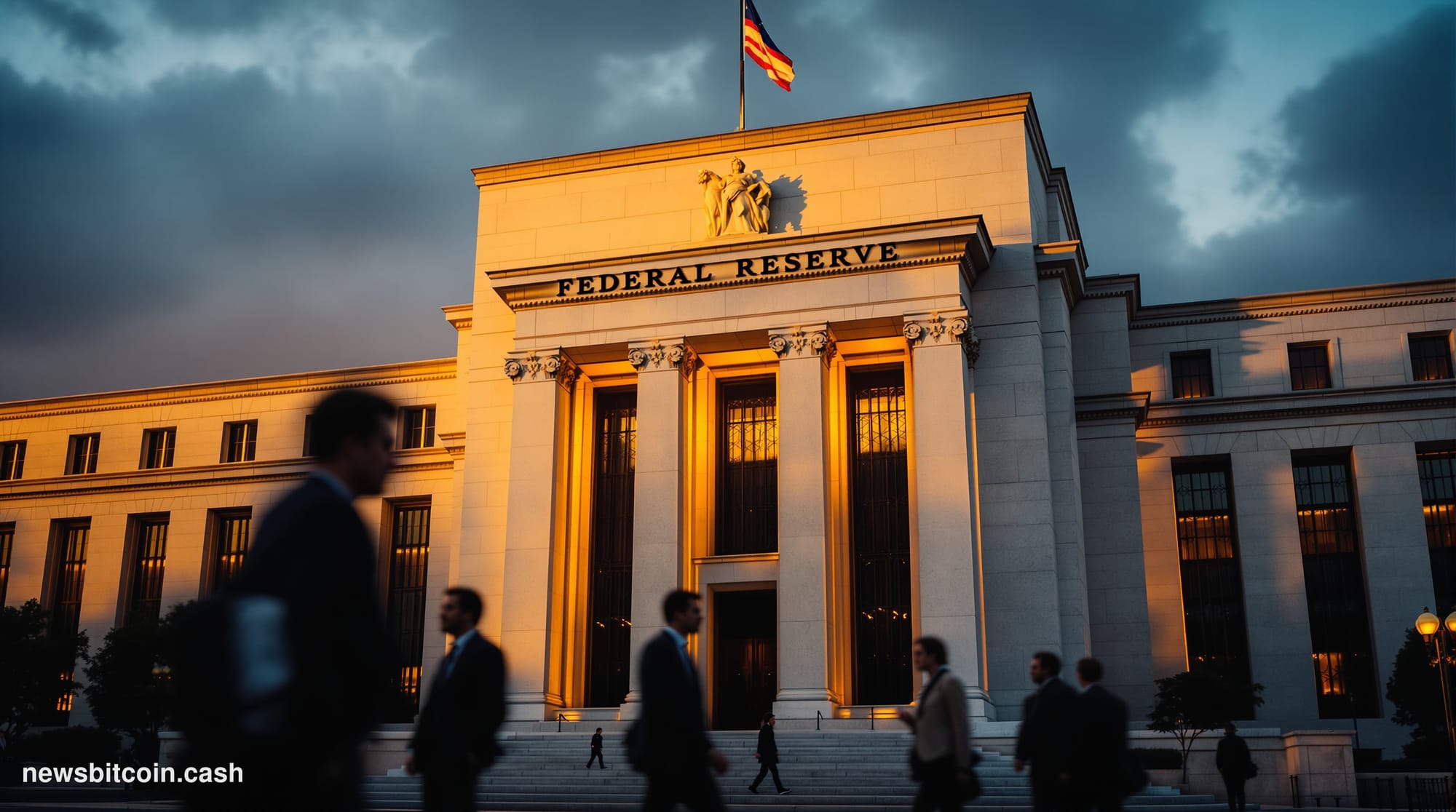
Financial markets are signaling a hawkish shift in Federal Reserve policy expectations, with traders positioning for a potential interest rate increase by December under the possible leadership of Kevin Warsh as Fed Chair. This market sentiment reflects growing anticipation of tighter monetary conditions that could fundamentally reshape the investment landscape for risk assets, including cryptocurrencies.
The betting pattern emerging in derivatives markets suggests institutional investors are preparing for a more aggressive stance on inflation control, should Warsh assume leadership of the central bank. This positioning represents a notable departure from the dovish expectations that have characterized much of the current monetary cycle, indicating that market participants view Warsh as likely to prioritize price stability over accommodative policy.
For digital asset markets, the prospect of December rate hikes carries profound implications. Higher interest rates typically increase the opportunity cost of holding non-yielding assets like Bitcoin and other cryptocurrencies, as investors can earn more attractive returns from traditional fixed-income securities. This dynamic has historically created headwinds for crypto valuations, as institutional capital flows toward risk-free government bonds offering competitive yields.
The potential tightening of financial conditions under Warsh's potential leadership would likely reverberate across the broader crypto ecosystem. Lending protocols, decentralized finance platforms, and crypto-native financial services could face reduced liquidity as traditional funding costs rise. Major exchanges like Coinbase and institutional trading platforms would need to navigate a more challenging environment where speculative capital becomes scarcer and more expensive.
Warsh's approach to monetary policy, should he be confirmed as Fed Chair, appears to emphasize orthodox inflation targeting over the more nuanced dual mandate considerations that have guided recent Fed policy. This philosophical shift could mark the end of the ultra-accommodative monetary environment that has largely supported risk asset appreciation since the pandemic-era policy interventions.
The December timeline for potential rate action aligns with critical seasonal dynamics in both traditional and crypto markets. Year-end positioning often amplifies volatility as institutional investors rebalance portfolios and retail participants adjust holdings for tax considerations. A rate hike during this period could compound these effects, potentially creating outsized market movements in digital assets.
However, the crypto market's evolution toward greater institutional adoption may provide some insulation from traditional monetary policy transmission mechanisms. Corporate treasury adoption of Bitcoin, the emergence of spot exchange-traded funds, and growing institutional infrastructure suggest that digital assets may exhibit different sensitivity patterns to rate changes than in previous cycles.
The market's positioning for December rate action under potential Warsh leadership signals a fundamental recalibration of monetary policy expectations that could define the next phase of crypto market development. As the Federal Reserve potentially shifts toward a more hawkish stance emphasizing inflation control, digital asset investors must prepare for a environment where easy money policies no longer provide the same tailwinds that have supported crypto valuations in recent years.
Written by the editorial team — independent journalism powered by Bitcoin News.