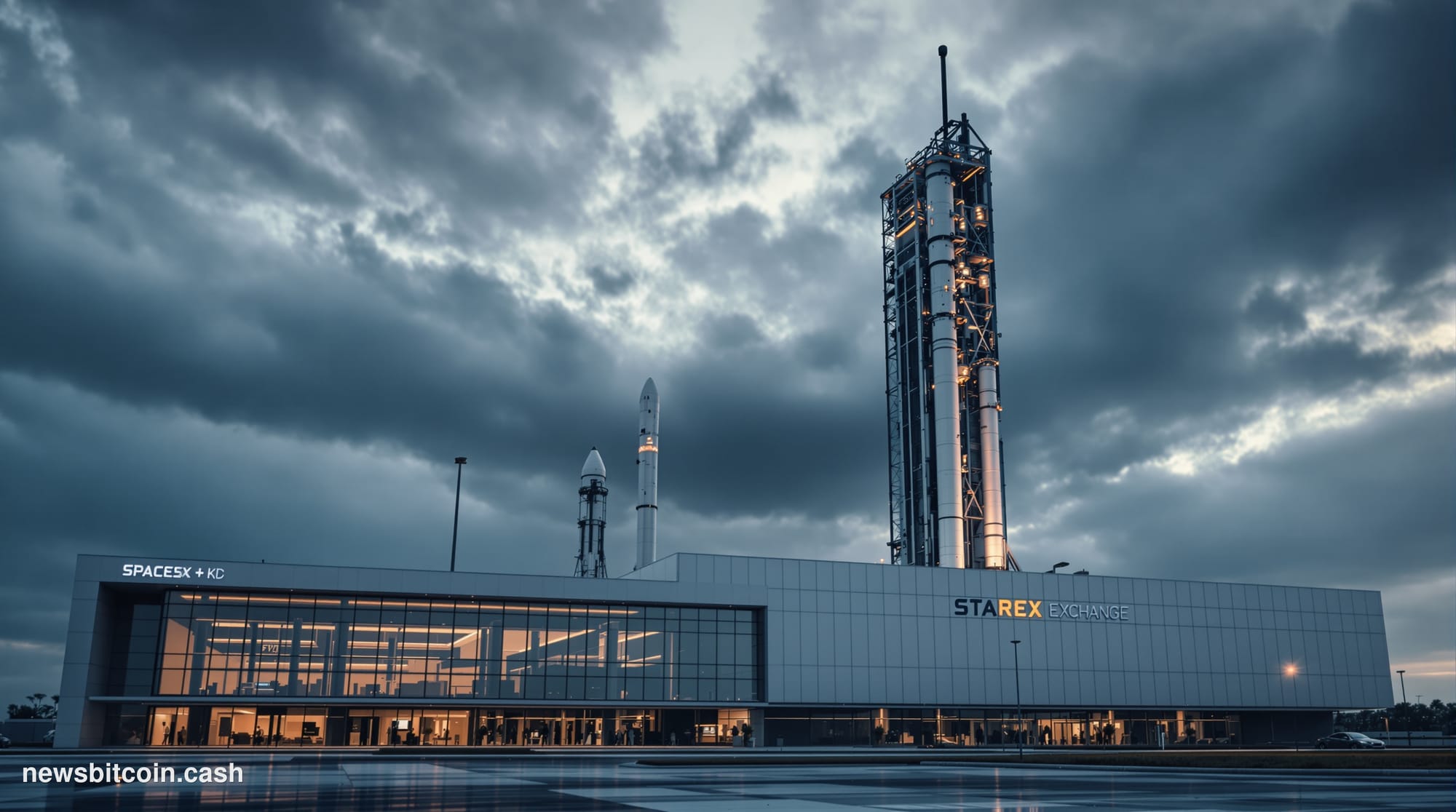
The ambitious marriage between traditional IPO access and crypto infrastructure hit a significant roadblock this week as three major cryptocurrency exchanges abandoned their SpaceX tokenized stock campaigns. Binance, Bybit, and Bitget all canceled their promised SpaceX IPO access products after tokenized stock platforms failed to secure adequate underlying share allocations.
The cancellations expose fundamental infrastructure gaps in the tokenized securities ecosystem, particularly around high-demand public offerings. While these exchanges successfully marketed SpaceX access products to retail crypto users, the underlying machinery proved incapable of delivering the promised exposure to Elon Musk's aerospace venture.
Allocation Reality Check
The allocation shortfall reveals how tokenized stock providers remain dependent on traditional financial intermediaries for share sourcing. Despite crypto's promise of disintermediation, these platforms must still navigate conventional IPO allocation mechanisms, where institutional demand typically overwhelms available shares for retail-focused products.
SpaceX's IPO generated exceptional investor interest, making share allocation particularly competitive. Traditional institutional investors, pension funds, and established brokerage relationships likely absorbed most available allocations, leaving tokenized stock platforms scrambling for sufficient inventory to back their crypto-native products.
This dynamic highlights the hybrid nature of tokenized securities, which require traditional asset custody and sourcing despite their blockchain-based distribution. The tokenization layer adds operational complexity without necessarily improving access to scarce underlying assets.
Exchange Reputation Stakes
For Binance, Bybit, and Bitget, the SpaceX cancellations represent significant reputational challenges. These exchanges heavily promoted their tokenized stock capabilities as differentiation strategies, particularly for users seeking exposure to high-profile U.S. equities without traditional brokerage accounts.
The cancellations also underscore regulatory and operational risks in the tokenized securities space. Exchanges must balance aggressive marketing of novel products against their ability to deliver underlying exposure, particularly for assets subject to complex allocation mechanisms.
Moreover, these failures could prompt increased scrutiny from regulators already concerned about crypto platforms offering securities-like products without appropriate licenses or protections.
Tokenized Securities Infrastructure
The SpaceX debacle illuminates broader structural challenges facing the tokenized securities sector. While blockchain technology enables fractional ownership and 24/7 trading, it cannot solve fundamental supply constraints in traditional financial markets.
Tokenized stock platforms typically partner with licensed broker-dealers and custodians to source underlying assets. When those traditional partners cannot secure adequate allocations, the entire tokenized product chain breaks down, regardless of blockchain infrastructure sophistication.
This dependency relationship suggests tokenized securities may work better for liquid secondary markets than for primary issuances with limited availability. The model faces particular strain around high-demand IPOs where allocation politics favor established institutional relationships.
The cancellations signal that tokenized securities infrastructure requires deeper integration with traditional financial systems, not just technological innovation. Crypto exchanges venturing into this space must build stronger relationships with prime brokers, market makers, and institutional allocation networks to avoid similar shortfalls.
What this means for the broader tokenization thesis remains unclear, but the SpaceX failures demonstrate that blockchain-based financial products cannot simply bypass traditional market structures—they must work within them, at least for now.
Written by the editorial team — independent journalism powered by Bitcoin News.