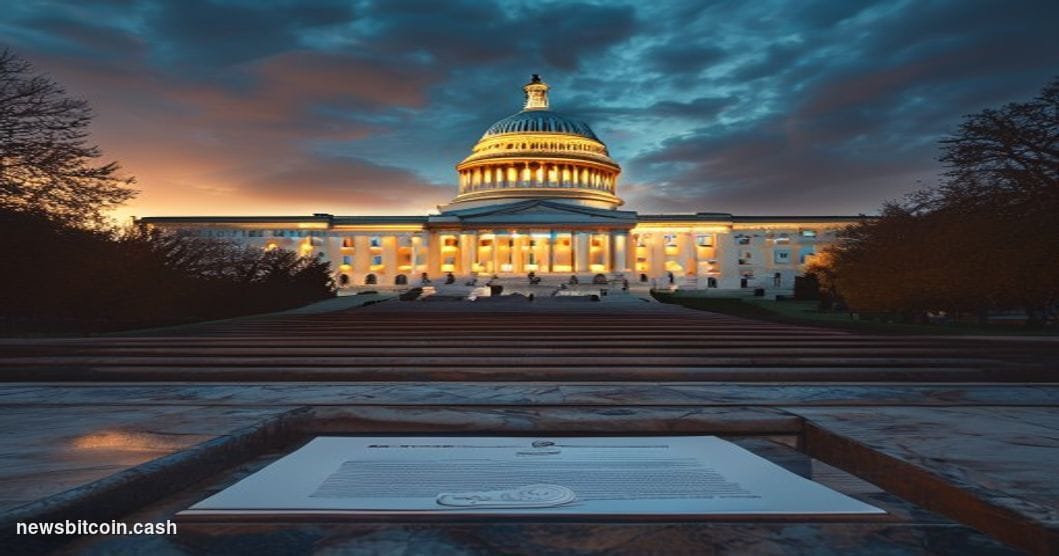
The clock is ticking on Capitol Hill, and Senator Cynthia Lummis is making sure everyone knows who she blames for the delay. The Wyoming Republican and prominent crypto advocate publicly lambasted Democrats on Thursday for what she characterized as an unfair obstruction of the long-awaited Crypto Clarity Act — legislation she says could have already been signed into law months ago. With Congress preparing to break for August recess, the window to deliver the digital asset industry a coherent regulatory framework is narrowing fast, and patience among crypto proponents in Washington is wearing thin.
Speaking on the Crypto in America podcast, Lummis was direct in her frustration. The Clarity Act, in her view, is not a partisan issue — it is an infrastructure bill for the financial system of the future, and its continued delay represents a failure of legislative process rather than a principled policy disagreement. Her remarks reflect a broader tension that has defined crypto regulation in the United States for years: the gap between the pace of technological innovation and the glacial tempo of Washington governance.
What the Clarity Act Would Actually Do
The Crypto Clarity Act sits at the intersection of the two most contested questions in digital asset regulation: what constitutes a security versus a commodity, and which federal agency — the Securities and Exchange Commission or the Commodity Futures Trading Commission — holds primary jurisdiction. These are not trivial academic distinctions. They determine which rules apply to token issuers, exchanges, and investors across a multi-trillion-dollar asset class. Without clarity on these questions, companies face enforcement-by-ambiguity, and institutional capital continues to navigate an uncertain legal landscape. For Lummis, passing this legislation is not about ideological alignment with the crypto industry — it is about providing the kind of regulatory certainty that any functioning market requires.
The senator has been one of the most consistent voices in Congress on digital asset policy, earning her unofficial title as the "Bitcoin Senator" through years of advocacy that has included co-authoring major crypto legislation and pushing for a national strategic Bitcoin reserve. Her frustration on the podcast is not a new development — it reflects accumulated friction from watching a bill she believes has the votes and the merit remain bottled up for political reasons.
The August Recess Pressure Cooker
The timing of Lummis's outburst matters as much as its content. Congress is approaching its summer recess, and any legislation that fails to clear both chambers before lawmakers depart faces a difficult path to revival in the fall. Legislative calendars reset, political priorities shift, and the window that once seemed achievable can close permanently. For crypto regulation, this is not a theoretical risk — the industry has watched multiple promising bills die in procedural limbo over recent years, each delay compounding uncertainty for businesses trying to build compliant products in the United States.
Lummis's argument that the bill could have passed months ago, if not for Democratic obstruction, is a pointed political charge. Democrats have at various times raised concerns about consumer protection provisions, anti-money laundering requirements, and the broader question of whether existing crypto legislation adequately addresses risks to retail investors. Whether those objections represent legitimate policy concerns or tactical delay is precisely the kind of dispute that makes Washington function — or fail to function — on complex technical legislation.
A Pattern of Last-Minute Urgency
What stands out about this moment is how familiar the pattern has become. Crypto legislation in the United States has repeatedly been positioned as imminent, only to slip past deadline after deadline. Stablecoin bills, market structure frameworks, and now the Clarity Act have all been framed as nearly-done deals that somehow never quite crossed the finish line. That pattern has real costs: developers relocate to friendlier jurisdictions, institutional investors demand higher risk premiums for regulatory uncertainty, and foreign competitors — particularly in the European Union, which implemented its Markets in Crypto-Assets regulation — consolidate their advantage as a regulated destination for digital asset businesses.
Lummis is not wrong to apply public pressure. Legislative momentum is partly a function of political will, and public accountability from a senior senator carries weight. If Democrats have substantive objections to the Clarity Act's current form, the appropriate response is to negotiate and amend, not to allow the bill to stall indefinitely. If they lack the votes to reshape it, the democratic process should allow the majority to move forward. Either way, the crypto industry and the millions of Americans who hold digital assets deserve a resolution — not another cycle of near-misses and recess delays.
Whether the Clarity Act clears Congress before the August break remains uncertain. What is not uncertain is that the cost of continued inaction is being paid in real time, by real market participants, who are building the financial infrastructure of the next decade with one hand tied behind their backs.
Written by the editorial team — independent journalism powered by Bitcoin News.