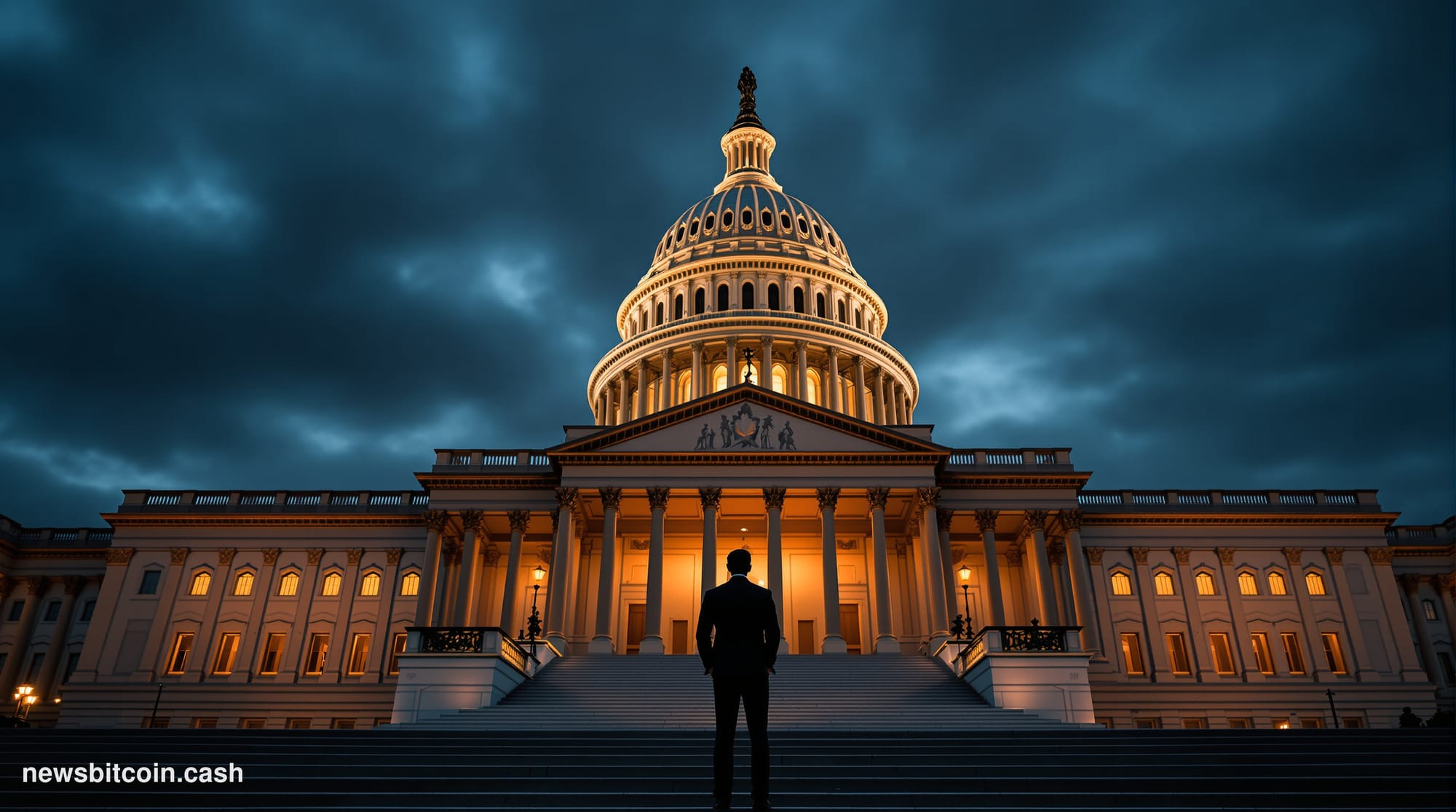
The United States crypto industry may finally have a path forward through years of regulatory uncertainty, as Senator Cynthia Lummis throws her support behind the CLARITY Act, legislation designed to establish clear rules for digital assets and end the jurisdictional confusion that has plagued the sector.
The CLARITY Act represents a critical intervention in what has become a regulatory quagmire affecting everything from exchange operations to institutional custody services. For years, crypto companies have operated in a gray area where Securities and Exchange Commission (SEC) enforcement actions and Commodity Futures Trading Commission (CFTC) guidance often seemed to contradict each other, creating compliance nightmares that have driven some firms overseas.
Lummis, who has emerged as one of the Senate's most vocal crypto advocates, sees the legislation as essential infrastructure for the industry's future. The Wyoming Republican has consistently argued that regulatory clarity, not restrictive rules, should be the priority for lawmakers seeking to maintain America's competitive edge in digital finance. Her support carries significant weight given her position on the Senate Banking Committee and her state's pioneering role in crypto-friendly legislation.
The potential market stabilization effects could be substantial. The legislation would provide regulatory certainty that institutional investors have repeatedly cited as a prerequisite for larger allocations to crypto assets. Major pension funds, insurance companies, and asset managers have largely remained on the sidelines not due to technological concerns, but because of unclear regulatory frameworks that make compliance strategies nearly impossible to develop.
This regulatory limbo has cost the industry more than just institutional capital. Coinbase and other major exchanges have spent millions on legal fees defending against enforcement actions that might never have been necessary under clearer rules. Smaller firms have been forced to limit product offerings or relocate operations entirely, bleeding talent and innovation to more crypto-friendly jurisdictions.
The CLARITY Act's approach differs significantly from previous legislative attempts by focusing on definitional clarity rather than restrictive oversight. Rather than attempting to force crypto assets into existing securities frameworks, the legislation would establish new categories that recognize the unique characteristics of digital assets. This could resolve the longstanding debate over whether tokens like Ethereum should be classified as securities or commodities.
However, the path to passage remains complex. The crypto industry has learned to temper expectations after previous legislative efforts stalled in committee or fell victim to broader political gridlock. The bill will need to navigate not just technical policy debates, but also concerns from traditional financial institutions and consumer protection advocates who worry about inadequate oversight.
The timing could prove crucial for American competitiveness in digital finance. European Union regulators have already implemented comprehensive crypto frameworks through the Markets in Crypto-Assets (MiCA) regulation, while Asian jurisdictions like Singapore and Hong Kong have established clear operational guidelines. American hesitation risks ceding first-mover advantages in what many consider the next evolution of global finance infrastructure.
For institutional investors specifically, regulatory clarity could unlock significant capital flows that have remained dormant. The potential for boosted institutional investment isn't just theoretical—survey data consistently shows that regulatory uncertainty, not market volatility or technological barriers, represents the primary obstacle to institutional crypto adoption.
The CLARITY Act's success would mark a turning point for an industry that has operated under regulatory uncertainty since its inception. While the legislation still faces an uncertain path through Congress, Lummis's support signals growing bipartisan recognition that clear rules, rather than regulatory avoidance, offer the best path forward for both innovation and consumer protection in the rapidly evolving digital asset landscape.
Written by the editorial team — independent journalism powered by Bitcoin News.