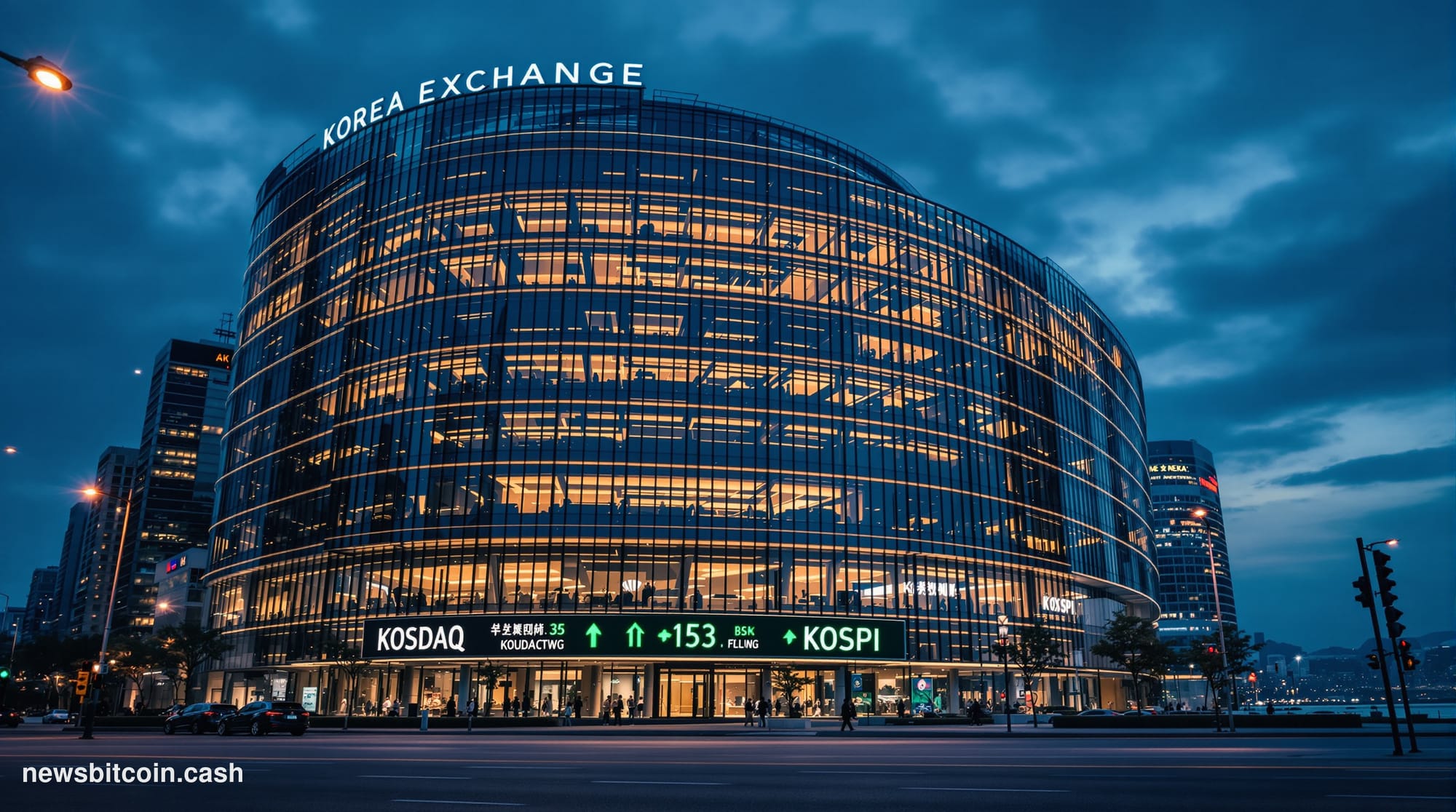
South Korea's stock market is telling two very different stories at once. While the Korea Composite Stock Price Index (KOSPI) — the benchmark for the country's largest listed companies — slumped sharply this month, three smaller stocks listed on the Korea Securities Dealers Automated Quotations (KOSDAQ) exchange defied gravity, each surging more than 60%. The divergence is striking, and it raises pointed questions about where capital is rotating and why the conventional narrative around technology and artificial intelligence is losing traction with Korean investors.
The three stocks at the center of this bifurcated market are HLB, SPG, and Peptron — each gaining over 60% in August alone against a backdrop of broader market deterioration. That kind of move in a single month, across three separate names on the same exchange, is not a coincidence. It signals deliberate capital rotation out of large-cap, AI-adjacent equities and into a cluster of smaller, sector-specific plays that appear insulated from the macro headwinds battering the rest of the Korean market.
KOSPI's Stumble and the AI Unraveling
The KOSPI's decline is noteworthy on its own terms, but what gives it additional weight is the simultaneous selloff in artificial intelligence stocks. For much of the past two years, AI-linked equities were the engine of equity market enthusiasm across Asia, drawing institutional and retail flows in roughly equal measure. That thesis is now being stress-tested. The selloff in AI names in Seoul mirrors a broader global reassessment of AI valuations — a repricing that asks whether the capital expenditure cycle in AI infrastructure will produce earnings returns on a timeline that justifies current multiples.
Korean investors, who have historically shown a strong appetite for high-growth technology names, appear to be answering that question with their feet. The rotation away from AI stocks on the KOSPI toward KOSDAQ-listed names in biotech and pharmaceuticals — the sectors where HLB and Peptron operate — suggests a flight to names where near-term catalysts are clinical or regulatory rather than dependent on AI adoption curves.
Leveraged ETF Rules Add Structural Pressure
Compounding the pressure on larger-cap and momentum-driven names is the tightening of rules around leveraged Exchange-Traded Funds (ETFs). Leveraged ETFs have been a popular vehicle among Korean retail investors seeking amplified exposure to index moves, and regulatory tightening on these instruments has direct implications for market structure. When the rules governing leveraged products become more restrictive, the forced deleveraging that follows tends to hit the most crowded, most liquid large-cap names first — precisely the stocks that dominate the KOSPI and that have the heaviest weighting in AI-themed indices.
This creates a mechanical feedback loop: tighter leveraged ETF rules push retail investors to reduce exposure, redemption pressure falls disproportionately on high-momentum names, and the resulting selloff accelerates the underperformance of the KOSPI relative to smaller, unleveraged plays on the KOSDAQ. HLB, SPG, and Peptron, sitting outside the crowded leveraged ETF complex, became accidental beneficiaries of that structural unwind.
KOSDAQ as a Refuge, Not a Speculation
There is a temptation to read a 60%-plus monthly surge in any stock as a speculative bubble in the making, and that reading cannot be entirely dismissed. But the context here matters. These are not meme-stock rallies driven by social media momentum or cryptocurrency-adjacent enthusiasm. They are happening in a market environment where sophisticated institutional capital is actively seeking assets that are both liquid enough to trade and sufficiently disconnected from the AI and large-cap narratives that are currently under pressure.
For readers who follow digital assets and blockchain infrastructure, the parallel is instructive. The Korean retail investor base has long been one of the most active in crypto markets — the so-called "kimchi premium" on Bitcoin prices has historically tracked periods of intense domestic risk appetite. When that same investor base pivots dramatically within equities — abandoning the AI names that felt like the safest growth bet two years ago — it is worth watching whether any of that energy eventually finds its way back into digital asset markets as an alternative growth proxy.
What This Means
The 60%-plus gains in HLB, SPG, and Peptron are less a story about three stocks and more a story about a market in transition. The KOSPI's crash, the AI selloff, and the tightening of leveraged ETF rules have collectively created a pressure valve, and capital has flowed through it into KOSDAQ. Whether these gains hold will depend on whether the companies behind them can deliver the underlying catalysts — clinical data, contract wins, product approvals — that justify the moves. But the macro signal is already clear: Korean markets are repricing risk, and the rotation is real, significant, and moving fast.
Written by the editorial team — independent journalism powered by Bitcoin News.